
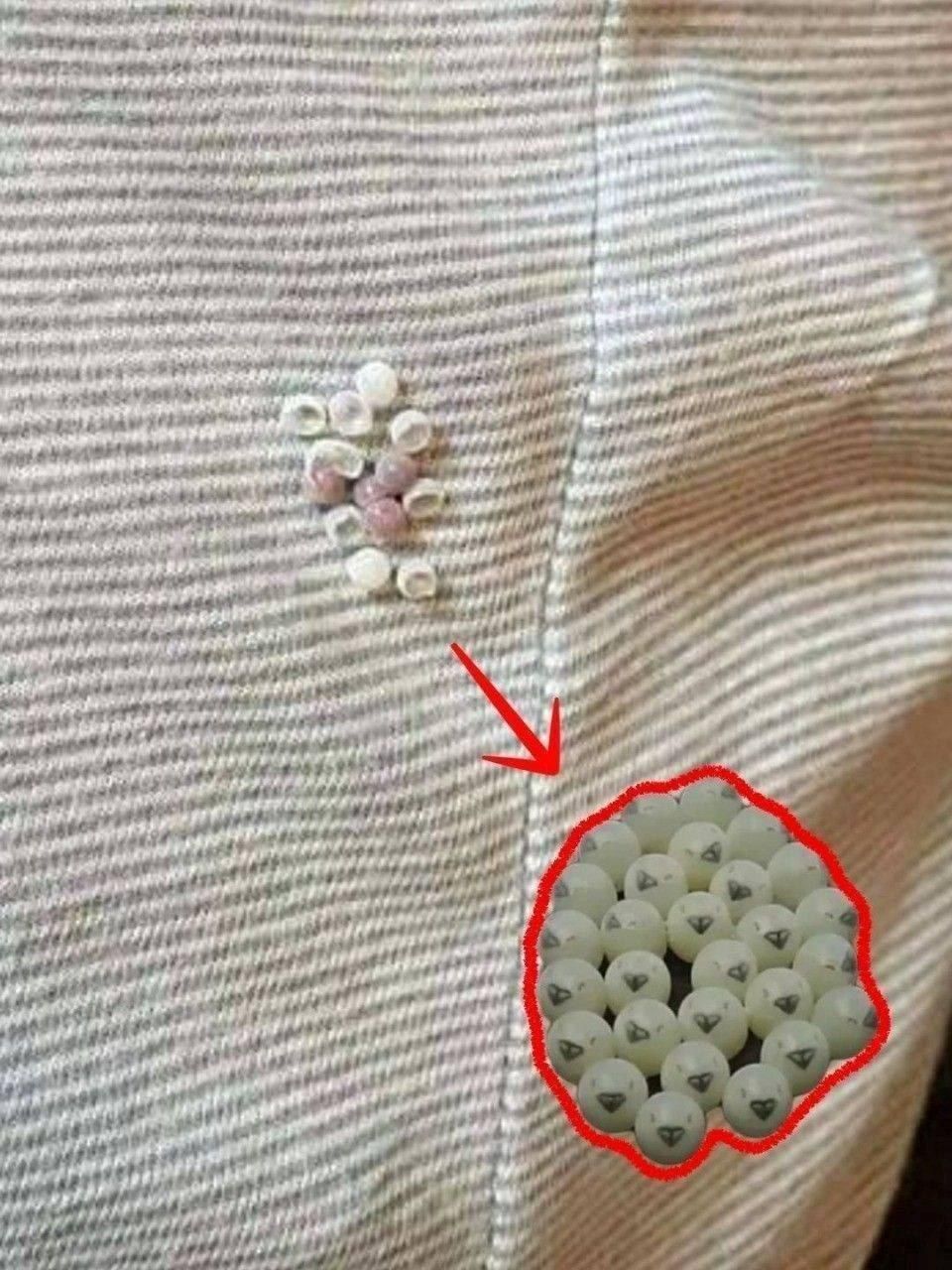
Your bed is associated with rest, comfort, and vulnerability. It’s where you spend 6–8 hours a night, unconscious and unaware of your surroundings. The idea that insects, pests, or unknown substances might share that space is unsettling.
Additionally, many people immediately think of:
Bed bugs
Discover more
Bedding
bed
mattress
Fleas
Cockroach eggs
Rodent droppings
Parasites
Because online images often show close-ups of insect eggs or droppings, it’s easy to match what you see to something frightening — even if it isn’t.
But panic can lead to misidentification. Let’s break down the most common explanations.
Common Causes of Tiny Balls Found in Bed
1. Fabric Pilling (Lint Balls)
One of the most common and harmless explanations is fabric pilling.
Over time, sheets, blankets, and mattress covers shed fibers. When these fibers tangle together due to friction — especially if you toss and turn — they form tiny balls of lint. These can appear:
Scattered across sheets
If the tiny balls feel like fabric and break apart when squeezed, they’re almost certainly lint pills.
Why it happens:
Low-quality or older sheets
Heavy movement during sleep
Washing bedding with rough fabrics like towels
Dryer friction
This is completely harmless — just a sign it might be time to replace or upgrade your bedding.
2. Mattress Foam Beads
Discover more
Pillow
Pillows
mattresses
If you have a memory foam mattress or topper, tiny foam beads can sometimes escape through small tears or worn seams.
These usually appear as:
Small white or pale yellow balls
Slightly firm but compressible
Uniform in size
Found near edges or seams
Check your mattress cover. If you notice damage, the foam inside may be shedding small pieces.
Again, not dangerous — but worth repairing or replacing.
3. Polystyrene Microbeads (From Pillows or Cushions)
Some pillows, bean bags, or decorative cushions are filled with small polystyrene beads.
If one of these has a small tear, beads may leak into your bed. They’re typically:
Very round
White
Smooth
Lightweight
Uniform in size
They often bounce slightly when dropped.
This situation looks dramatic but isn’t harmful. Simply locate the source and patch or replace it.
