
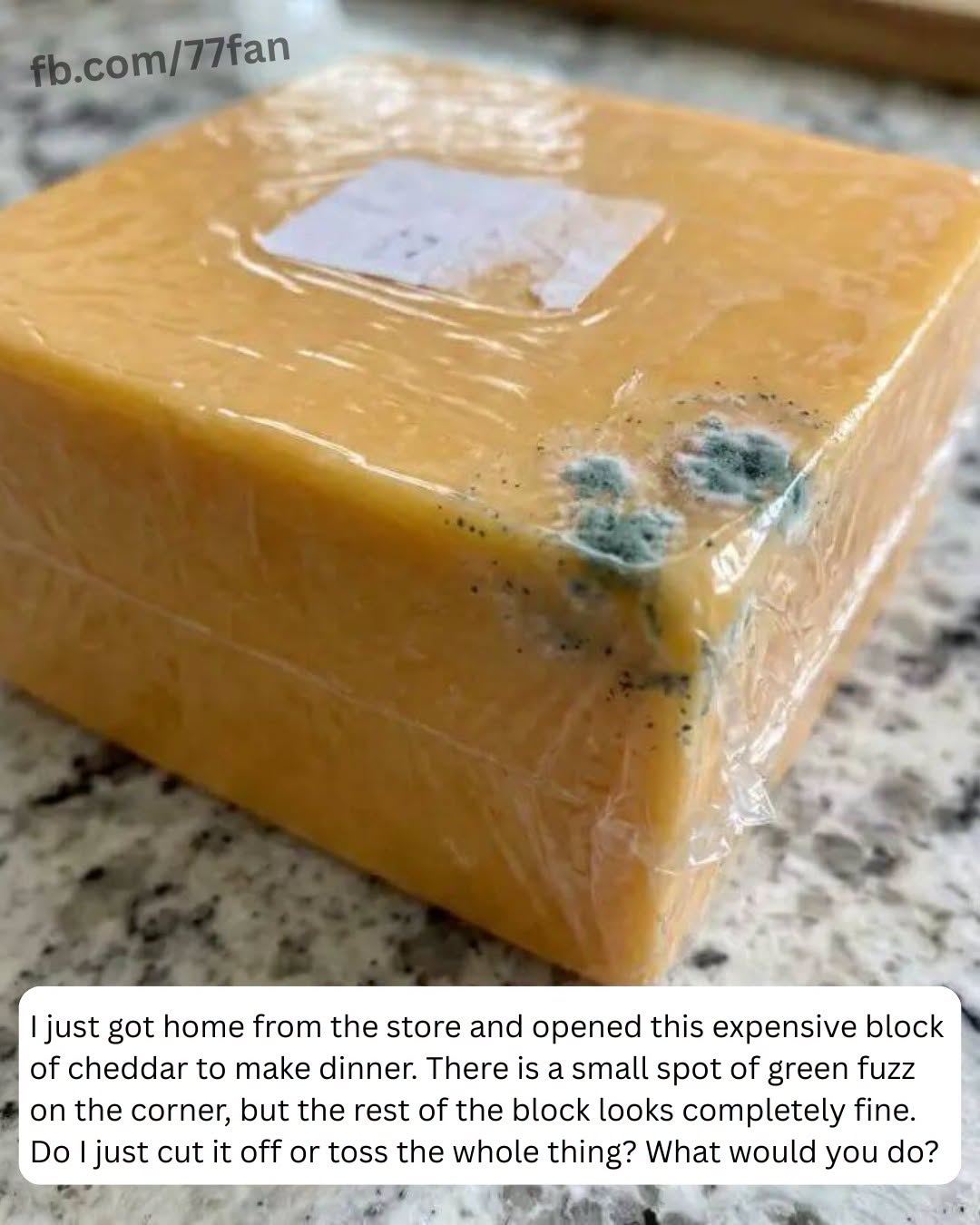
[adinserter block=”3″]
Sometimes discarding the entire cheese is the safer choice.
Consider throwing it out if:
- Mold appears in multiple locations.
- The cheese has a strong unpleasant odor.
- The texture has become slimy.
- Significant discoloration is present.
- The cheese is soft or crumbling unexpectedly.
- You are unsure how long it has been stored.
When in doubt, food safety should take priority over saving leftovers.
Soft Cheese Requires Extra Caution
Unlike hard cheeses, soft cheeses should generally be discarded if mold develops unexpectedly.
This includes:
- Cream cheese
- Cottage cheese
- Ricotta
- Brie
- Fresh mozzarella
Because these cheeses contain more moisture, mold can spread throughout the product even when only a small area appears affected.
[adinserter block=”4″]
Signs Your Cheese Has Spoiled
Watch for these warning signs:
Unpleasant Odor
Fresh cheddar has a mild, slightly sharp aroma.
Strong sour, ammonia-like, or rotten smells may indicate spoilage.
Slimy Surface
A slippery texture often suggests bacterial growth.
Unusual Colors
Unexpected pink, black, or extensive green growth should raise concern.
Excessive Dryness
While some drying can occur naturally, severe hardening may indicate the cheese is past its best quality.
How to Store Cheddar Cheese Properly
Proper storage significantly extends freshness.
Wrap It Correctly
Use:
- Cheese paper
- Wax paper
- Parchment paper
Then loosely cover with plastic wrap or place in a storage container.
Keep It Refrigerated
Store cheese in the refrigerator’s cheese drawer or vegetable compartment where humidity tends to be more stable.
Avoid Excess Moisture
Moisture encourages mold growth.
Replace damp wrapping materials when necessary.
Use Clean Utensils
Always cut cheese with clean knives to reduce contamination.
Common Myths About Moldy Cheese
Myth: Any Mold Means Immediate Danger
Not always.
Certain hard cheeses can often be safely salvaged by removing the affected area.
Myth: Mold Only Exists Where You Can See It
Visible mold may represent only part of the growth.
That’s why generous trimming is recommended.
Myth: Refrigeration Completely Prevents Mold
Cold temperatures slow mold growth but do not stop it entirely.
Myth: Dry Cheese Can’t Spoil
Even hard cheeses can eventually develop mold or quality issues.
Frequently Asked Questions
Can I eat cheddar after removing mold?
In many cases, yes, if the mold is limited and the cheese remains firm and otherwise normal.
How much cheese should I cut away?
Food safety experts often recommend removing at least 1 inch around and below the moldy area.
Is green mold always harmful?
Not necessarily, but it should be treated cautiously because identifying mold species by appearance alone is difficult.
Can frozen cheese develop mold?
It’s less common, but mold can still appear if contamination occurs before freezing or during thawing.
[adinserter block=”5″]