
[adinserter block=”3″]
You Open the Can and Notice a Strange Jelly—Should You Be Concerned?
Many people have experienced the same moment.
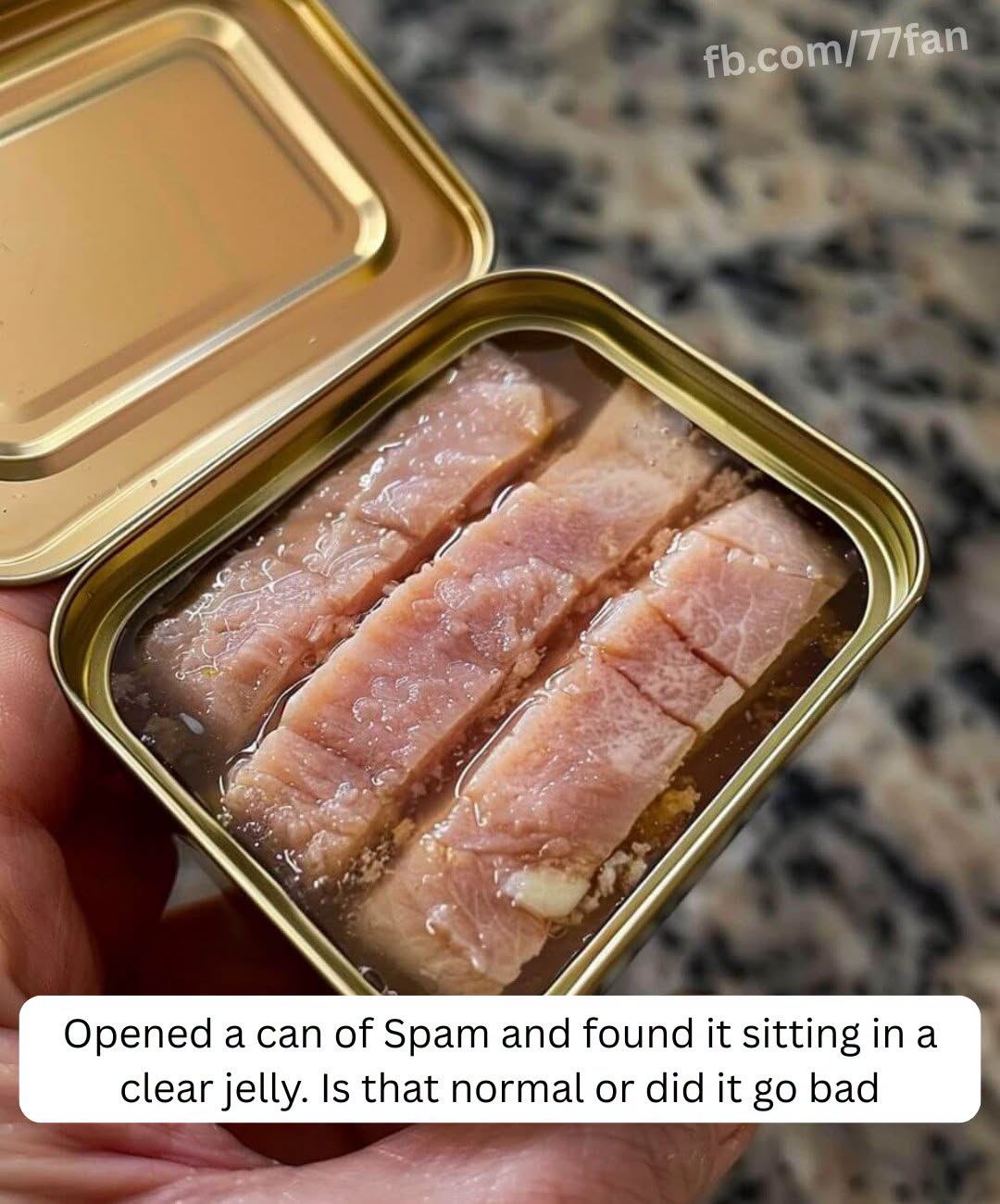
You open a can of luncheon meat, slide the contents onto a plate, and notice a clear or slightly cloudy jelly-like substance surrounding the meat. For some, it’s completely normal. For others, it’s enough to spark concern.
Questions quickly follow:
- What exactly is that jelly?
- Is it a sign the meat has gone bad?
- Is it safe to eat?
- Why does it appear in the first place?
The answer is actually much simpler than most people expect.
In most cases, the jelly is a natural result of the cooking and canning process—not a sign of spoilage.
What Is the Jelly Made Of?
The gelatinous layer that sometimes surrounds canned meats is primarily made from naturally occurring proteins, water, and fats released during cooking.
When the meat is heated during processing:
- Proteins break down
- Natural collagen dissolves
- Juices are released
- Fat and moisture separate
As the product cools inside the sealed container, some of these substances solidify into a soft gel.
The result is the jelly-like layer many people notice when opening the can.
[adinserter block=”4″]
Understanding Collagen and Gelatin
Collagen is a protein naturally found in animal connective tissues.
During cooking, collagen can transform into gelatin.
This is the same process responsible for:
- The richness of homemade bone broth
- The texture of meat stock
- Traditional aspic dishes
- Some soups and stews that thicken after refrigeration
The jelly found in canned meats forms through a similar process.
Is the Jelly Safe to Eat?
In properly sealed and stored canned products, the jelly is generally considered safe to consume.
It is simply part of the product’s natural composition.
Many people eat it without a second thought, while others prefer to remove it for texture reasons.
Either choice is largely a matter of personal preference.
Why Does the Amount of Jelly Vary?
Not every can contains the same amount.
Several factors can influence how much gel forms:
Meat Composition
Different cuts contain varying levels of collagen and fat.
Processing Methods
Manufacturing techniques may affect the final texture.
Storage Temperature
Cooler temperatures often make the gel firmer and more noticeable.
Product Formulation
Different brands and recipes may produce different amounts of jelly.
When Should You Be Concerned?
[adinserter block=”5″]