
[adinserter block=”3″]
Is It Safe to Cut Around Mold, or Should the Entire Block Be Thrown Away?
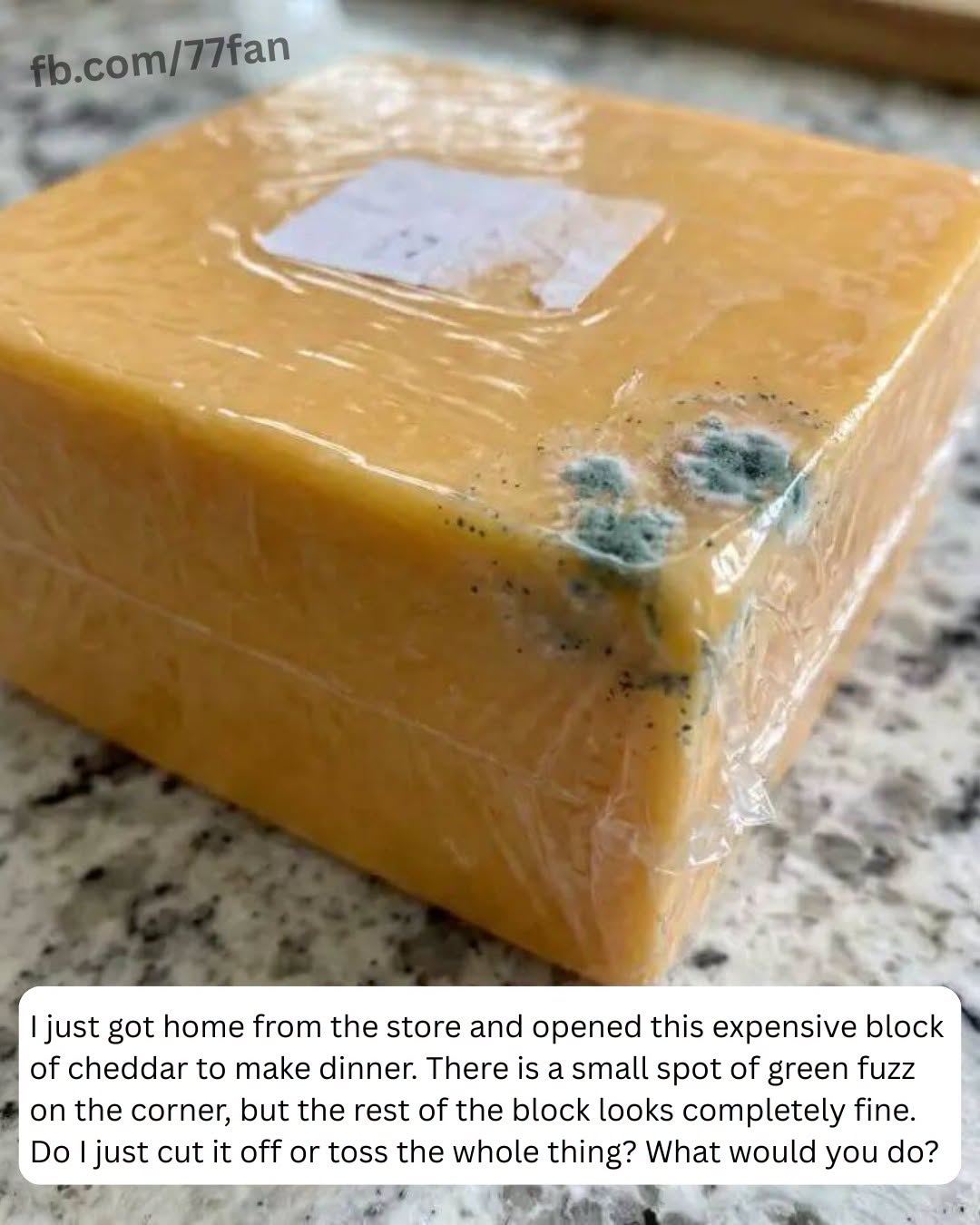
You’re about to make a sandwich, grate some cheese over pasta, or prepare a snack when you notice something unexpected—a green spot on your cheddar cheese.
Immediately, questions start racing through your mind:
- Is it mold?
- Can I simply cut it off?
- Is the rest of the cheese still safe to eat?
- Should I throw the entire block away?
The answer depends on the type of cheese, the amount of mold present, and how the cheese has been stored.
Understanding the difference between harmless surface mold and signs of spoilage can help you make a safer decision and reduce unnecessary food waste.
Why Mold Appears on Cheese
Cheese is a dairy product that naturally contains moisture and nutrients, making it an environment where mold can grow under the right conditions.
Common causes include:
- Exposure to air
- Improper storage
- Excess moisture
- Aging
- Cross-contamination from other foods
While mold growth isn’t always dangerous, it should never be ignored.
[adinserter block=”4″]
Not All Cheese Mold Is the Same
Some cheeses are intentionally made with mold.
Examples include:
- Blue cheese
- Roquefort
- Gorgonzola
- Stilton
In these cheeses, specific mold cultures are part of the production process and are safe to consume.
Cheddar cheese, however, is not supposed to develop random green mold during storage.
What Does a Green Spot Usually Mean?
A green spot on cheddar is often mold growth that developed after the cheese was packaged or opened.
The appearance may vary:
- Green
- Blue-green
- Gray-green
- Fuzzy patches
- Small circular spots
Even if the visible mold appears limited to one area, microscopic growth may extend beyond what you can easily see.
Can You Cut Off the Mold?
For hard cheeses such as cheddar, the answer is often yes—provided the mold is limited and the cheese is otherwise in good condition.
Because hard cheeses have low moisture content, mold tends to spread more slowly than it does in softer varieties.
Recommended Approach
If you discover a small moldy area:
- Use a clean knife.
- Cut at least 1 inch (2.5 cm) around and below the visible mold.
- Avoid touching the mold with the knife and then cutting into clean portions.
- Store the remaining cheese properly.
This method can help remove the affected section while preserving the rest of the block.
When You Should Throw It Away
[adinserter block=”5″]