
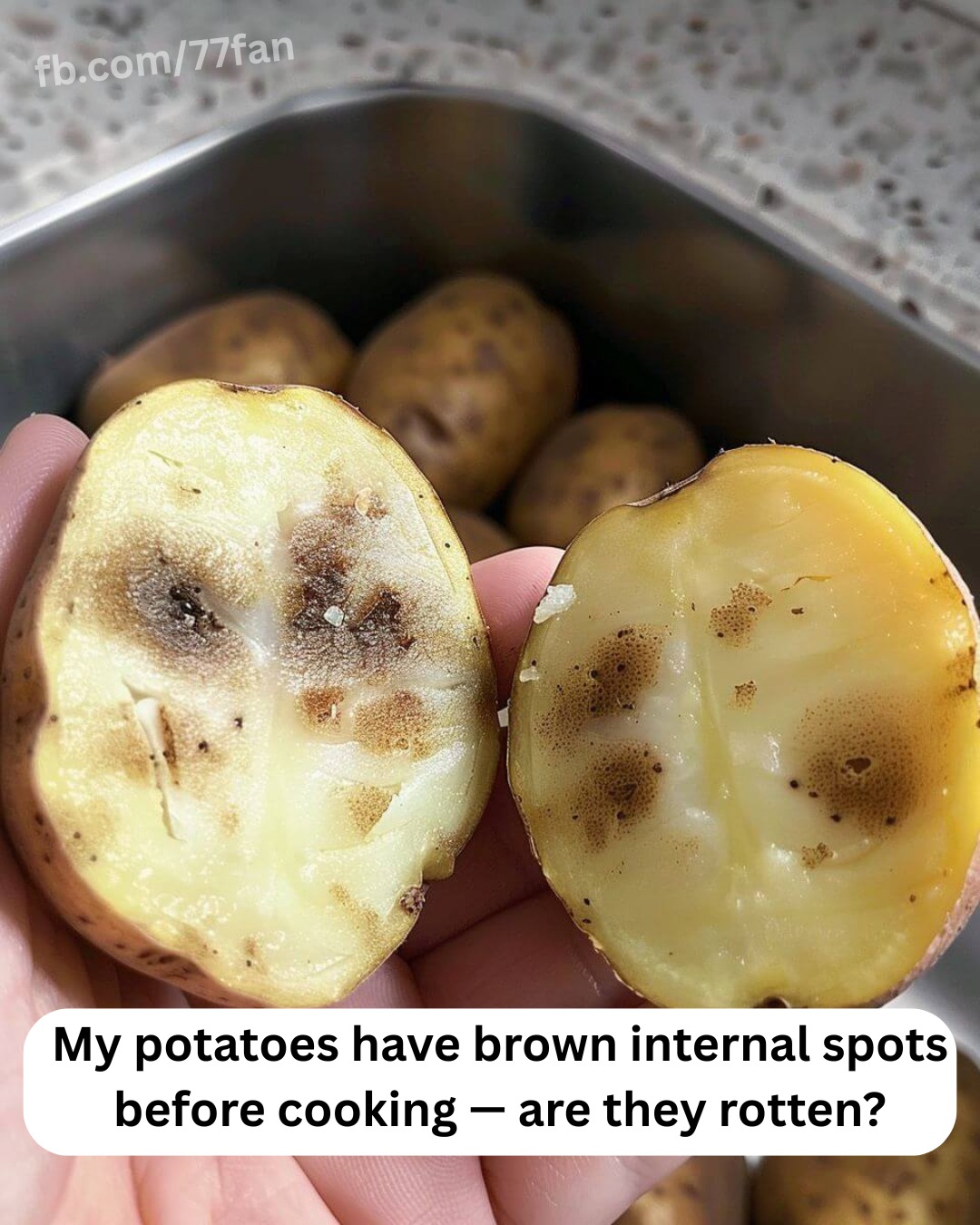
Now let’s talk about the potatoes you shouldn’t try to save.
Because yes, some really do belong in the trash.
A rotten potato often shows several warning signs at once:
1. It Feels Soft or Collapsed
Fresh potatoes should feel solid and heavy for their size.
If it feels spongy, wrinkled, or cave-like when squeezed, it’s breaking down internally.
2. There’s a Bad Smell
This is usually the biggest giveaway.
Rotten potatoes can smell:
Sour
Musty
Moldy
Almost sulfur-like
Not exactly something you want near dinner.
3. The Flesh Looks Wet or Slimy
Bruising stays dry.
Rot spreads moisture and bacteria through the flesh, creating a mushy texture that’s impossible to miss once you see it.
4. It Has Green Areas
Green potatoes deserve special attention because they may contain solanine, a naturally occurring compound that develops with light exposure.
A little green can sometimes be peeled away safely. But if the potato is heavily green or bitter tasting, toss it.
No side dish is worth a stomachache.
Why This Happens Before You Even Buy Them
Honestly, some potatoes are bruised long before they reach the grocery store.
Potatoes may look tough, but they bruise surprisingly easily during:
Harvesting
Packing
Shipping
Restocking
A potato dropped from even a short distance can develop internal damage without showing obvious marks outside.
That’s why you sometimes cut into a potato that looked completely fine in the bag.
Temperature changes also play a role. Potatoes exposed to excessive cold or heat during storage can develop internal discoloration over time.
And unfortunately, you usually can’t spot that from the outside.
Storage Mistakes That Make Things Worse
A tiny bruise isn’t a huge problem.
But poor storage? That can turn a small issue into full-blown rot pretty quickly.
Potatoes hate three things:
Light
Heat
Moisture
A warm kitchen counter near the stove? Bad idea.
A sealed plastic bag trapping humidity? Also bad.
The ideal storage setup is:
Cool
Dark
Dry
Well ventilated
Think pantry, basement shelf, or cellar.
And here’s a small but important tip people forget all the time—don’t store potatoes next to onions.
Onions release gases that speed up spoilage. Together, they basically sabotage each other.
Kind of like storing bananas beside avocados and suddenly everything ripens overnight.
How Much Should You Cut Away?
If the potato only has minor brown spots, you usually don’t need to throw out the whole thing.
Use a sharp knife and cut:
About ½ inch around the spot
Slightly deeper beneath the discoloration
You want to remove all affected flesh while keeping the healthy part intact.
Once trimmed, the rest of the potato is generally fine to cook.
But if you start cutting and realize the discoloration spreads deep throughout the potato, or the smell changes, stop there and toss it.
Sometimes the potato tells you pretty clearly it’s done.
Do Brown Spots Change the Taste?
Sometimes yes, sometimes no.
Small bruises often don’t affect flavor much at all. Especially in heavily seasoned dishes like:
Mashed potatoes
Roasted potatoes
Soups
Hash browns
But severe internal discoloration can create:
Bitter flavor
Odd aftertaste
Grainy texture
Dry patches after cooking
And honestly, potatoes are comfort food. Texture matters.
A fluffy baked potato with hidden bitter spots just ruins the experience a little.
Quick Home Checks Before Cooking
Not sure if your potato is safe? Here’s an easy kitchen checklist.
The Visual Check
Look for:
Mold
Black patches
Green skin
Deep wrinkles
The Squeeze Test
A fresh potato feels:
Firm
Dense
Smooth
A bad potato feels:
Soft
Hollow
Damp
The Smell Test
Fresh potatoes smell earthy and neutral.
Anything sour, musty, or rotten means it’s time to let it go.
Honestly, this simple three-step check catches most bad potatoes immediately.
How to Prevent Brown Spots in Future Potatoes
You can’t prevent every bruise, but you can reduce the chances significantly.
At the Store:
Choose potatoes that are:
Firm
Smooth
Heavy for their size
Free from sprouts and cuts
Avoid bags with moisture buildup or strong odors.
At Home:
Store potatoes:
In a paper bag or basket
Away from sunlight
Around 45–50°F if possible
With airflow
And try not to forget about them for two months in the back of the pantry.
We’ve all done it.
Frequently Asked Questions About Brown Spots Inside Potatoes
Are brown spots inside potatoes dangerous?
Usually not. Most are caused by bruising or internal discoloration and can simply be trimmed away.
Can I cook potatoes with brown spots?
Yes—if the potato is firm, odor-free, and the spots are limited. Remove the affected areas first.
What if the potato is brown all the way through?
If discoloration spreads widely through the flesh, especially with softness or odor, it’s safer to discard it.
Are green potatoes safe?
Small green spots can sometimes be peeled away. Heavily green potatoes should be tossed because they may contain solanine.
Why do potatoes bruise so easily?
Potatoes are surprisingly delicate underground crops. Harvesting, stacking, and transport can all create internal bruising before you ever buy them.
The Bottom Line
Finding brown spots inside a potato can feel alarming the first time you see it, especially when dinner’s already halfway started. But most of the time, it’s simply internal bruising—not rot.
A good potato should still feel firm, smell fresh, and look mostly healthy once the spots are trimmed away.
Rotten potatoes, though, are hard to miss. Soft texture, foul odor, slime, or widespread discoloration are all signs it’s time to throw it out.
And honestly? Once you know the difference, you stop panicking every time you slice into one.
You just trim, cook, and move on with dinner.
