
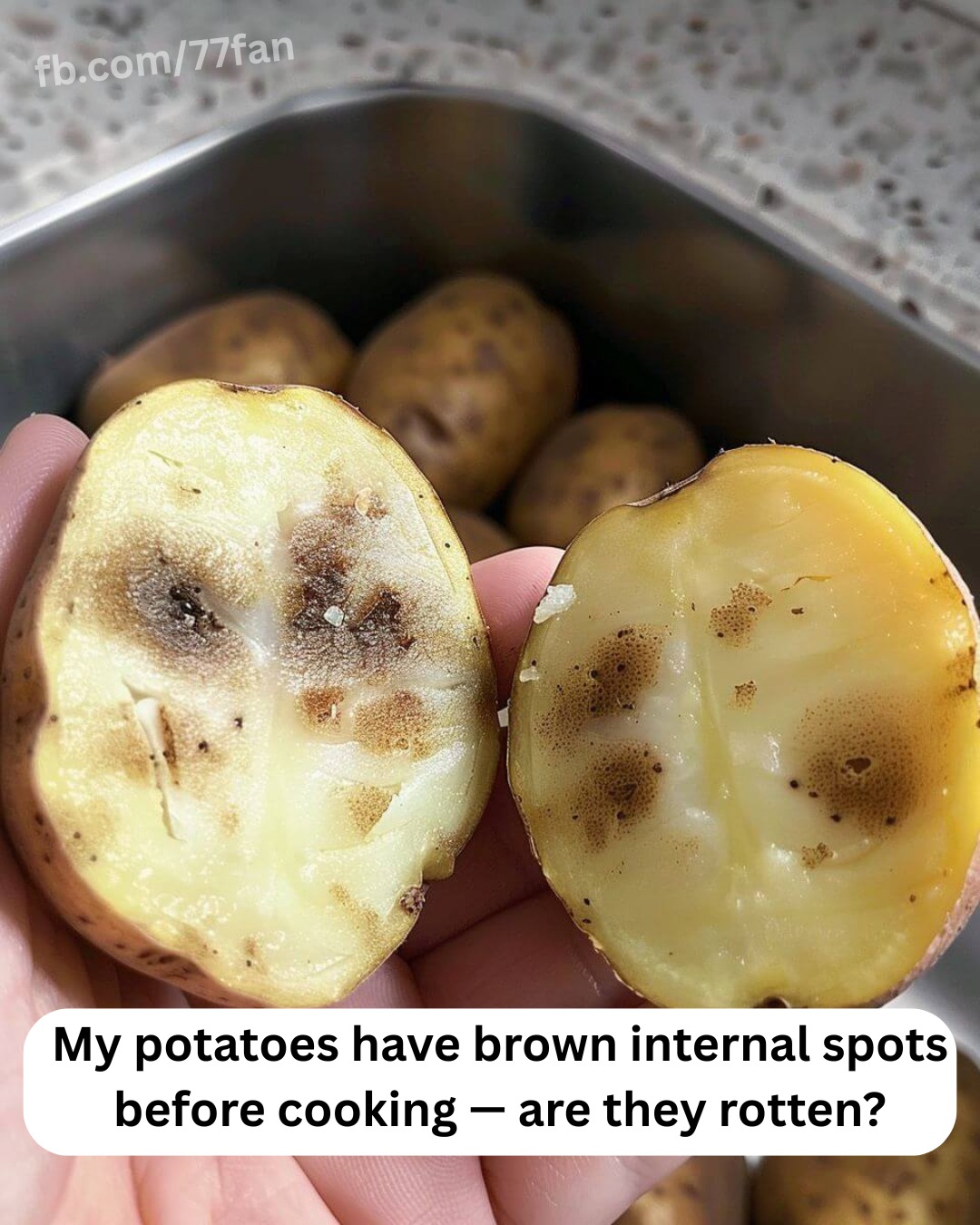
You’re halfway through making dinner. Maybe it’s mashed potatoes, crispy oven fries, or one of those cozy skillet meals that somehow tastes even better when the weather cools down a little. You slice into a potato and suddenly—there it is. Brown spots inside.
Not on the skin. Inside.
And honestly? It’s enough to make anyone pause for a second with the knife still in hand thinking, Wait… is this bad?
Potatoes are one of those kitchen staples we almost take for granted. They sit quietly in the pantry for weeks, ready to become comfort food at a moment’s notice. So when something looks “off,” it feels suspicious fast.
The good news is that brown spots inside potatoes are often harmless. But not always. That’s the tricky part.
Some spots are simply bruises from rough handling during harvest or shipping. Others can point to spoilage, poor storage, or potatoes that have crossed the line from “still usable” to “please throw me away immediately.”
Let me explain.
So… What Are Those Brown Spots Inside Potatoes?
Most of the time, those brown patches are what’s called internal bruising or internal rust spot. Sounds dramatic, but it usually isn’t.
Potatoes grow underground, and they go through a lot before landing in your kitchen. Harvest machines, transport bins, grocery store stocking—every bump matters. Even a potato that looks perfect on the outside can end up with bruised flesh underneath the skin.
These spots usually appear as:
Small brown specks
Rust-colored streaks
Dry dark patches
Slight discoloration inside the flesh
They’re commonly caused by:
Rough handling during harvesting
Pressure from stacking
Temperature swings during storage
Drought stress while growing
And here’s the interesting part: the potato may still be completely safe to eat.
That surprises a lot of people.
The Big Difference: Bruising vs. Rot
This is where things matter.
A bruised potato and a rotten potato are not the same thing, even though they can both look brown inside.
A Bruised Potato Usually Has:
Dry spots
Firm texture
No smell
Normal-looking flesh around the spot
A Rotten Potato Usually Has:
Soft or mushy areas
Slimy texture
Sour or foul odor
Gray, black, or wet-looking flesh
Honestly, your nose tells you a lot here. Rotten potatoes smell terrible. Not subtle. Not questionable. Terrible.
If you cut one open and instantly recoil, trust that instinct.
And if the potato feels squishy before you even slice it? That’s another red flag.
When Brown Spots Are Totally Harmless
Here’s the thing many home cooks don’t realize: potatoes bruise just like apples do.
The difference is apples show it immediately. Potatoes hide it inside until you cut them open.
Minor internal bruising is usually harmless. If the potato still feels firm and smells normal, you can simply trim the spot away and keep cooking.
That’s what most people do, especially when:
The spots are small
The discoloration is isolated
The texture around the spot looks healthy
In fact, restaurants and commercial kitchens trim bruised potatoes constantly. It’s incredibly common.
A few brown streaks inside a potato don’t automatically mean it’s spoiled. Sometimes it just had a rough trip from the farm to your cutting board.
The Signs a Potato Has Actually Gone Bad
