
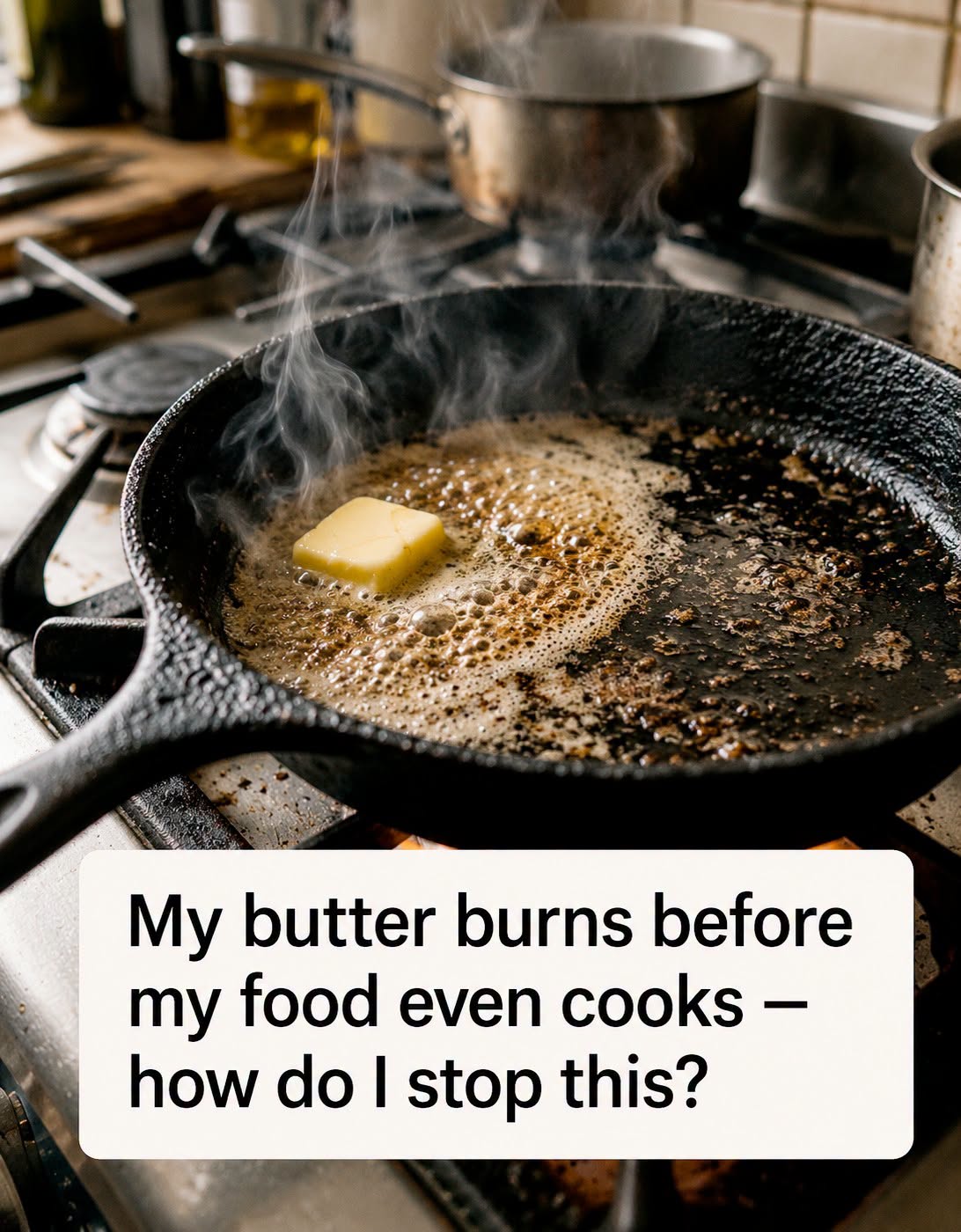
If you regularly cook at high heat and want to use butter, clarified butter is your best friend. Clarified butter is regular butter with the water and milk solids removed, leaving behind pure golden butterfat with a smoke point of around 450°F (232°C) — far beyond what regular butter can handle.
To make clarified butter at home, melt butter slowly in a saucepan over low heat until it separates into three visible layers: foam on top, clear golden fat in the middle, and milky solids at the bottom. Skim off the foam, then carefully pour the clear golden layer into a jar, leaving the milky solids behind.
Ghee, which is widely available at most grocery stores, is similar but cooked slightly longer for a nuttier, more concentrated flavor. Both are excellent for high-heat cooking.
4. 🔪 Cut the Butter Into Small Pieces
Adding a large, cold block of butter directly to a hot pan creates an immediate problem: the outer edges melt and begin to burn while the center is still solid. Cutting your butter into small, even pieces — or using pre-sliced pats — ensures it melts quickly, evenly, and consistently, reducing the window of time when some butter is dangerously hot while the rest is still catching up.
5. 🥄 Keep It Moving
Butter that sits still on the bottom of a hot pan will always burn. The solution is simple: keep stirring. Use a wooden spoon or silicone spatula to continuously move the butter (and any other ingredients) around the pan, distributing the heat evenly and preventing any single spot from overheating.
If you’re cooking in batches — pancakes, scallops, chicken pieces — wipe the pan clean between batches and add fresh butter each time rather than letting old, used butter continue to heat and degrade.
6. 🧂 Add Ingredients Gradually
Adding your other ingredients to the pan immediately after the butter reduces the temperature of the whole mixture, protecting the butter from overheating. Rather than letting butter sit alone in the pan while you prep other things, have everything ready before the butter goes in and add ingredients promptly.
For longer cooking processes, add ingredients gradually — the “from the ground up” sauté technique, where each ingredient is added progressively, keeps the overall pan temperature in check and results in better-cooked food across the board.
7. 🏋️ Use a Heavy-Bottomed Pan
The pan you choose matters significantly. Thin, lightweight pans develop hot spots — areas where the heat concentrates intensely — which cause butter to burn in patches even when the overall heat setting is moderate.
Heavy-bottomed pans made from cast iron, stainless steel, or copper distribute heat far more evenly across the entire cooking surface, eliminating hot spots and giving you much more control. If your butter consistently burns even on medium heat, upgrading your cookware may solve the problem entirely.
8. 🧊 Have a Rescue Plan Ready
If you’re making brown butter — intentionally cooking butter until the milk solids turn a deep golden brown and develop a nutty flavor — the line between perfectly browned and burned is razor-thin and crosses in seconds.
Keep a small dish of cold water or a splash of lemon juice next to the stove while browning butter. The moment your butter reaches the color you want, immediately add a teaspoon of the cold liquid and remove the pan from the heat. The cold liquid drops the temperature instantly, stopping the cooking process right where you want it and preventing the slide from brown to burnt.
Which Butter Burns Fastest?
Not all butters are equal when it comes to heat tolerance:
European-style butter has a higher milk fat content than standard American butter — which means a richer flavor, but an even lower smoke point and faster burning. Reserve European butter for baking, finishing dishes, or spreading on toast rather than high-heat cooking.
Standard American butter (80% fat) is the most versatile for cooking, but still needs careful heat management.
Salted vs. unsalted makes no meaningful difference to burning behavior — it’s the milk solids, not the salt, that determine smoke point.
When to Skip Butter Entirely
There are some cooking applications where butter simply isn’t the right tool, no matter how carefully you manage the heat:
Searing meat at very high temperatures — use a high smoke point oil like avocado, grapeseed, or refined coconut oil, then add butter at the very end for flavor and basting
Deep frying — never use butter for deep frying
Stir frying — the high, fast heat of stir frying requires an oil that can handle it
A good rule of thumb: if your cooking method requires heat above 350°F for any extended period, start with oil and add butter at the end of cooking to finish the dish with flavor rather than risking burning it throughout.
The Takeaway
Butter burns because of its milk solids — small but powerful components that give butter its extraordinary flavor and equally extraordinary fragility when exposed to heat. Managing that fragility is a matter of temperature control, technique, and choosing the right fat for the right cooking method.
