
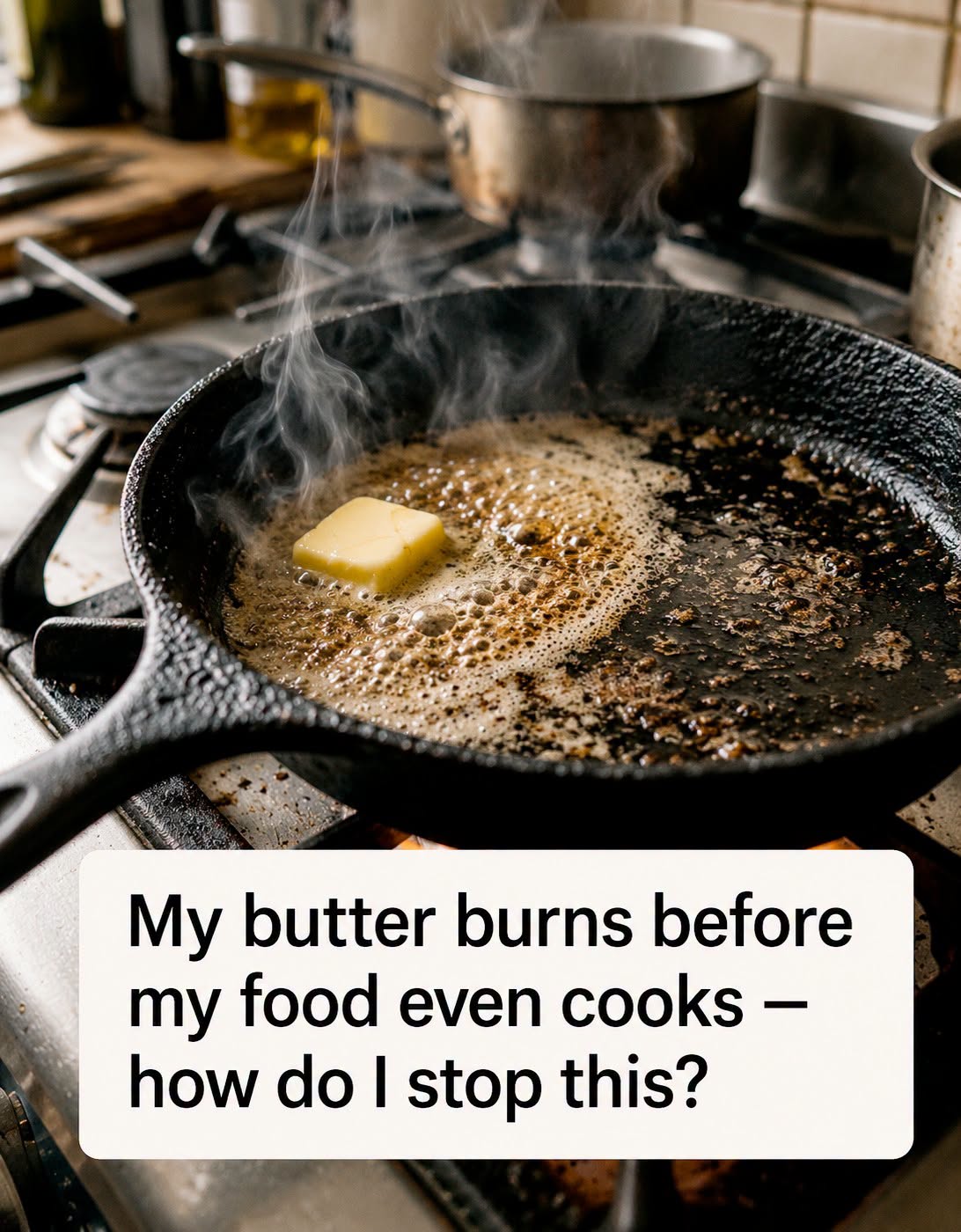
You turn on the heat, drop in a knob of butter, and within what feels like seconds it goes from golden and fragrant to dark, bitter, and acrid. Sound familiar? Burning butter is one of the most common and frustrating kitchen mistakes — and it happens to experienced cooks just as often as beginners.
The good news is that once you understand why butter burns, the fixes are simple, immediate, and genuinely effective. Here’s everything you need to know.
Why Does Butter Burn So Easily?
The answer comes down to chemistry — specifically, what butter is actually made of.
Unlike cooking oils, butter is not pure fat. Every pat of butter contains three components: fat, water, and milk solids. The milk solids are what give butter its rich, creamy, complex flavor. But they’re also the reason butter burns so quickly.
Milk solids have a very low smoke point — around 350°F (175°C). By comparison, sunflower oil can handle up to 440°F (227°C), and refined avocado oil can go even higher. The moment the temperature in your pan climbs above that threshold, the milk solids in your butter begin to scorch, turning from golden brown to black — and taking the flavor from nutty and delicious to acrid and bitter in seconds.
The water content in butter also plays a role. As butter melts, the water evaporates first, which concentrates the milk solids and accelerates the burning process if the heat isn’t managed carefully.
This is why you can leave a pan of olive oil on medium heat without disaster, but the same approach with butter ends in smoke.
How to Tell If Your Butter Has Already Burned
Burnt butter has a distinct, unmistakable smell — sharp, pungent, and slightly metallic, like overcooked microwave popcorn. Visually, you’ll see black debris floating in a pool of dark brown liquid. If your pan is dark-colored and you can’t see it clearly, pour a small amount into a light-colored dish to check.
If your butter has burned, remove it from the pan, wipe the pan thoroughly clean with a paper towel, and start fresh. Never continue cooking on top of burnt butter — the bitter, scorched particles will transfer directly into your food and ruin the entire dish.
8 Proven Ways to Stop Butter from Burning
1. 🌡️ Lower the Heat — Seriously, Lower It
This is the single most important fix. Most home cooks run their stoves too hot, too fast. Butter should be melted over low to medium heat — never high. Give it time to melt slowly and evenly. Yes, it takes an extra minute or two. The result is dramatically better flavor and complete control over the process.
For sautéing, start on medium and adjust as you go. For sauces, keep the heat low the entire time. If your recipe requires high heat, butter is probably not the right fat for that application — which leads to the next tip.
2. 🫒 Add a Neutral Oil to the Butter
This is the trick Julia Child recommended on her classic cooking show decades ago — and it still works perfectly today. Adding just one teaspoon of a neutral, high-smoke-point oil (vegetable oil, grapeseed oil, sunflower oil, or canola oil) to your butter before it hits the pan raises the effective smoke point of the mixture by diluting the milk solids. The result is butter that can handle more heat without burning, while still delivering that rich, unmistakable buttery flavor.
This is the technique used in professional kitchens when chefs want the flavor of butter with the heat tolerance of oil.
3. 🍳 Use Clarified Butter or Ghee
