
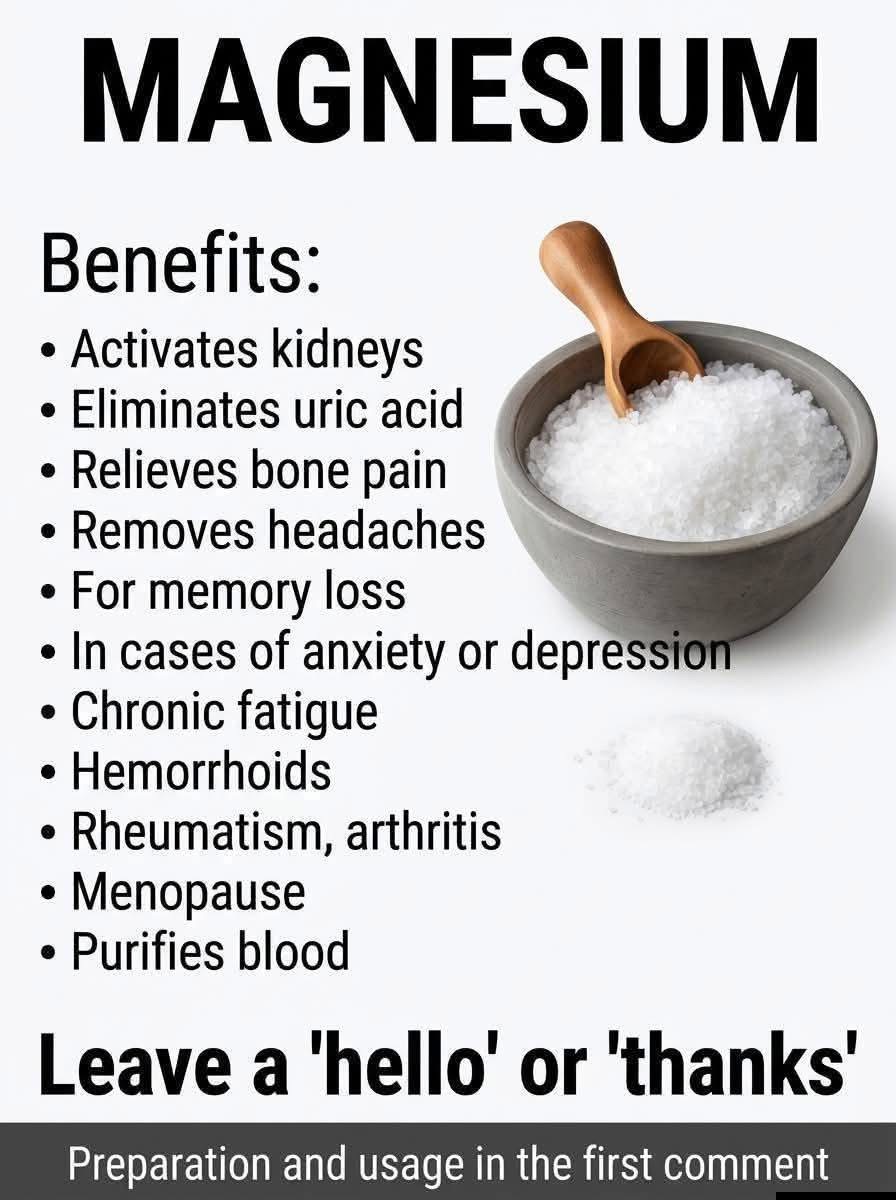
🧠 What Is Magnesium?
Magnesium is an essential mineral your body needs for:
- Muscle function
- Nerve signals
- Energy production
- Heart health
👉 It’s involved in 300+ biochemical processes in the body.
💪 Top Benefits of Magnesium
❤️ 1. Supports Heart Health
Magnesium helps:
- Regulate heartbeat
- Maintain healthy blood pressure
👉 Important for overall cardiovascular health.
😌 2. Reduces Stress & Improves Sleep
- Helps relax muscles
- Supports nervous system
👉 Many people use it to:
- Sleep better
- Reduce anxiety
🦴 3. Strengthens Bones
Magnesium works with:
- Calcium
- Vitamin D
👉 Essential for strong bones.
⚡ 4. Boosts Energy Levels
- Helps convert food into energy
- Reduces fatigue
💪 5. Prevents Muscle Cramps
- Supports muscle relaxation
- Commonly used by athletes
🧠 6. Supports Brain Function
- Helps regulate mood
- May reduce symptoms of anxiety or depression
🧃 Natural Sources of Magnesium
You don’t always need supplements. You can get it from:
- Leafy greens (spinach)
- Nuts and seeds
- Whole grains
- Bananas
- Dark chocolate
👉 A balanced diet can cover your needs.
💊 Should You Take Magnesium Every Day?
✔ Yes, if:
- You have a deficiency
- You experience cramps or poor sleep
- Your diet lacks magnesium
❌ Not always necessary if:
- You already get enough from food
👉 Supplements should be used when needed, not blindly.
⚠️ Possible Side Effects
Too much magnesium can cause:
- Diarrhea
- Nausea
- Stomach discomfort
👉 Especially from supplements.
🧠 Recommended Intake
- Adult men: ~400–420 mg/day
- Adult women: ~310–320 mg/day
👉 Always follow recommended doses.
⚠️ Important Advice
- Consult a doctor if:
- You have kidney issues
- You take medications
👉 Don’t self-medicate excessively.
