
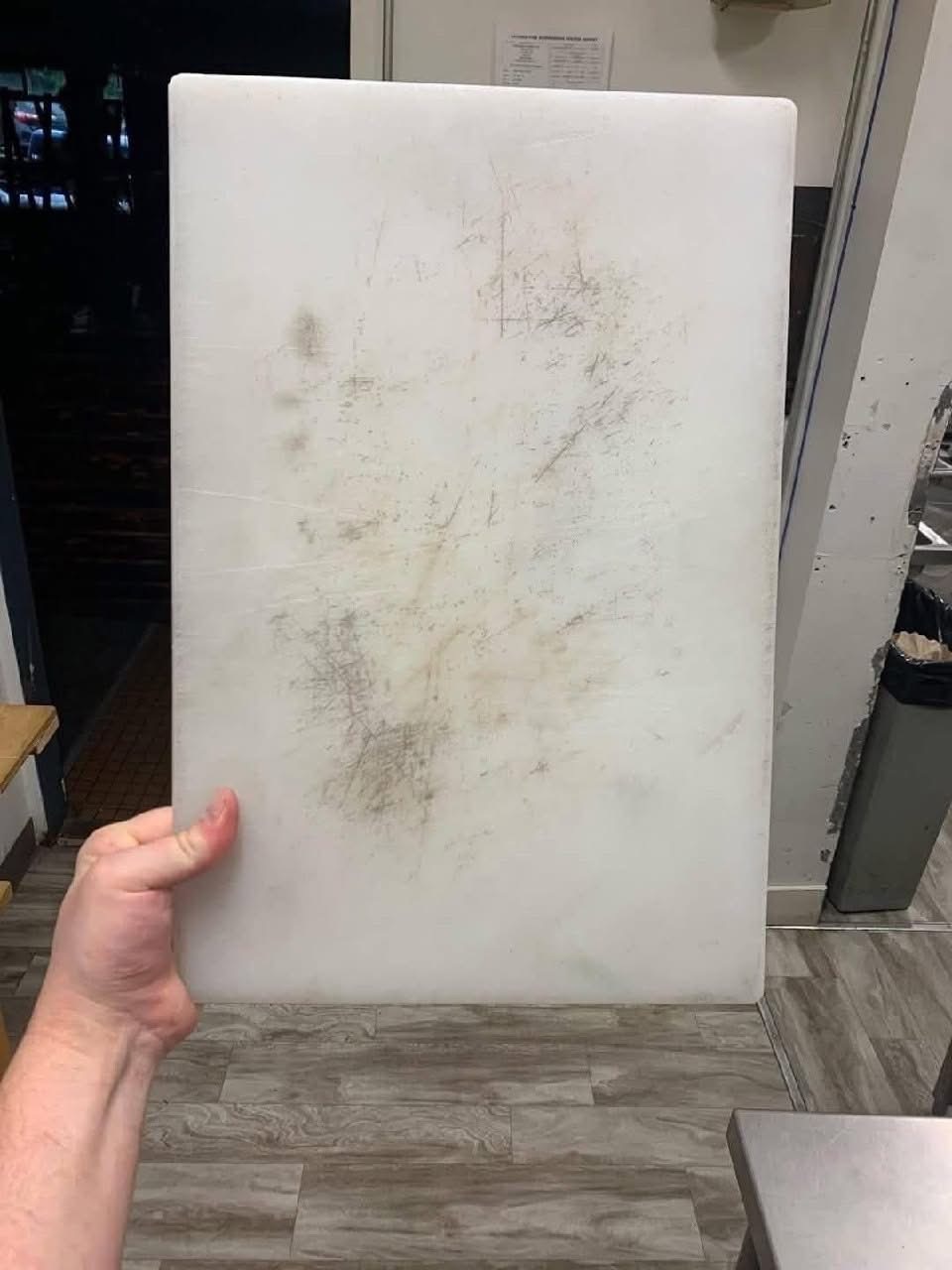
🧠 Why Cleaning Plastic Cutting Boards Matters
Plastic cutting boards are common in every kitchen…
👉 But they can easily:
- Trap bacteria in knife grooves
- Absorb odors
- Develop stains
👉 Proper cleaning is essential for food safety and hygiene
🧼 Daily Cleaning (Basic Method)
After each use:
- Rinse with hot water
- Wash with dish soap
- Scrub with a sponge or brush
- Rinse thoroughly
- Let it air dry
👉 This removes most bacteria and food residue.
🦠 Deep Cleaning & Disinfecting
✔ Method 1: Vinegar Solution
- Spray white vinegar
- Let sit for a few minutes
- Rinse
👉 Helps kill bacteria and remove odors
✔ Method 2: Bleach Solution (Strong Clean)
- Mix 1 tablespoon bleach with 1 liter of water
- Soak for a few minutes
- Rinse very well
👉 Effective for disinfecting deeply
✔ Method 3: Baking Soda Paste
- Mix baking soda + water
- Scrub surface
👉 Removes stains and smells
🍋 Removing Strong Odors
For smells like garlic or onion:
- Rub with lemon + salt
- Let sit for a few minutes
- Rinse
👉 Leaves the board fresh.
⚠️ When to Replace Your Cutting Board
Replace it if:
- Deep grooves are visible
- Cracks appear
- Persistent odors remain
👉 Old boards can harbor bacteria.
🧠 Pro Tips for Maintenance
- Use separate boards for:
- Raw meat
- Vegetables
- Avoid:
- Leaving it wet
- Using very harsh scrubbers
- Dishwasher safe?
👉 Many plastic boards can go in the dishwasher (check label)
🚫 Common Mistakes
- ❌ Not drying properly
- ❌ Ignoring deep cuts
- ❌ Using one board for everything
👉 These increase contamination risk.
