
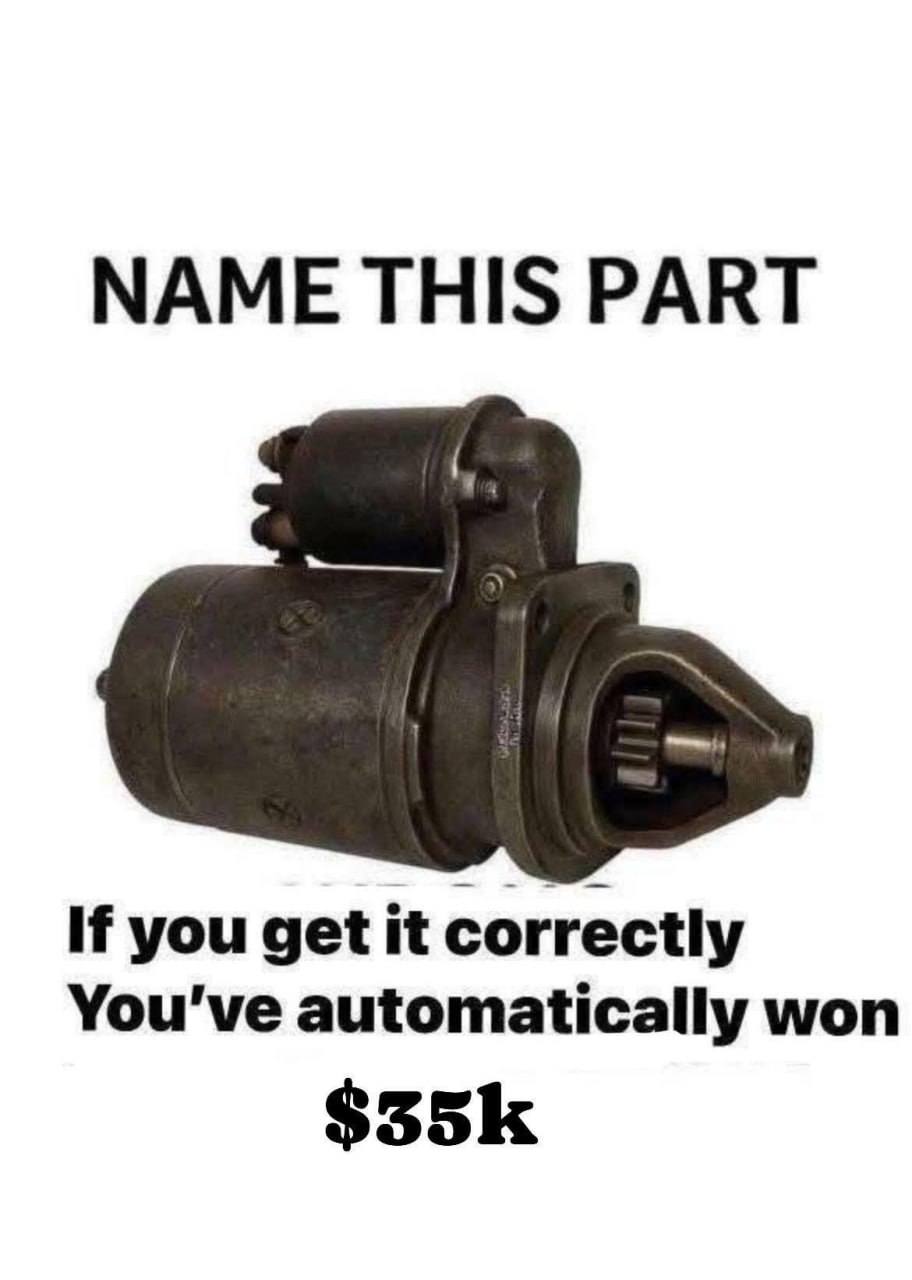
If you’ve ever turned your key or pressed your ignition button and heard that familiar cranking sound before your engine roared to life — that’s your starter motor doing its job. It’s one of the most important components in your vehicle, and most drivers have no idea what it looks like, where it is, or how it works — until the day it fails.
So let’s break it all down.
What Is a Starter Motor?
A starter motor is an electric motor that cranks your internal combustion engine to initiate the firing cycle. In simple terms: it’s the part that gets your engine running. Without it, your car won’t start — period.
The starter motor is powered by your vehicle’s battery and activated the moment you turn the ignition key or press the start button. It engages a small gear (called the pinion gear) with the engine’s flywheel, spins the engine fast enough to begin the combustion process, and then disengages automatically once the engine is running on its own.
What Does a Starter Motor Look Like?
A starter motor is a compact, cylindrical metal component — typically dark gray or black from heat and engine grime. It has two main sections:
The main cylindrical body — this houses the electric motor and the field coils that generate the magnetic force to spin the armature
The smaller solenoid assembly on top — this is the electromagnetic switch that connects the battery power to the motor and pushes the pinion gear forward to engage the flywheel
The drive end with the pinion gear — the toothed gear that meshes with the flywheel ring gear to actually crank the engine
It’s typically mounted low on the engine, near where the engine meets the transmission.
How Does a Starter Motor Work?
The process happens in a fraction of a second:
You turn the ignition key or press the start button
A small electrical signal is sent to the starter solenoid
The solenoid activates, pushing the pinion gear forward to engage the flywheel
Simultaneously, full battery current flows to the starter motor
The motor spins at high speed, cranking the engine
Once the engine fires and runs on its own, the starter disengages automatically
The whole process takes less than a second in a healthy vehicle
Signs Your Starter Motor Is Failing
A failing starter motor gives you warning signs before it dies completely. Watch out for these:
1. Clicking sound when you turn the key
A single loud click or rapid clicking with no engine crank is one of the most classic signs of a bad starter — or a dead battery. If the battery is fully charged and you still hear clicking, the starter is likely the culprit.
2. Engine cranks slowly
If the engine turns over but much more sluggishly than usual, the starter motor may be worn and struggling to generate enough power.
3. Starter motor runs but engine doesn’t crank
You hear the motor spinning but the engine doesn’t turn over — this often means the pinion gear isn’t engaging the flywheel properly.
4. Smoke or burning smell
If the starter is overheating from being run too long or from an electrical short, you may notice smoke or a burning odor from under the hood.
5. Starter stays on after engine starts
If the starter motor doesn’t disengage after the engine fires, you’ll hear a grinding noise. This needs immediate attention as it can damage both the starter and the flywheel.
6. Intermittent starting issues
Sometimes the car starts fine, other times it doesn’t. Intermittent problems are a classic sign of a starter motor reaching the end of its life.
How Long Does a Starter Motor Last?
