
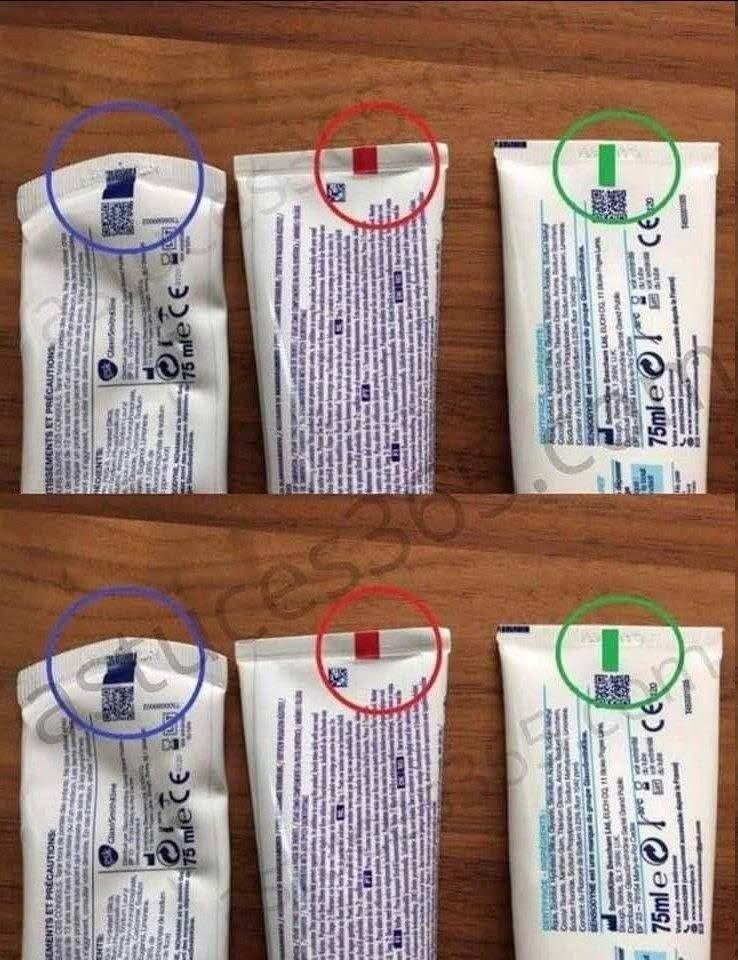
The Secret Behind the Colored Stripe on a Toothpaste Tube
Many people notice that toothpaste tubes have a colored stripe near the crimped end — red, blue, green, black, etc. There’s a common idea online that these colored bars are “chemical indicators” showing ingredients, but that’s not true. The real reason is much simpler and practical:
🟦 1. It’s a Machine‑Reading Mark
The colored stripe is used in the manufacturing and packaging process.
When toothpaste tubes are made, machines need a visual cue to know where to cut, seal, fold, and align the tube. The colored stripe acts like a barcode or guide for high‑speed production machines to detect the correct position quickly.
🟩 2. It Helps With Cutting and Sealing
The stripe tells the machine exactly where the end of the tube should be sealed and cut.
Without this mark, machines would have a harder time positioning each tube accurately at very fast speeds. The stripe makes the process efficient and precise.
🟥 3. It’s Not a Chemical Code
There’s a myth saying:
Red = contains harsh chemicals
Blue = safe ingredients
Green = natural
But this is just a myth — the stripe has nothing to do with the toothpaste’s formula, ingredients, or safety. The color choice is purely a printing and manufacturing convenience.
⚫ 4. The Color Can Be Random
Brands choose stripe colors for printing visibility or design reasons.
It might match the brand’s packaging, marketing colors, or simply be easy for machines and scanners to detect.
🧠 In Simple Terms
The colored stripe on a toothpaste tube is a manufacturing alignment mark for machines.
It makes the tube easier to cut and seal correctly during production.
It does not indicate the chemical content of the toothpaste.
