
The Importance of Healthy Sleep Posture — What You Need to Know
Good sleep is one of the foundations of overall wellness, but how you sleep matters just as much as how long you sleep. Your sleep posture — the position your body stays in while you rest — affects your spinal alignment, breathing, muscle tension, and even your energy levels during the day. Understanding healthy sleep posture can help reduce pain, improve sleep quality, and support long‑term health.
Why Sleep Posture Matters
Every part of your body — from your neck to your lower back — needs support while you sleep. Poor sleep posture can cause:
Neck and shoulder pain
Back stiffness
Headaches
Poor circulation
Snoring or breathing difficulty
When your spine is not aligned properly, your muscles strain to hold your body in uncomfortable positions. Over time, this strain can lead to persistent pain and disrupted sleep cycles.
Best Sleep Positions for a Healthy Spine
1. Sleeping on Your Back
Sleeping on your back with proper support is often considered the best overall posture. It helps evenly distribute your body weight and keeps your spine, neck, and head in a neutral position.
Tips:
Place a pillow under your knees to help relieve lower back pressure.
Use a supportive pillow for your head that doesn’t push your chin forward.
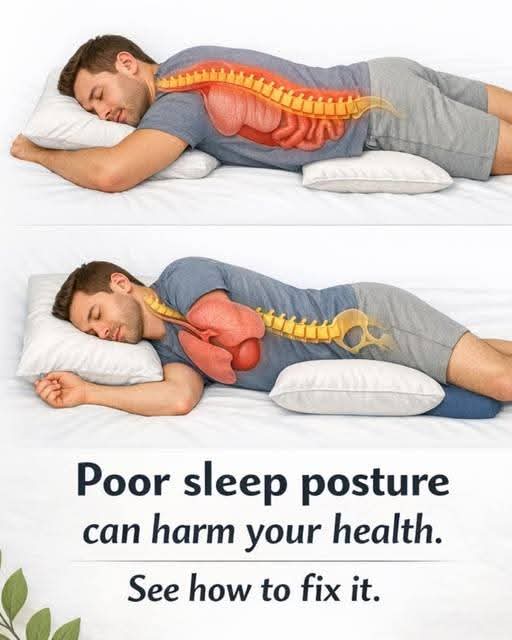
2. Sleeping on Your Side
Side sleeping is very common and can be great for reducing snoring and acid reflux. It also supports spinal alignment when done correctly.
Tips:
Use a pillow between your knees to keep hips aligned.
Choose a pillow that fills the space between your neck and shoulder.
3. Fetal Position
A slightly curled fetal position can be comfortable, especially for people with back pain. However, curling too tightly can restrict deep breathing.
Tips:
Keep your legs gently bent and avoid tucking your chin into your chest.
Place a small pillow between your legs for added support.
Positions to Avoid
Some positions can increase strain on the spine or joints:
❌ Sleeping on your stomach — this can strain your neck and lower back because your head has to twist to one side.
❌ Using very thick or very flat pillows — these can misalign your head and neck.
How Sleep Posture Affects Your Health
1. Reduces Pain
Proper sleep posture reduces stress on your spine and muscles, helping prevent stiffness and pain.
2. Improves Breathing
Good posture opens your airways and supports better breathing, which can reduce snoring and improve oxygen flow.
3. Enhances Sleep Quality
When your body is comfortable and aligned, you’re less likely to wake up during the night and more likely to fall into deep, restorative sleep.
4. Boosts Energy & Mood
Better sleep quality leads to improved daytime energy, focus, and mood.
Tips for Better Sleep Posture
✔ Choose a mattress that supports your natural spine curve (not too soft, not too firm).
✔ Keep your head and neck aligned with your spine using a suitable pillow.
✔ Be mindful of your posture during the day; good daytime posture helps nighttime alignment.
✔ Try gentle stretching before bed to relieve muscle tension.
