
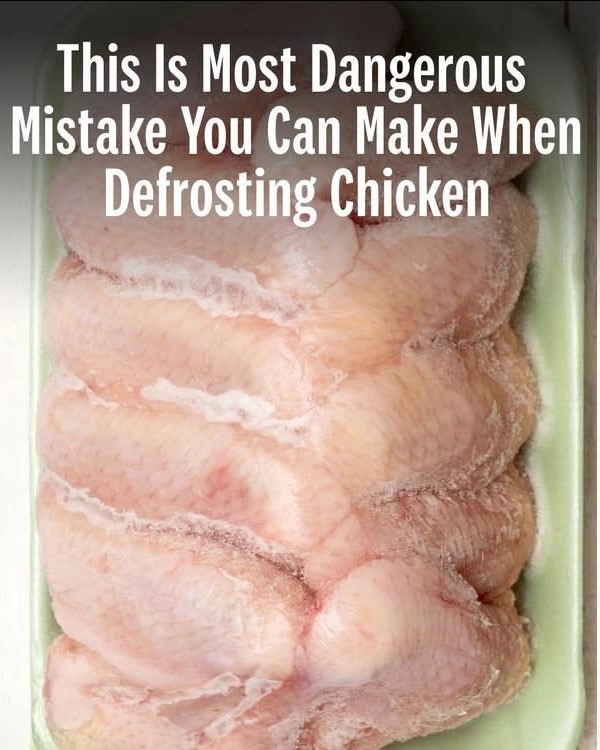
Refrigerator defrosting is the gold standard recommended by every major food safety authority in the world. It keeps the chicken at a consistently safe temperature throughout the entire thawing process, eliminating any opportunity for bacterial growth in the Danger Zone.
How to do it:
Place the chicken — still in its original packaging or inside a sealed container — on a plate or tray on the lowest shelf of your refrigerator. The plate catches any drips and prevents contamination of other foods stored below. Leave it there until fully defrosted.
How long it takes:
Chicken breasts and thighs: approximately 12 to 24 hours
A whole chicken: 24 hours per 2.5 kg (roughly 5 lbs) of weight
The big advantage: Chicken defrosted in the refrigerator can be stored there for an additional one to two days before cooking — and if plans change, it can even be safely refrozen without being cooked first, though quality will decline slightly with each freeze-thaw cycle.
The one limitation: It requires planning ahead. If you want chicken for dinner tonight, you need to have moved it from the freezer to the fridge the evening before.
✅ Method 2: Cold Water Bath — Fast and Safe When Done Correctly
When you do not have 24 hours to spare, the cold water method is the next safest and most effective option — and it is much faster than most people realize.
How to do it:
Place the chicken in a sealed, leak-proof plastic bag — this is essential to prevent water from entering the meat and to contain any bacteria-laden juices. Submerge the sealed bag in a large bowl or pot of cold tap water. Change the water every 30 minutes to keep it consistently cold and maintain a safe temperature throughout the thaw.
How long it takes:
Chicken breasts or thighs: 1 to 2 hours
A whole chicken: 2 to 3 hours, or up to 1 hour per kilogram of weight
Critical rule: Once the chicken is defrosted using the cold water method, cook it immediately. Do not store cold-water-thawed chicken in the fridge for later use.
Why it is safe: As long as the water is kept cold by regular changes, the chicken stays below the Danger Zone temperature throughout the process. The water conducts heat far more efficiently than air, which is why this method thaws chicken so much more quickly than the counter method — while actually being far safer.
✅ Method 3: In the Microwave — Only for Immediate Cooking
The microwave defrost setting provides the fastest defrosting available at home — in minutes rather than hours — and is officially recognized as a safe method by food authorities.
How to do it:
Remove all packaging and place the chicken on a microwave-safe plate or dish. Use the microwave’s dedicated defrost setting, which operates at reduced power to thaw the meat more evenly without cooking it. Follow the timing guide on your microwave for the weight of your chicken, turning and checking the meat periodically.
Critical rule: Chicken defrosted in the microwave must be cooked immediately. No exceptions. Parts of the chicken will have been warmed above safe temperatures during microwave defrosting, and those areas must be cooked right away to prevent bacterial multiplication.
The limitation: Microwave defrosting can produce uneven results — some areas partially cook while others remain icy — and can affect the final texture of the cooked chicken. It is best used for smaller, thinner cuts when time is genuinely short.
✅ Method 4: Cook From Frozen — No Defrosting Required
Many people do not realize that you can cook chicken directly from frozen without defrosting at all — safely and with excellent results — by simply adjusting the cooking time.
Cooking frozen chicken requires approximately 50 percent longer than the standard cooking time for fresh or properly defrosted chicken. The internal temperature must still reach 75°C (165°F) throughout the thickest part of the meat to be considered fully safe to eat.
This method works particularly well for chicken breasts, thighs, drumsticks, and other individual cuts in the oven, on the stovetop, or in a slow cooker. It is not recommended for large whole chickens or very thick pieces where achieving a consistently safe internal temperature throughout can be difficult.
Using a meat thermometer to verify the internal temperature is strongly recommended when cooking from frozen.
Cross-Contamination: The Hidden Danger Nobody Talks About Enough
Safe defrosting is only half of the equation. The other half is preventing the bacteria on raw chicken from spreading to other foods, surfaces, and utensils in your kitchen through cross-contamination.
Raw chicken — including the juices it releases during thawing — contains bacteria that can cause serious illness in amounts too small to see. A single drop of raw chicken juice on a cutting board, then touched by a tomato that goes directly into a salad, can be enough to cause illness.
The rules for preventing cross-contamination are simple but non-negotiable:
Always use a separate cutting board for raw chicken — one that is never used for vegetables, fruit, or any food that will be eaten without cooking
Wash your hands thoroughly with soap and warm water for at least 20 seconds immediately after handling raw chicken and before touching anything else in the kitchen
Sanitize all surfaces that raw chicken or its packaging has touched — countertops, sink, handles, faucets — with a food-safe disinfectant or a diluted bleach solution
Never rinse raw chicken under the tap — this does not remove bacteria and actively spreads contaminated water droplets across your sink and surrounding surfaces. Cooking to the correct temperature is what kills bacteria, not rinsing
Store raw chicken on the lowest shelf of the refrigerator at all times, in a sealed container or on a plate, to prevent drips from contaminating foods stored below
How to Know When Chicken Is Fully and Safely Cooked
Defrosting is only safe if the chicken is subsequently cooked to the correct internal temperature. Color, texture, and the clarity of the juices are not reliable indicators of doneness — only a meat thermometer gives you certainty.
The safe minimum internal temperature for all poultry — chicken, turkey, duck — is 75°C (165°F), measured in the thickest part of the meat, away from any bone. Bone conducts heat differently than meat and gives inaccurate readings.
At this temperature, all the harmful bacteria commonly found in raw chicken — salmonella, campylobacter, listeria — are killed. There is no need to go higher. Cooking chicken to a higher temperature does not make it safer — it only makes it drier and less enjoyable to eat.
The Signs of Chicken That Has Gone Bad
Even when defrosted correctly, chicken that has been stored too long before cooking or that was already past its best before being frozen can be unsafe to eat. Signs to watch for:
Sour, unpleasant, or ammonia-like smell — fresh raw chicken should have little to no odor. Any distinctly bad smell is a serious warning sign
Slimy or tacky texture on the surface after rinsing — fresh chicken feels slightly moist but not slippery
Gray or green discoloration — fresh raw chicken should be pink and pale. Gray coloring indicates age and bacterial activity; any green tinge is a serious sign of spoilage
Visible mold — any mold growth means the chicken must be discarded immediately, with no exceptions
When in doubt, throw it out. No meal is worth the risk of serious food poisoning.
The Bottom Line
The dangerous chicken defrosting mistake — leaving it on the counter at room temperature — is so widespread precisely because it looks harmless. The chicken seems fine. Nobody gets sick every time they do it. But the risk is very real, very serious, and completely avoidable.
The refrigerator method costs you nothing but a small amount of planning ahead. The cold water method takes under two hours and is genuinely fast and safe. The microwave method takes minutes. And cooking from frozen is a completely legitimate option that requires no defrosting at all.
