
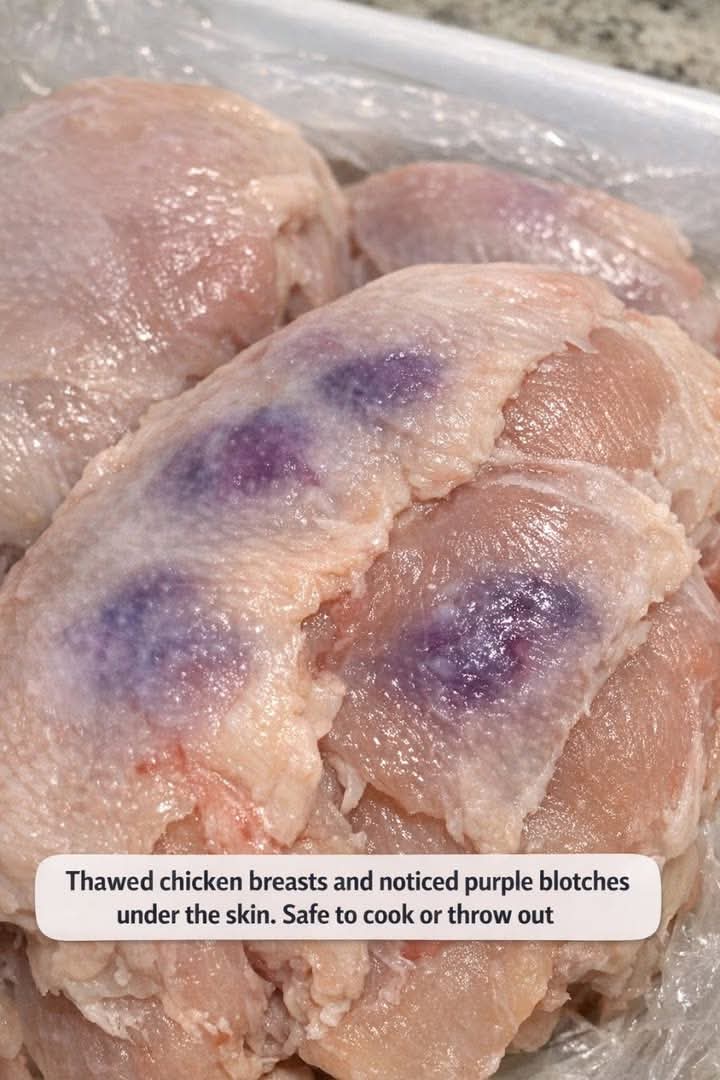
Thawed Chicken with Purple Blotches – Safe to Cook or Throw Away?
You take your chicken out of the fridge, ready to cook, and suddenly notice strange purple blotches under the skin. It may look alarming, but in most cases, there’s no need to worry.
What Causes Purple Spots on Chicken?
Purple or dark patches on chicken are usually natural and not a sign of spoilage. Common causes include:
Myoglobin: A natural protein in meat that stores oxygen and can give a purple or darker color, especially after freezing and thawing.
Bone marrow leakage: Freezing can break down cells, allowing pigments from the bones to spread into the meat.
Bruising or trapped blood: Handling during processing can cause small blood vessels to break, creating dark spots.
These changes are mostly visual and do not mean the chicken is unsafe.
Is It Safe to Eat?
In most cases, yes — it is safe to cook and eat if:
The chicken smells normal (not sour or rotten)
The texture is firm (not slimy or sticky)
There are no green or gray discolorations
It has been stored properly
Cooking the chicken thoroughly will eliminate harmful bacteria and make it safe to consume.
When Should You Throw It Away?
Do not eat the chicken if you notice:
A strong, unpleasant odor
A slimy or sticky texture
Gray, green, or unusual colors
Signs of improper storage
These are clear indicators that the chicken may be spoiled.
Can You Remove the Purple Areas?
Yes. If the appearance bothers you, you can simply cut off the purple spots before cooking. The rest of the chicken should still be fine.
