
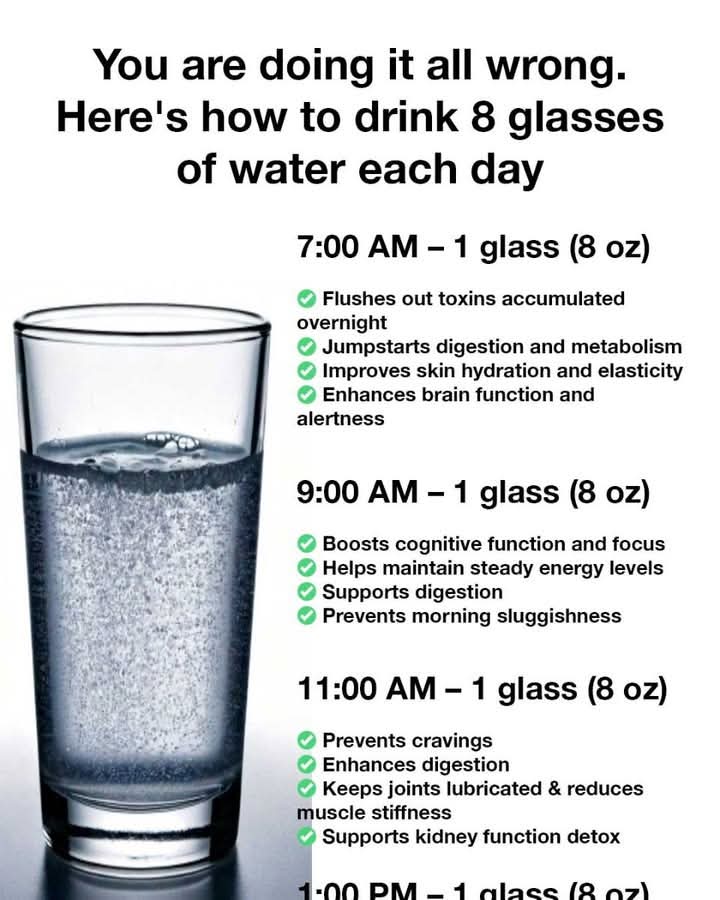
Are You Really Drinking Water the Right Way? Here’s the Truth About the “8 Glasses a Day” Rule
You’ve probably seen it everywhere: drink 8 glasses of water a day, spaced out at specific times, and you’ll unlock a long list of health benefits. From boosting brain function to “detoxing” your body, these claims sound convincing—but how much of it is actually true?
Let’s break it down.
First, staying hydrated is essential. Water plays a key role in digestion, circulation, temperature regulation, and overall energy levels. Drinking water regularly throughout the day can help you feel more alert, support your metabolism, and keep your skin looking healthy.
However, the idea that you must follow a strict schedule—like drinking a glass at 7:00 AM, 9:00 AM, and so on—is a myth. Your body doesn’t work on a fixed hydration clock. Instead, it sends you natural signals like thirst to tell you when it needs water.
Another common misconception is that drinking water “flushes out toxins.” In reality, your body already has a highly effective detox system—mainly your liver and kidneys. Water supports these organs, but it doesn’t magically remove toxins on its own.
Also, while drinking water can help reduce hunger in some cases, it’s not a guaranteed way to stop cravings or control appetite.
So what’s the best approach?
Rather than focusing on a fixed number like 8 glasses a day, aim to stay consistently hydrated. Drink when you feel thirsty, increase your intake during hot weather or physical activity, and pay attention to your body. A simple indicator of good hydration is light-colored urine.
