
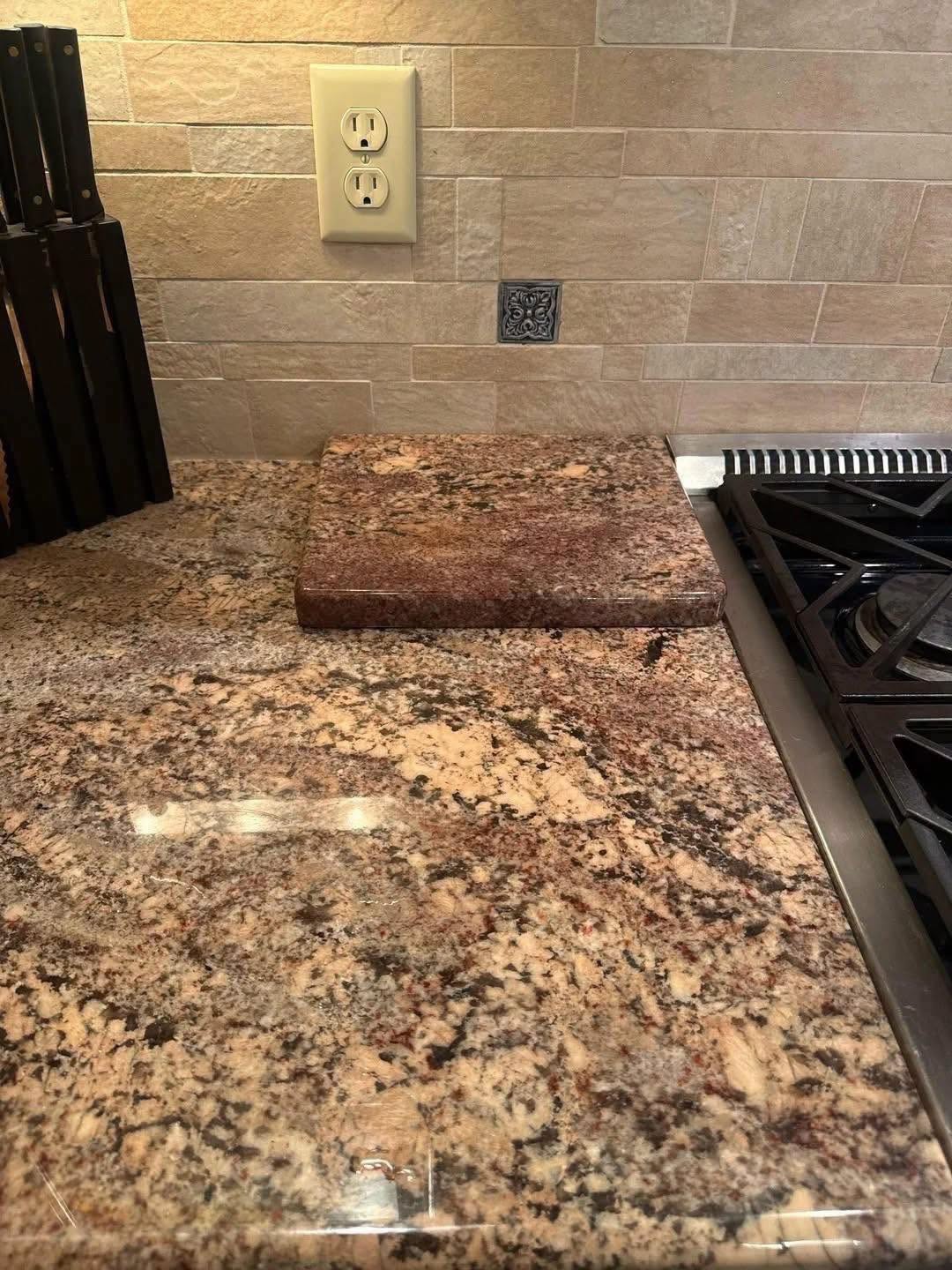
Granite’s suitability as a heat pad isn’t accidental — it comes directly from how the stone was formed. Granite is an igneous rock, created deep within the earth under intense heat and pressure over millions of years. The same geological forces that formed it make it extraordinarily resistant to the comparatively mild heat of a kitchen stove.
Unlike laminate, granite will not scorch, melt, blister, or discolor from contact with hot cookware. Unlike wood or bamboo trivets, it won’t warp, crack, or deteriorate over time. Unlike silicone trivets, it doesn’t shift or slide when a heavy pot is placed on it. It simply absorbs the heat and dissipates it slowly, safely, and completely — every single time.
Beyond heat resistance, granite also offers scratch resistance (rating 7 on the Mohs hardness scale), stain resistance when properly sealed, and a natural beauty that actually improves the look of the kitchen rather than cluttering the counter with utilitarian accessories.
Even Granite Countertops Themselves Can Benefit From This Principle
As granite became more affordable and began replacing laminate as the countertop standard throughout the 1990s and 2000s, you might assume the heat pad became obsolete. But there’s an important nuance here that even many granite countertop owners don’t fully appreciate.
Granite is heat resistant — but it is not entirely immune to heat damage. The specific vulnerability is called thermal shock: the rapid temperature differential between a very hot object (a 400°F cast-iron skillet, for example) and the comparatively cool surface of a granite countertop causes rapid, uneven expansion in the stone. Over time and with repeated exposure, this can create microscopic cracks in the surface that gradually worsen and may eventually become visible.
Additionally, most granite countertops are sealed with resin-based sealants that can be damaged or discolored by sustained exposure to very high heat — even if the stone itself is unaffected. And the heat can transfer into the cabinet or substructure below, potentially warping adhesives or wood over time.
This is why countertop installers and stone care professionals consistently advise using trivets or heat pads even with granite countertops. The built-in granite slab, used as a dedicated heat landing zone while the surrounding countertop is protected, was ahead of its time in its understanding of these dynamics.
What Younger Homeowners Are Doing With These Slabs Today
If you’ve inherited one of these built-in granite heat pads in an older home, you have several options — and removal is far from the obvious choice.
Keep it and use it as intended. Place all hot items from the stove or oven directly on the granite pad. It does exactly what it was designed to do, and it does it better than any trivet or silicone mat you could buy.
Use it as a pastry and dough surface. The natural cool temperature of a granite or marble slab makes it an exceptional surface for working with pastry dough, chocolate tempering, and other temperature-sensitive culinary tasks. Professional pastry chefs prize marble and granite work surfaces for exactly this reason.
Keep it as a dedicated cutting area. Granite’s hardness makes it scratch-resistant under normal cutting use. Many homeowners designate the built-in slab as a specific zone for food prep tasks that benefit from a stone surface.
Leave it. Many interior designers and renovation specialists now advise against removing these features, pointing out that they add character, tell a story about the home’s history, and remain genuinely functional in ways that modern kitchens often lack.
A Design Feature Worth Appreciating
There’s something worth pausing on in the story of the built-in granite heat pad. It’s a design feature that arose not from aesthetic trend-chasing or marketing, but from a genuine, practical problem — and solved it with an elegant, durable, zero-maintenance solution that has now lasted for decades in the homes it was built into.
