
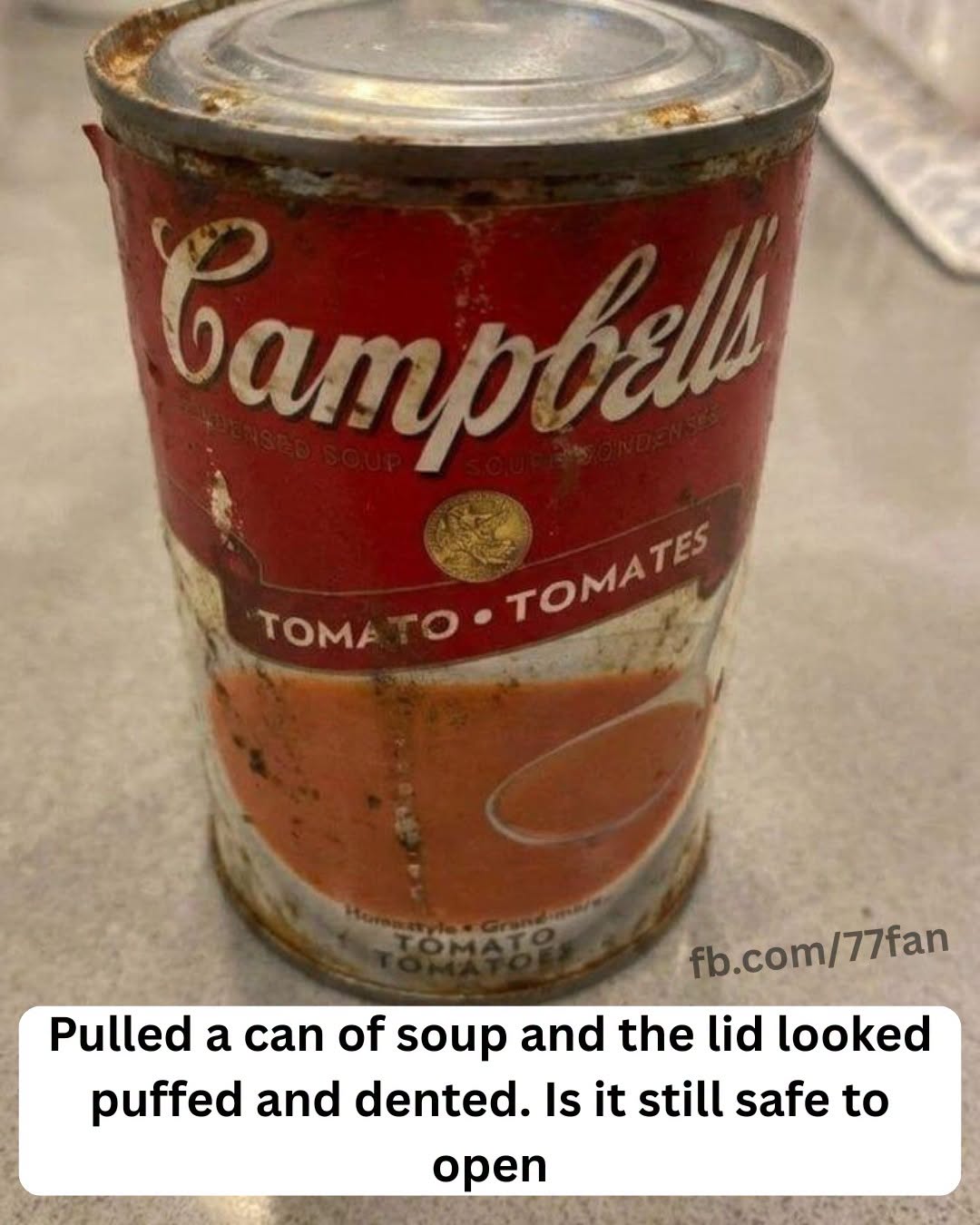
One reason swollen cans are taken so seriously is their potential connection to botulism.
Botulism is a rare but potentially life-threatening illness caused by toxins produced by certain bacteria under low-oxygen conditions.
Because canned foods provide an oxygen-free environment, improper processing can occasionally create conditions where these bacteria thrive.
Although botulism is uncommon, its consequences can be severe, which is why food safety authorities recommend treating swollen cans with extreme caution.
Warning Signs Beyond a Puffed Lid
A swollen lid isn’t the only indicator that canned food may be unsafe.
Watch for:
* Bulging ends or sides
* Leaks around seams
* Rust that compromises the metal
* Deep dents near the seal
* Cracks or punctures
* Unusual odors when opened
* Spurting liquid upon opening
* Foam or bubbling not expected for the product
Any of these signs should raise concerns about the food’s safety.
What To Do If You Find a Bulging Can
### Do Not Open It
Opening a swollen can may release contaminated contents or aerosols.
### Avoid Tasting the Food
Never taste food to determine whether it is safe.
Even a tiny amount of contaminated food can pose a health risk.
### Handle Carefully
Minimize direct contact with leaking contents if the can is already damaged.
### Dispose of It Properly
Follow local disposal guidelines and place the can where children and animals cannot access it.
### Clean Contaminated Surfaces
If leakage occurs, thoroughly clean and disinfect any surfaces that may have been exposed.
## Can Cooking Make It Safe?
Many people assume that boiling or reheating food will eliminate any danger.
Unfortunately, food safety is not always that simple.
While heat can destroy many bacteria, certain toxins produced before cooking may still present risks.
For that reason, experts recommend discarding suspicious canned foods rather than attempting to salvage them.
How to Store Canned Foods Safely
Proper storage helps maximize both quality and safety.
### Keep Cans in a Cool, Dry Place
Avoid areas exposed to excessive heat or moisture.
### Rotate Inventory
Use older products first and regularly check expiration or best-by dates.
### Inspect Before Use
Examine cans for dents, rust, leaks, or swelling before opening.
### Avoid Severe Temperature Changes
Repeated heating and cooling can affect packaging integrity over time.
Common Myths About Swollen Cans
### “It’s Only Slightly Puffed”
Even minor swelling should be taken seriously.
### “It Smells Fine”
Some dangerous contaminants do not produce noticeable odors.
### “The Can Isn’t Expired”
A product can become unsafe before its printed date if contamination occurs.
### “Cooking Will Fix Everything”
Certain food safety hazards cannot be eliminated through ordinary cooking.
Other Packaging Warning Signs
While cans are often discussed, similar concerns apply to other food containers.
Be cautious if you notice:
* Vacuum-sealed packages that have inflated unexpectedly
* Jars with lids that pop upward
* Containers leaking liquid
* Packages producing unusual odors
These can all indicate spoilage or contamination.
Frequently Asked Questions
### Is a dented can always dangerous?
Not necessarily. Small dents on the body of the can may not affect safety. However, deep dents near seams or seals can compromise the container.
### Can a swollen can explode?
Severely pressurized containers may rupture if handled improperly, though this is relatively uncommon.
### Are all bulging cans contaminated?
Not every swollen can contains dangerous bacteria, but there is no reliable way for consumers to determine this safely at home.
### Should I return a swollen can to the store?
Many retailers will replace defective products. Contact the store or manufacturer for guidance.
Final Thoughts
A puffed or swollen can may seem like a minor packaging defect, but it can be an important warning sign that should never be ignored. Bulging lids, leaking seams, unusual odors, and visible damage can indicate contamination or spoilage that may pose health risks.
When it comes to canned foods, the safest approach is simple: if a container looks suspicious, don’t open it and don’t eat its contents. Replacing a single can is far less costly than dealing with a serious foodborne illness.
A few seconds spent inspecting your pantry items can make a big difference in protecting yourself and your family.
