
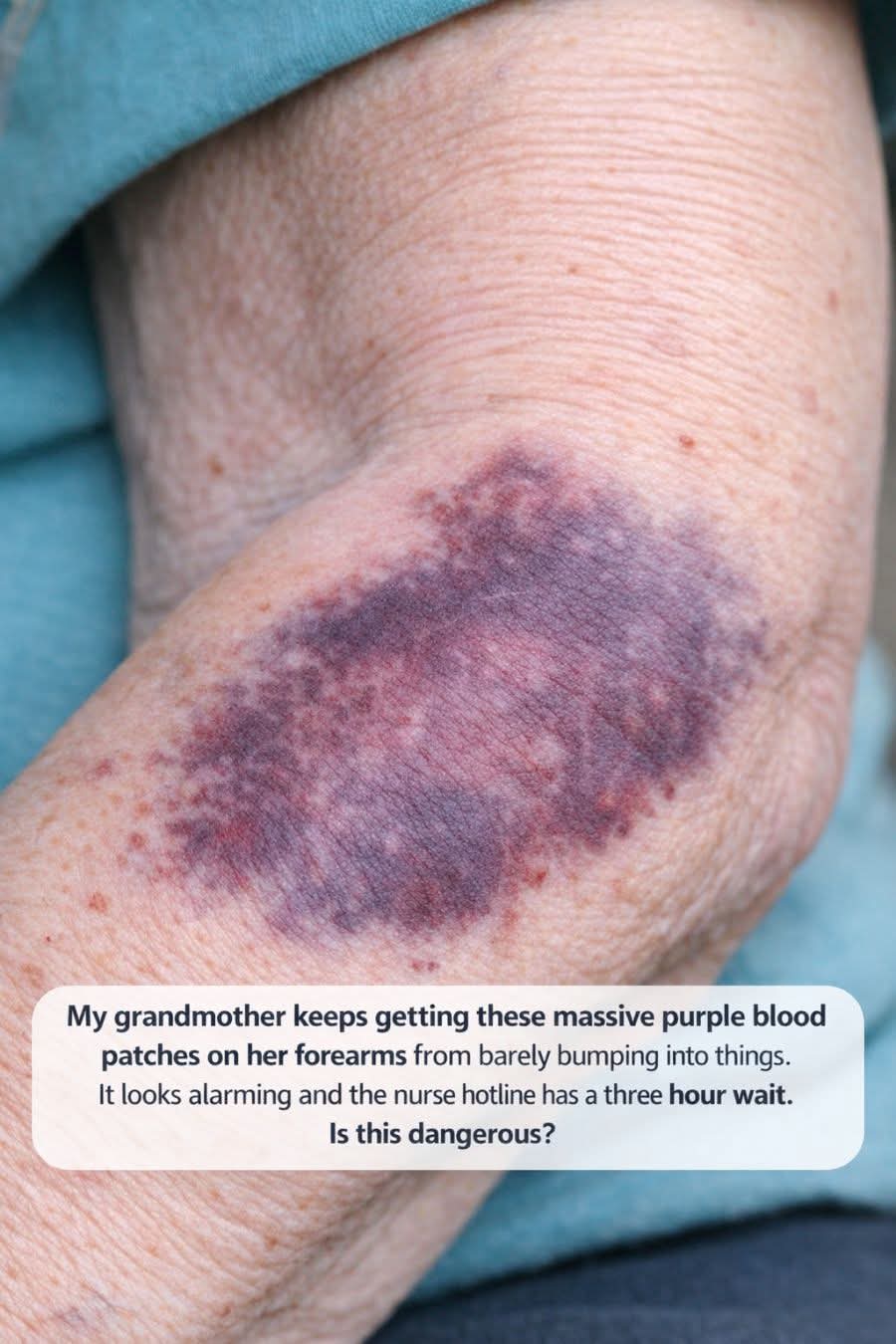
Why Do Older Adults Get Large Purple Bruises Easily?
Many people notice that elderly individuals, especially on the forearms and hands, develop large purple patches after even minor bumps. This condition is commonly known as Purpura, and it is usually linked to natural changes in the skin and blood vessels with age.
As the body gets older, the skin becomes thinner and loses some of its protective fat layer. At the same time, small blood vessels (capillaries) become more fragile. Because of this, even a light knock against a surface can cause blood to leak under the skin, leading to noticeable bruising.
Certain factors can increase the likelihood of these bruises, including the use of blood-thinning medications such as aspirin, long-term sun exposure, and deficiencies in vitamins like vitamin C or vitamin K. In most cases, these bruises are harmless and will gradually fade over a period of days or weeks without treatment.
However, it is important to pay attention to warning signs. If bruises appear without any clear cause, grow unusually large, become painful, or are accompanied by bleeding from other areas such as the gums or nose, medical evaluation is recommended. These symptoms may indicate an underlying issue that needs attention.
To reduce the risk of bruising, maintaining a balanced diet rich in essential vitamins, protecting the skin from injury, and reviewing medications with a healthcare provider can be helpful.
