
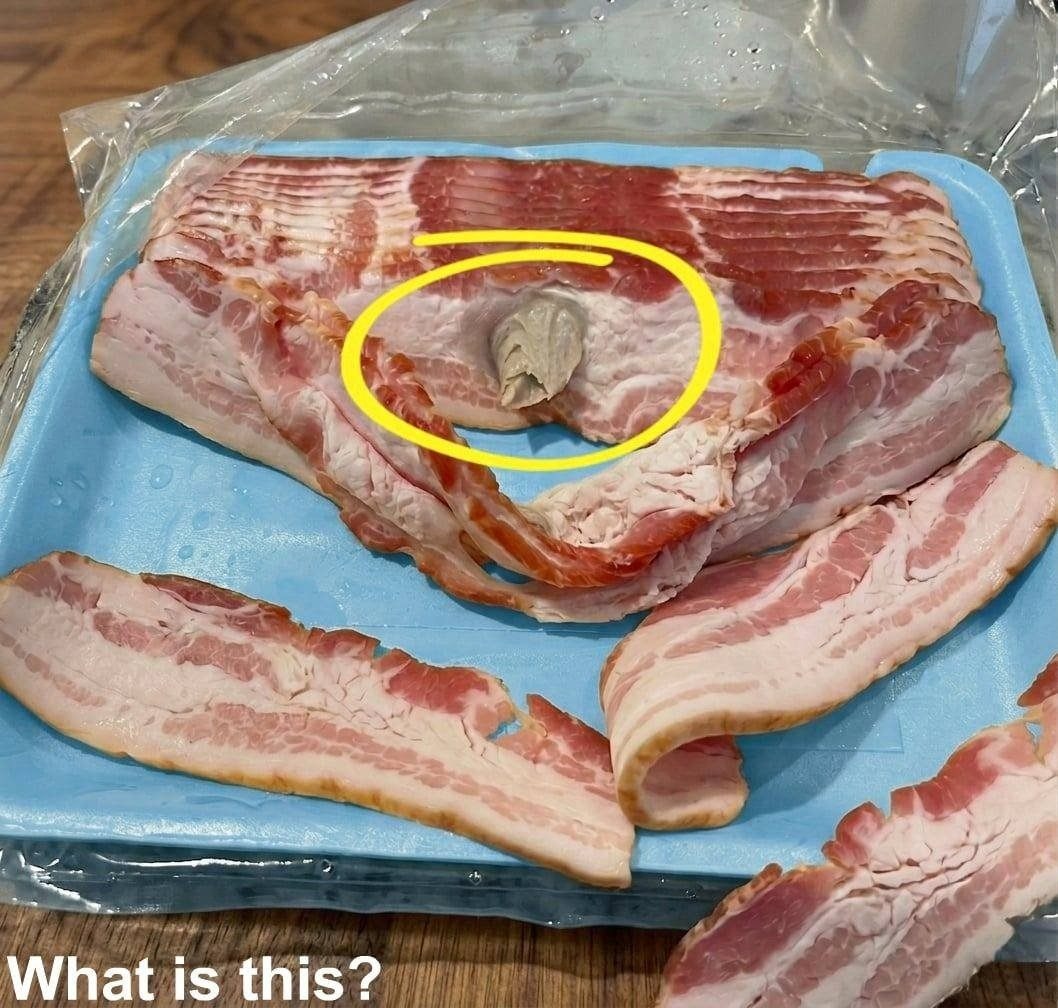
While many irregularities are harmless, certain warning signs should never be ignored.
Discard bacon immediately if you notice:
* A sour or rotten smell
* Sticky or slimy surfaces
* Fuzzy mold growth
* Green, blue, or black discoloration spreading across the meat
* Excessive stickiness after opening
* Signs of spoilage combined with an unusual lump
Food safety experts recommend trusting your senses. If the bacon smells bad or feels slimy, it is safer to throw it away.
How to Tell If Bacon Has Gone Bad
Fresh bacon should have:
* A clean, smoky aroma
* Pink meat with white fat
* A slightly moist but not slimy texture
* No visible mold
Spoiled bacon often develops:
* Sour odors
* Sticky surfaces
* Unusual color changes
* Mold growth
* Excessive moisture buildup
If more than one spoilage sign is present, the product should not be consumed.
Other Food Oddities That Often Cause Concern
Bacon isn’t the only food that can look strange while remaining safe to eat.
Green Rings Around Hard-Boiled Eggs
A green-gray ring around the yolk is usually caused by overcooking and is completely harmless.
White Strands in Chicken
Many people mistake connective tissue for parasites. In reality, these white strands are usually tendons and collagen fibers.
Brown-Spotted Bananas
Brown spots often indicate ripeness rather than spoilage. In fact, many people prefer bananas at this stage because they are sweeter.
Mold on Hard Cheese
Unlike soft foods, hard cheeses can often be saved by cutting away the moldy section and a generous area around it.
Smart Food Safety Tips
To reduce waste and improve kitchen safety:
Label Leftovers
Mark containers with preparation dates so you know how long food has been stored.
Store Meat Correctly
Keep raw meat on the lowest shelf of your refrigerator to prevent contamination from drips.
Follow Expiration Guidelines
Always check use-by dates and consume products within recommended timeframes.
Trust Your Senses
Sight, smell, and texture are often the best indicators of freshness.
The Bottom Line
Finding a strange lump in your bacon can be surprising, but it doesn’t automatically mean the product is unsafe. Many odd-looking spots are simply natural fat deposits, connective tissue, or harmless processing variations.
The real danger signs are spoilage indicators such as foul odors, slime, mold, or widespread discoloration. By learning to recognize the difference, you can save money, reduce food waste, and feel more confident about the food you serve.
The next time you discover an unusual lump in your bacon, take a closer look before tossing the entire package—you may find that your breakfast is still perfectly safe to enjoy.
