
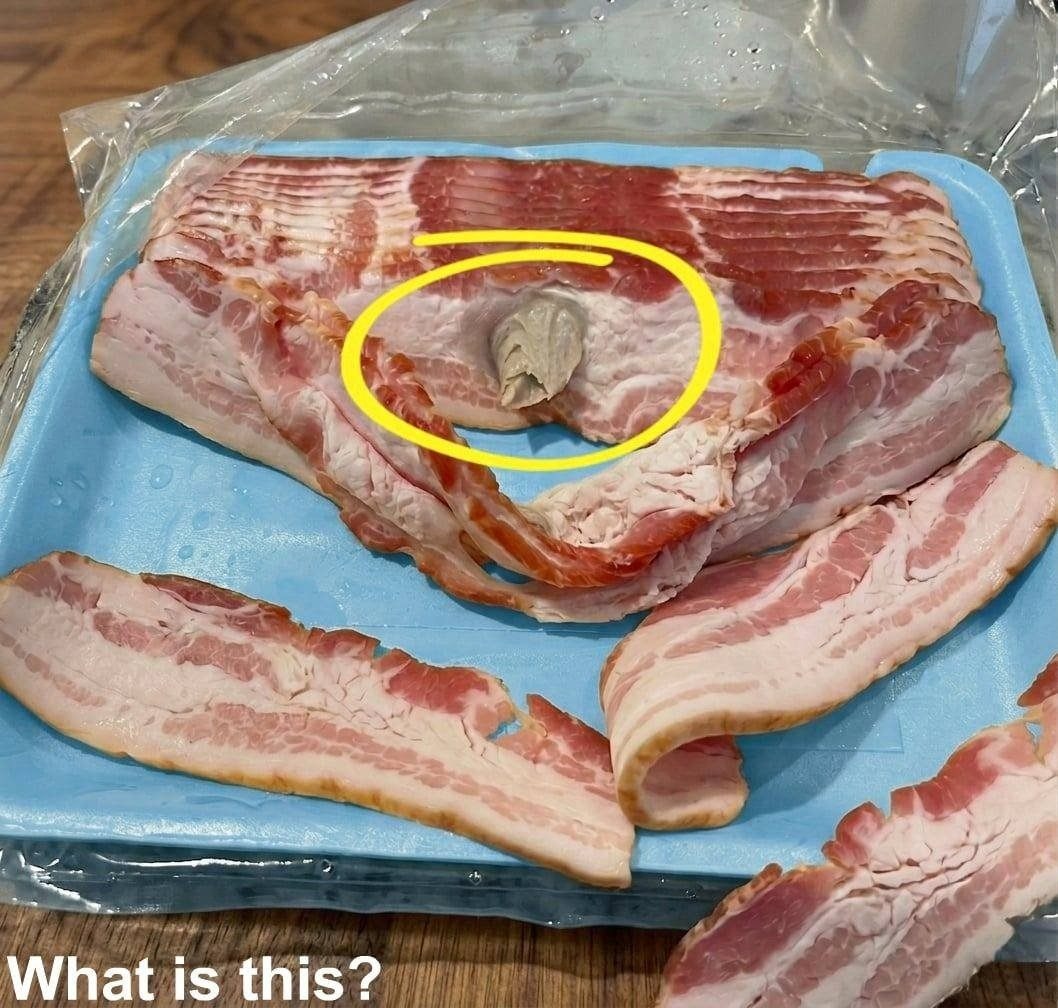
Don’t Panic Before You Toss the Package
Few things can ruin breakfast faster than opening a package of bacon and spotting something that doesn’t look right. Maybe it’s a hard lump, a strange discoloration, or an odd-looking spot hidden between the slices.
Your first reaction might be to throw the entire package away. But before you do, it’s worth understanding that not every unusual-looking piece of bacon is a sign of spoilage.
In many cases, these strange lumps are simply natural variations that occur during processing and are completely harmless. Knowing the difference between a harmless irregularity and actual spoilage can help you avoid unnecessary food waste while keeping your family safe.
Why Does Bacon Sometimes Have Strange Lumps?
Bacon comes from pork belly, which naturally contains layers of muscle, fat, connective tissue, and other biological structures. Because animals are not perfectly uniform, occasional irregularities can appear in packaged bacon.
These unusual spots can look alarming, especially if you’ve never seen them before, but they are often harmless.
Common Causes of Unusual Lumps in Bacon
1. Concentrated Fat Deposits
One of the most common explanations is a dense pocket of fat that cured differently from the surrounding meat.
During smoking and curing, some fat deposits can become firmer, darker, or slightly discolored. They may feel waxy or harder than the rest of the bacon.
In most cases, these spots are perfectly safe to eat, though some people prefer to trim them away because of their texture.
2. Connective Tissue or Glands
Animals naturally have glands and connective tissues throughout their bodies. While processing removes most of these structures, small remnants can occasionally remain.
These may appear as firm, pale, grayish, or tan-colored nodules embedded within the meat or fat.
Although they may not be visually appealing, they are generally not harmful. If they bother you, simply cut them out before cooking.
3. Blood Spots or Bruising
Small blood vessels can occasionally rupture during processing, creating dark red, brown, or purple spots within the bacon.
These marks are similar to bruises and are typically harmless once cooked thoroughly.
When a Lump Could Be a Problem
