
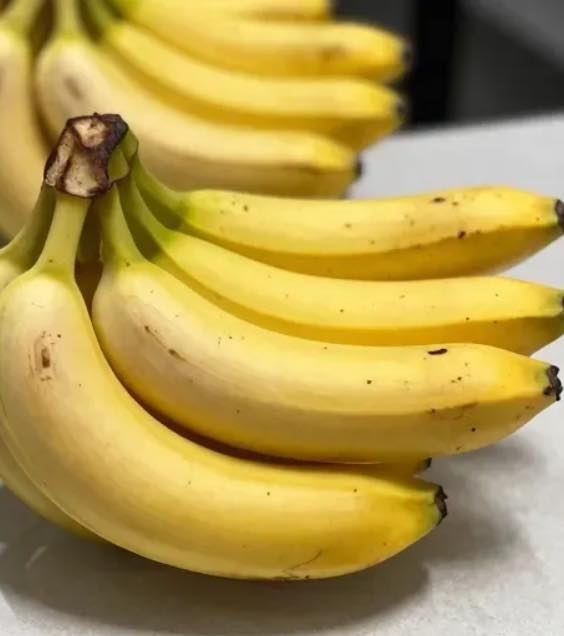
Many people assume that a banana is a banana — but the ripeness stage actually transforms its entire nutritional profile, and choosing the right one depends on what your body needs.
Green, unripe bananas are high in resistant starch and prebiotic fiber — the kind of fiber that feeds the beneficial bacteria in your gut. This makes them excellent for digestive health, gut microbiome support, immune function, and even mental health through the gut-brain connection. They have a lower sugar content and a lower glycemic impact. The tradeoff is that they are starchier and less sweet, which many people find less palatable.
Yellow, ripe bananas are easier to digest, sweeter, and provide more readily available antioxidants. Their resistant starch has largely converted into simpler sugars, making them a quick and easily absorbed energy source — ideal before exercise.
Brown, spotted bananas contain the highest concentration of antioxidants and the most sugar. They are the sweetest and softest stage, and while their antioxidant content is at its peak, their impact on blood sugar is also at its highest. These are best used in cooking and baking.
Myth 5: Bananas Prevent Muscle Cramps
Bananas have long been associated with preventing and stopping muscle cramps because of their potassium content — and athletes around the world eat them before and after workouts for exactly this reason. But the science behind this popular belief is more complicated than most people realize.
While bananas do provide a meaningful amount of potassium — around 10 percent of the recommended daily value in a medium banana — research suggests that hydration status and sodium levels actually play a more significant role in preventing muscle cramps than potassium alone. Bananas are genuinely healthy and provide real nutritional value for athletes, but they are not the magical cramp-prevention tool they are often claimed to be.
If you are experiencing frequent muscle cramps, addressing your hydration and overall electrolyte balance — including magnesium, sodium, and calcium alongside potassium — is a more effective and complete approach.
Myth 6: Bananas Are Fattening and Should Be Avoided on a Diet
This myth is directly tied to the low-carb and keto diet movements, both of which categorize bananas as forbidden due to their carbohydrate content. But labeling any whole, unprocessed fruit as “fattening” is an oversimplification that ignores how nutrition actually works.
A medium banana contains just over 100 calories. It is nutrient-dense, filling, and packed with vitamins, minerals, and fiber. Its combination of fiber and resistant starch has actually been shown to support weight management by increasing feelings of fullness, reducing appetite, and helping regulate blood sugar.
For most people on most dietary approaches — outside of strict ketogenic diets — bananas fit comfortably and beneficially into a healthy eating pattern. Avoiding them out of fear of carbohydrates means missing out on significant nutritional benefits for a reason that does not hold up to scientific scrutiny.
Myth 7: Bananas Cause Constipation
This is another long-running myth that has very little basis in evidence for most people. The confusion likely arose from the fact that unripe, green bananas — which are high in resistant starch — can occasionally contribute to constipation in some individuals when eaten in large quantities.
Ripe bananas, on the other hand, actually support healthy digestion. They contain both soluble fiber, which adds bulk to stools and promotes regularity, and prebiotic compounds that feed beneficial gut bacteria and support overall digestive function. Ripe bananas have traditionally been recommended as part of the BRAT diet — bananas, rice, applesauce, and toast — specifically for soothing digestive upset and diarrhea, which is the opposite of causing constipation.
What Bananas Actually Give Your Body
Despite all the myths and fear, bananas are genuinely one of the most nutritious, convenient, and affordable foods available. A single medium banana provides:
Potassium — vital for heart health, blood pressure regulation, nerve function, and muscle contraction
Vitamin B6 — essential for brain function, mood regulation, and immune support
Vitamin C — a powerful antioxidant that supports the immune system and skin health
Dietary fiber — supports digestion, gut health, and feelings of fullness
Magnesium — important for bone health, muscle relaxation, and energy production
Antioxidants — protect cells from oxidative damage and reduce inflammation
Natural energy — fast-acting carbohydrates make bananas one of the best natural pre-workout foods available
All of this in a perfectly portioned, naturally packaged, 100-calorie snack that requires zero preparation.
The Bottom Line
Bananas are not the enemy. They are not fattening, they do not cause diabetes, they are not off-limits for people managing blood sugar, and they do not cause constipation. These are myths born from diet culture, oversimplification, and the demonization of carbohydrates — not from science.
The truth is that bananas are one of nature’s most complete, convenient, and underrated foods. Whether you choose a green one for its prebiotic benefits, a yellow one for energy before a workout, or a spotted one for its antioxidant punch, you are making a genuinely good choice for your health.
