
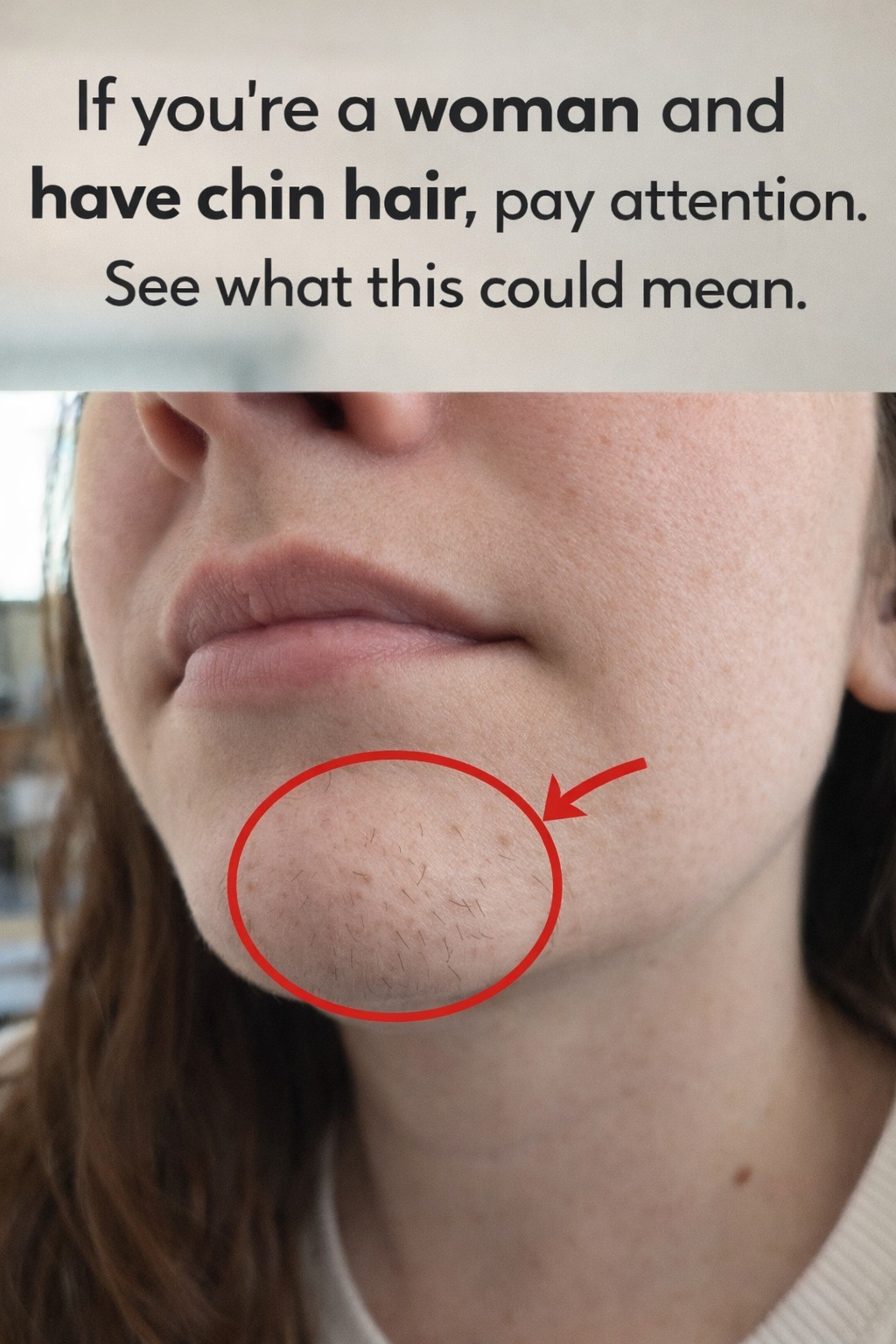
Sometimes the answer is simply in your DNA. Chin hair can be a completely inherited trait, passed down through generations. If your mother, grandmother, or aunts had noticeable facial hair, there is a good chance you will too — often appearing at around the same age they first noticed it.
In this case, the hair growth is not a sign of any health problem. It is simply a genetic characteristic, just like your eye color or skin tone. Some ethnic backgrounds also naturally produce more body and facial hair than others, which is entirely normal.
5. Cushing’s Syndrome
A less common but important cause of excess facial hair in women is Cushing’s syndrome — a condition caused by prolonged exposure to high levels of cortisol, the body’s main stress hormone. This can happen naturally when the adrenal glands produce too much cortisol, or as a side effect of certain steroid medications.
Along with chin hair, symptoms of Cushing’s syndrome include unexplained weight gain (especially around the abdomen and face), stretch marks, fatigue, and high blood pressure. If you experience several of these symptoms together, it is important to consult a doctor.
6. Certain Medications
Some medications are known to stimulate excess hair growth as a side effect. These include anabolic steroids, testosterone therapy, minoxidil, cyclosporine, danazol, and certain anti-seizure medications. If your chin hair appeared after starting a new medication, that connection may be worth discussing with your prescribing doctor.
When Should You See a Doctor?
A few stray chin hairs are usually nothing to worry about — especially if they appear gradually with age or run in your family. However, you should make an appointment with your doctor if:
The hair growth appeared suddenly or is increasing rapidly
You are also experiencing irregular or missed periods
You have unexplained weight gain, especially around the abdomen
You notice acne, hair thinning on the scalp, or a deeper voice alongside the facial hair
The hair is very thick, dark, and widespread across the face or body
These signs together can point to a hormonal condition that deserves proper evaluation and treatment. A doctor can run blood tests to check your androgen and estrogen levels and recommend the right course of action.
How to Manage Chin Hair
If the hair growth is not linked to a medical condition, there are several ways to manage it:
Temporary options:
Plucking — quick and effective for a few stray hairs
Shaving — fast but can sometimes cause irritation or ingrown hairs
Waxing — removes larger areas but can be painful and may cause skin irritation
Threading — precise and gentle, great for chin and upper lip areas
Longer-lasting options:
Laser hair removal — reduces hair growth significantly over multiple sessions
Electrolysis — the only method currently considered permanent
Medical treatments (when caused by a hormonal condition):
Birth control pills can help balance hormone levels by reducing androgen production
Prescription creams can slow hair growth
Treating the underlying condition — such as PCOS or Cushing’s syndrome — often reduces the hair growth naturally over time
The Bottom Line
Chin hair in women is more common than society lets on — and in most cases, it is completely normal. It becomes a health signal worth paying attention to when it appears suddenly, grows rapidly, or comes with other symptoms like irregular periods, weight gain, or acne.
Your body is always communicating with you. A few extra hairs might just be genetics or age — but they could also be the first clue that your hormones need some attention. Either way, now you know what to look for.
