
[adinserter block=”3″]
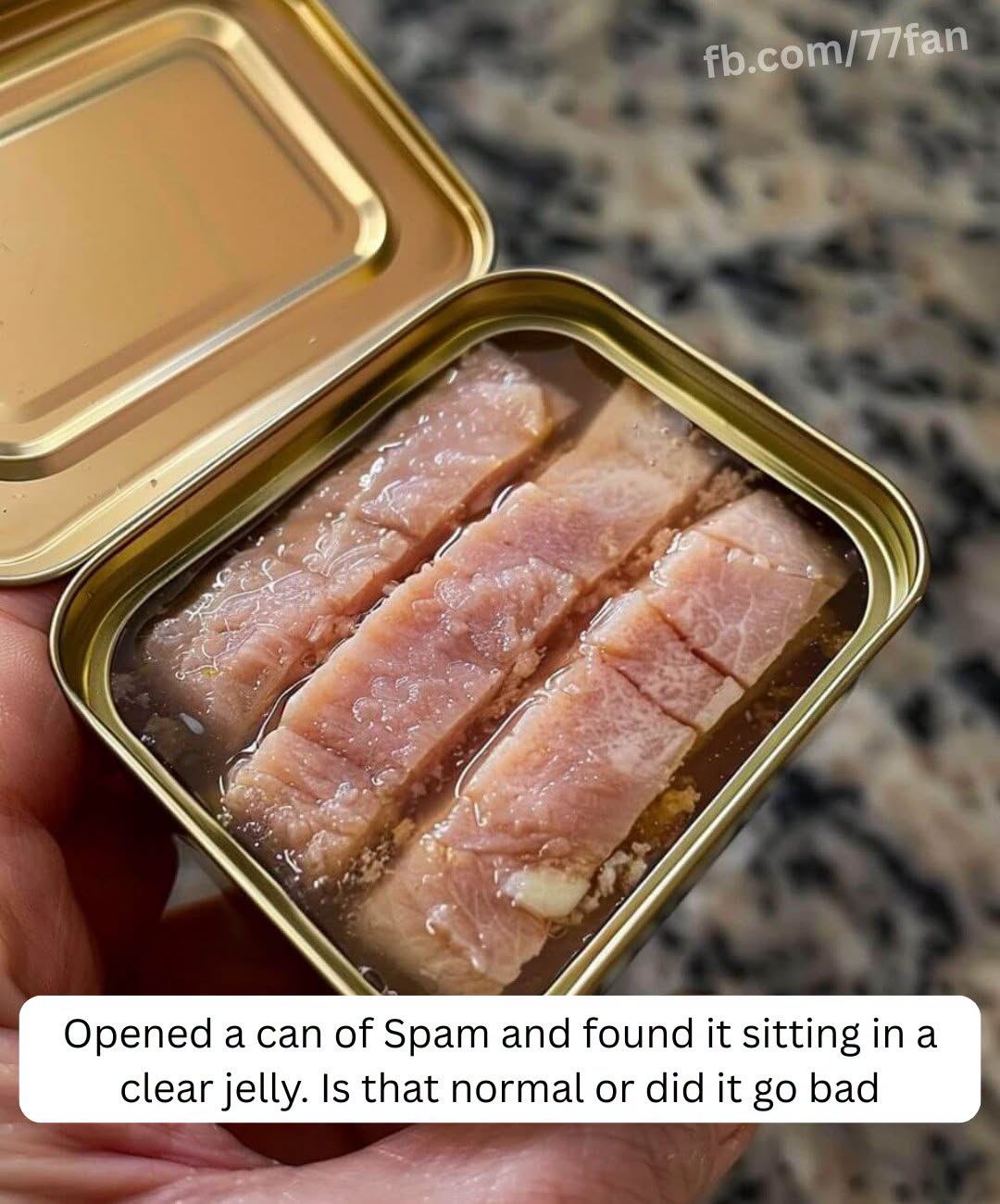
While the jelly itself is usually harmless, there are situations where caution is warranted.
Discard canned meat if you notice:
- A swollen or bulging can
- Leaking contents
- Rust damage affecting the seal
- A foul or rotten odor
- Unusual discoloration
- Mold growth
These signs may indicate spoilage or contamination.
Why Some People Remove the Jelly
Even though it’s generally safe, not everyone enjoys the texture.
Common reasons include:
- Personal preference
- Appearance
- Texture concerns
- Recipe requirements
Some people simply rinse it away before cooking.
Others leave it intact because it can add moisture and flavor.
Does the Jelly Affect Taste?
Usually, the flavor impact is minimal.
The jelly often carries a mild savory taste because it contains dissolved meat juices and proteins.
In cooked dishes, many people barely notice it.
Popular Ways to Use Canned Luncheon Meat
This pantry staple remains popular because of its versatility.
Common uses include:
- Breakfast skillets
- Fried rice
- Sandwiches
- Omelets
- Stir-fries
- Pasta dishes
- Grilled slices
- Breakfast burritos
Cooking often changes the texture enough that the jelly becomes unnoticeable.
[adinserter block=”4″]
Storage Tips After Opening
Once opened, canned meat should be handled like any other cooked meat product.
Transfer to a Container
Do not store opened contents in the original can.
Refrigerate Promptly
Place leftovers in an airtight container and refrigerate.
Consume Within a Few Days
For best quality and safety, use refrigerated leftovers promptly.
Common Myths About the Jelly
Myth: The Jelly Means the Meat Has Spoiled
False.
The gel is usually a normal result of processing and cooling.
Myth: It’s Artificial Filler
Not necessarily.
Most of the gel comes from natural proteins and cooking juices.
Myth: It Contains Dangerous Chemicals
The presence of gel alone does not indicate anything harmful.
Myth: You Must Remove It Before Eating
There is generally no requirement to remove it if the product is fresh and properly stored.
Frequently Asked Questions
Why does the jelly disappear when heated?
Heat causes gelatin to liquefy, which is why it often melts during cooking.
Is the jelly fat?
Partially. It may contain small amounts of fat, but it also includes water, proteins, and gelatin.
Can I cook with it?
Yes. Many recipes use the entire contents of the can.
Why is it firmer in the refrigerator?
Cold temperatures cause gelatin to solidify more effectively.
[adinserter block=”5″]