
[adinserter block=”3″]
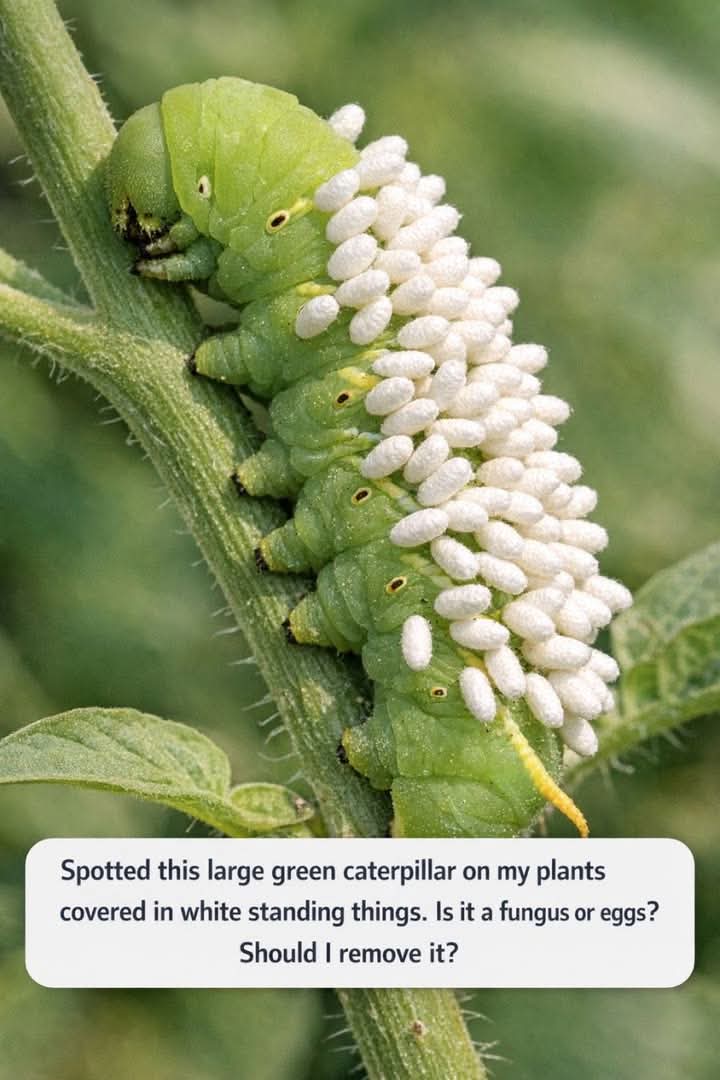
At first glance, it looks like something straight out of a science-fiction movie. A large green caterpillar crawling across a plant, covered in dozens of strange white structures, can easily leave gardeners shocked and concerned. Many people assume the caterpillar has been infected by a fungus, attacked by a disease, or covered in eggs from another insect. The reality, however, is far more fascinating and reveals one of nature’s most extraordinary survival strategies.
The caterpillar is most often a hornworm, a common garden pest known for feeding on tomato plants, peppers, eggplants, and other crops. These caterpillars are famous for their enormous appetites and can strip leaves from plants in a surprisingly short amount of time. Because of the damage they cause, gardeners frequently search for ways to eliminate them. Yet when a hornworm is found covered in small white capsules, the situation has already changed dramatically.
Those white structures are actually cocoons created by parasitic wasps. Earlier in the caterpillar’s life, a female wasp deposited her eggs inside the caterpillar’s body. The caterpillar continued eating and growing, completely unaware of what was happening inside it. As the wasp larvae developed, they fed on the caterpillar’s internal fluids and tissues while carefully avoiding vital organs that would kill the host too quickly.
After reaching maturity, the larvae emerged from the caterpillar and immediately spun silky white cocoons on its outer surface. These cocoons are what people usually mistake for eggs. Inside each cocoon, a young wasp undergoes its transformation into an adult. Over time, dozens of tiny wasps will emerge and fly away to continue the cycle.
One of the most surprising aspects of this process is that the caterpillar often remains alive even after the cocoons appear. It may continue to move slowly around the plant, although it usually stops feeding and becomes much less active. In some cases, the parasitized caterpillar appears to guard the cocoons, protecting them from predators until the adult wasps emerge. Scientists continue to study this unusual behavior, which demonstrates the complex interactions that exist in the natural world.
[adinserter block=”4″]
While the sight may seem disturbing, gardeners are generally encouraged to leave these caterpillars alone. The tiny wasps are considered highly beneficial insects because they naturally control populations of destructive caterpillars. By reducing the number of plant-eating pests, they help maintain a healthier garden ecosystem without the need for chemical pesticides.
Nature has developed countless methods for keeping populations balanced, and this is one of the most remarkable examples. What appears to be a sick or infected caterpillar is actually part of an intricate biological process that has evolved over millions of years. Every white cocoon represents a future wasp that will help protect plants from future infestations.
The next time you discover a large green caterpillar covered with white capsules, take a closer look before removing it. Rather than a sign of disease or danger, you may be witnessing one of nature’s most effective forms of pest control in action. It is a powerful reminder that even the smallest creatures play an important role in maintaining the delicate balance of the environment.
For many gardeners, this unexpected discovery becomes a memorable lesson about the hidden world thriving among leaves and stems. What initially appears strange or alarming often turns out to be a fascinating example of how nature solves its own problems. The caterpillar, the wasps, and the plants are all connected in a complex cycle that has been unfolding long before humans ever planted their first gardens. Understanding these relationships not only helps gardeners make better decisions but also offers a deeper appreciation for the incredible diversity of life that exists all around us.
Every garden tells a story, and a caterpillar covered in white cocoons may be one of the most extraordinary chapters. It is a scene that combines survival, adaptation, and the delicate balance of predator and prey. Although it may look unusual, it is actually a sign that nature is working exactly as intended.
[adinserter block=”5″]