
[adinserter block=”3″]
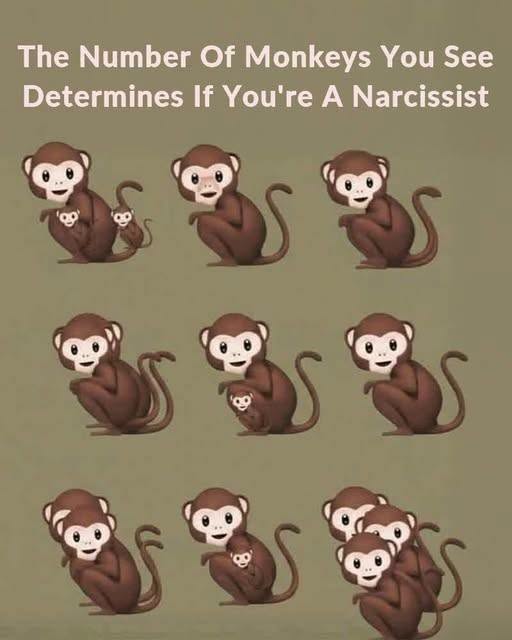
A viral post circulating on social media claims that the number of monkeys you can spot in an image can reveal whether you are a narcissist. At first glance, it sounds intriguing—almost like a quick psychological test that exposes hidden traits about your personality.
But how accurate is this claim? And can an image like this really say anything meaningful about your mental health?
The short answer: no, it cannot. This type of content is not a real psychological assessment, but rather a viral internet trend designed to attract attention and engagement.
What the Viral Claim Says
These posts typically feature an illustration containing monkeys hidden within a complex pattern. The caption often suggests:
- “Count the monkeys you see to reveal your personality”
- “Only narcissists see a certain number”
- “Your answer exposes your hidden traits”
The idea is that different people will see different numbers of monkeys, and that this difference supposedly reflects personality characteristics such as narcissism, intelligence, or emotional awareness.
However, this interpretation is not supported by any scientific research.
Why These “Personality Tests” Go Viral
Content like this spreads quickly for a few simple reasons:
1. Curiosity and Self-Discovery
People are naturally interested in learning more about themselves. Anything that promises insight into personality tends to attract attention.
2. Easy Participation
Unlike real psychological assessments, these tests require no effort—just a quick look at an image.
3. Social Sharing
Users often share their results with friends to compare answers, which increases engagement.
4. Mystery and Challenge
Hidden-object illusions trigger curiosity and make people feel like they are solving a puzzle.
Is There Any Scientific Basis?
No. There is no psychological evidence that counting animals or spotting hidden objects in an image can diagnose narcissism or any other personality disorder.
Psychologists use structured, validated tools such as:
- Clinical interviews
- Standardized questionnaires
- Behavioral observations
- Long-term assessment
None of these methods involve visual illusion tests.
What You Are Really Testing
[adinserter block=”4″]
While these images are not diagnostic tools, they do reveal something interesting: how your brain processes visual information.
Differences in what people see can be influenced by:
1. Attention to Detail
Some individuals naturally focus on small visual elements, while others see the bigger picture first.
2. Perception and Pattern Recognition
The brain interprets images based on prior experience and expectations.
3. Viewing Time
People who spend more time analyzing an image may notice more hidden elements.
4. Cognitive Bias
The brain often fills in missing information or overlooks subtle details.
These factors relate to perception—not personality disorders.
What Narcissism Actually Means
The term “narcissist” is often misused online. In psychology, narcissism refers to a spectrum of traits, and in severe cases, a diagnosable condition called narcissistic personality disorder (NPD).
It is characterized by:
- Excessive need for admiration
- Lack of empathy
- Inflated sense of self-importance
- Difficulty maintaining healthy relationships
Importantly, none of these traits can be identified through a quick visual puzzle.
Why These Claims Are Misleading
These viral posts are designed more for entertainment than education. They often:
- Oversimplify complex psychology
- Use misleading labels
- Encourage self-diagnosis based on unreliable methods
- Spread misinformation under the appearance of science
Because they look like tests, many people assume they are legitimate—but they are not scientifically validated.
The Psychology Behind Optical Illusions
Even though the “narcissism test” is not real, optical illusions themselves are scientifically interesting.
They demonstrate that:
- The brain actively interprets images, rather than passively recording them
- Perception can vary between individuals
- Context and expectation strongly influence what we see
This is why two people can look at the same image and notice different details—but it reflects perception, not personality.
The Role of Social Media in Spreading Fake Tests
Social platforms prioritize content that gets reactions. Posts that make users curious or challenge them are more likely to be:
- Shared
- Commented on
- Reposted
As a result, many “personality tests” go viral even when they have no scientific foundation.
[adinserter block=”5″]