
[adinserter block=”3″]
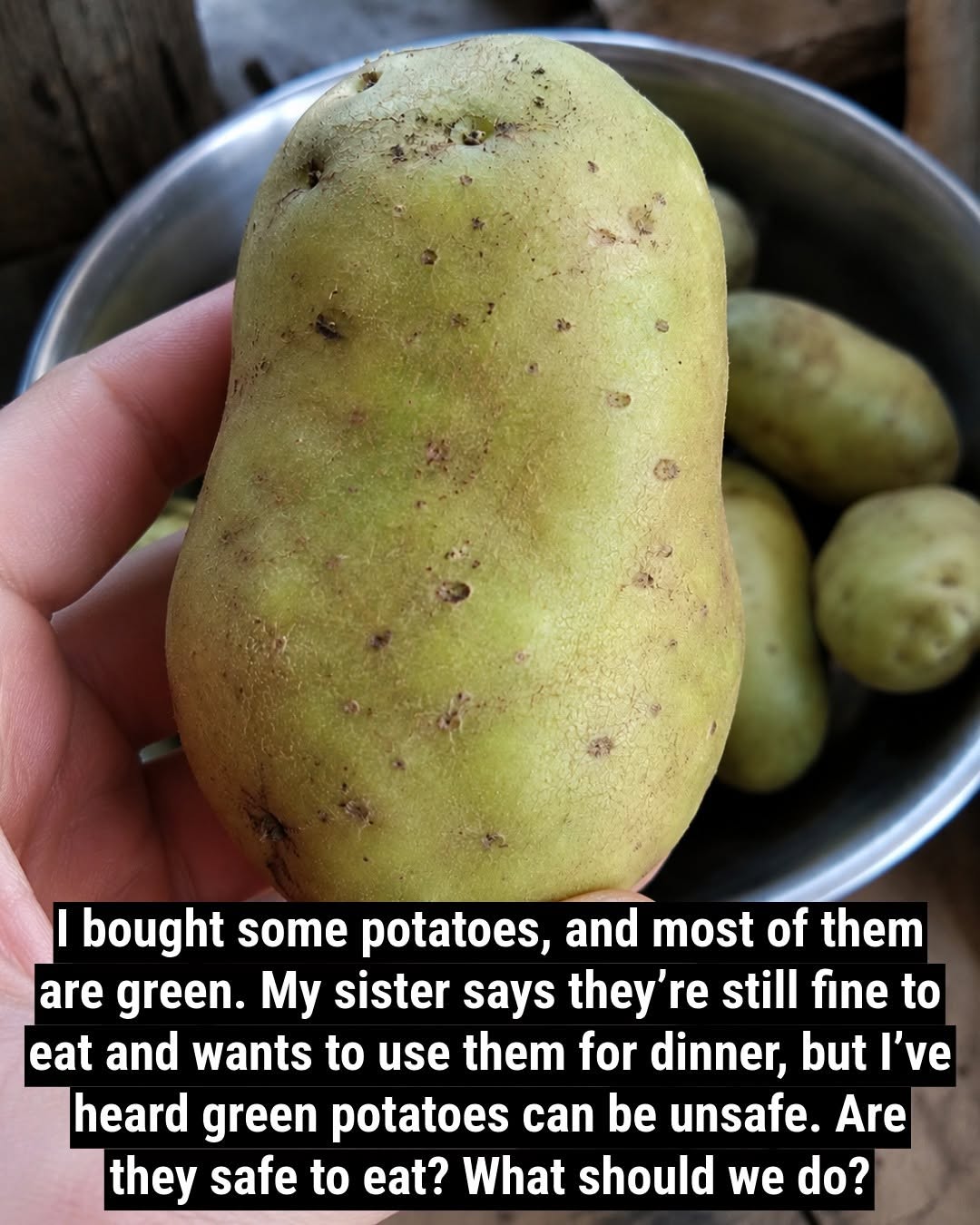
The answer depends entirely on how much green is present and how deeply it has penetrated.
Small green patches on the skin: If only a small area of the potato surface has turned green and the flesh beneath is still fully white and untinged, you can salvage the potato by cutting away all the green areas generously — removing not just the surface but a meaningful depth below it as well, since solanine can penetrate a few millimeters beneath the skin. Peel the entire potato completely rather than spot-trimming, and discard any sprouts or eyes at the same time.
Extensive green throughout: If the greening is widespread across the skin, covers large sections of the potato, or if the flesh beneath the skin is also noticeably green when peeled, the safest decision is to discard the potato entirely. The solanine concentration in a heavily greened potato is simply too high to make careful trimming a reliable safety measure.
The bitter taste test: If a cooked potato tastes noticeably bitter — regardless of its appearance — stop eating it. That bitterness is solanine. Cooking does not eliminate it, and the bitter flavor is a reliable indicator that levels are elevated even when visible greening isn’t obvious.
When in doubt, throw it out. This is not an area where guessing is worth the risk.
What About Green Potato Skins in Restaurants?
Many restaurants leave potato skins on for texture, flavor, and presentation. Under normal circumstances, with properly stored potatoes showing no signs of greening, this is completely safe. All potatoes contain tiny amounts of solanine in their skins — but at normal levels, this poses no health risk to healthy adults eating a reasonable portion.
The concern arises specifically with visibly greened or sprouting potatoes. Any professional kitchen should be discarding potatoes with significant green areas rather than serving them — and home cooks should apply the same standard.
How to Prevent Potatoes from Turning Green
The good news is that preventing green potatoes is straightforward once you understand the cause. Since light triggers both chlorophyll and solanine production, the primary rule is simple: keep potatoes in the dark.
Ideal storage conditions for potatoes:
Store potatoes in a cool, dark, well-ventilated location. A pantry cupboard, a drawer away from light, a paper bag, or a basement are all excellent options. The ideal temperature range is between 45°F and 50°F (7°C to 10°C) — cool but not cold.
[adinserter block=”4″]
Specific things to avoid:
Storing potatoes on an open countertop near a window is one of the fastest ways to trigger greening. Even indirect ambient light over several days can cause the process to begin. Avoid transparent bags and containers that allow light to reach the potatoes. Keep them away from heat sources as well — warmth accelerates the process.
Don’t store potatoes in the refrigerator. Temperatures below 40°F convert the potato’s starch into sugar, altering the flavor and causing the potato to darken quickly when cooked. The pantry or a cool cupboard is a better choice than the refrigerator for most households.
Buy in smaller quantities. The longer potatoes sit in storage, the more opportunity they have to develop greening, sprouting, and deterioration. Buying what you’ll realistically use within a week or two reduces waste and ensures fresher, safer potatoes.
Check the bag before buying. At the grocery store, check that potatoes in the bag haven’t already begun turning green before purchasing, particularly potatoes in transparent packaging on a brightly lit shelf.
A Note About Sprouts
Green coloring and sprouting often go hand in hand — both are triggered by similar conditions of light, warmth, and age. Potato sprouts also contain solanine and should always be removed before cooking. Dig out the entire eye and a small amount of the surrounding flesh with the tip of a peeler or a small knife. If the sprouts are long and numerous and the potato has become soft and shriveled, it’s better to discard it than to attempt to salvage it.
Which Potato Varieties Are Most Prone to Greening?
Not all potatoes green at the same rate. White-skinned potato varieties are the most prone to visible greening because their pale skin shows the color change clearly and quickly. Russet potatoes, with their darker, rougher skin, green more slowly under the same conditions. Red-skinned varieties fall somewhere in between.
However, skin color does not determine solanine accumulation — darker-skinned potatoes can accumulate solanine without showing obvious visual greening. This is why proper storage matters for all potato varieties, not just white-skinned ones, and why the bitter taste test is a valuable secondary check regardless of what the potato looks like.
[adinserter block=”5″]