
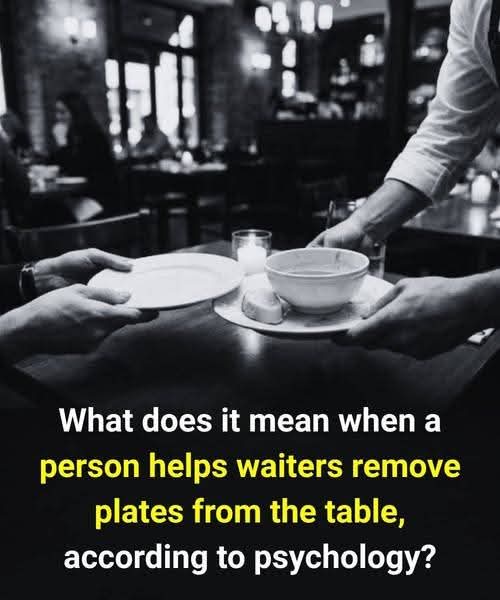
The Psychology Behind Helping Waiters Clear the Table
Have you ever finished a meal at a restaurant and instinctively gathered your plates, stacked the dishes, or pushed empty glasses to the side to “help” the waiter? What seems like a simple polite gesture actually reveals a lot about how we think, feel, and relate to others.
🧠 More Than Just Politeness
While some people see clearing the table as basic etiquette, psychologists call acts like this prosocial behavior — voluntary actions intended to benefit someone else without expecting a reward. This includes everyday helpful actions, from holding a door open to volunteering.
When you help a waiter even without being asked, it suggests that you notice the needs of others. This kind of behavior often comes from empathy — the ability to imagine what someone else might be experiencing or feeling.
❤️ What This Gesture Says About You
People who spontaneously help with tasks like clearing plates often share these traits:
Empathy: You are aware of another person’s effort and want to ease it.
Social awareness: You notice subtle cues, like a waiter carrying many items at once.
Low ego focus: You can step out of your role as a customer to offer help.
Respect for shared spaces: You treat the restaurant as a communal space, not just a place to eat.
Some research also shows that people who help this way may have been raised in environments emphasizing cooperation and responsibility — habits learned in childhood often continue in adulthood.
🤔 Different Motivations Behind the Same Action
Not all help comes from the same place. Motivations may include:
Genuine concern: Wanting to make someone else’s job easier.
Discomfort with clutter: Some people clear things because messes make them uneasy.
Approval seeking: Helping to be seen as polite or “nice.”
Social comfort: For others, helping feels safer than being passive or judged.
Understanding these motivations shows that the same gesture can have different psychological roots.
🍽️ How Staff See It
Many servers appreciate the gesture, but not all actions actually help their workflow. Some may prefer to clear plates in their own way, as they have efficient routines. The most appreciated help is simple and respectful — like nudging an empty glass or stacking plates neatly without mixing silverware and napkins.
🧩 A Small Act With a Big Message
Helping a waiter clear a table isn’t just about moving dishes. It’s about noticing others, being aware of their effort, and connecting with people even in brief interactions. These small gestures can indicate deeper traits like empathy, social intelligence, and responsibility. Understanding the psychology behind these actions gives valuable insight into human nature and social connection.
