
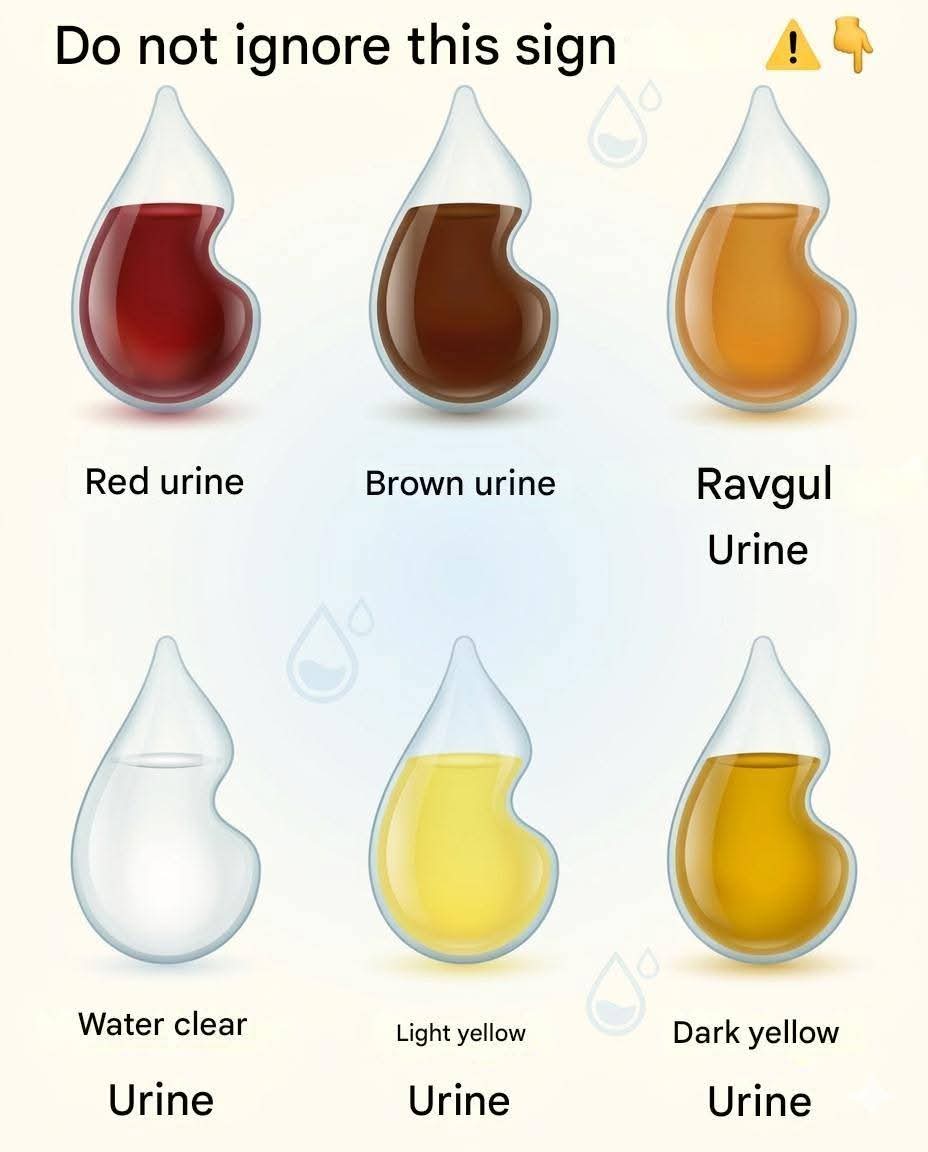
💧 What Does the Color of Your Urine Say About Your Health?
Urine color is one of the easiest ways to understand what’s happening inside your body. While it’s normally a shade of yellow, changes in color can give important clues about hydration, diet, or possible health issues.
🟡 Clear to Light Yellow
This is the ideal and healthiest urine color. It means your body is well hydrated and your kidneys are working properly. The lighter the color, the better your hydration level.
🟠 Dark Yellow or Amber
This usually means your body needs more water. When you’re dehydrated, your urine becomes more concentrated, making it darker in color. Drinking more fluids will help bring it back to normal.
🔴 Pink or Red
Sometimes this color comes from foods like beets or berries. However, it can also be a warning sign of blood in the urine. This may be linked to infections, kidney stones, or other serious conditions, so it should not be ignored.
🟤 Dark Brown
Dark brown urine can result from severe dehydration, certain medications, or eating specific foods. In some cases, it may indicate liver or kidney problems and should be checked if it continues.
🟢🔵 Blue or Green
These unusual colors are often caused by food dyes or medications. In rare cases, they may be linked to infections or genetic conditions, but this is uncommon.
⚪ Cloudy or Milky
Cloudy urine may be a sign of a urinary tract infection. It can also be linked to kidney stones or excess minerals in the urine.
🫧 Foamy Urine
If your urine appears very foamy or bubbly, it might indicate a high level of protein. This can sometimes be an early sign of kidney issues.
⚠️ When Should You Be Concerned?
You should consider seeing a doctor if:
The unusual color lasts for several days
You notice blood in your urine
You feel pain, burning, or fever
✔️ Simple Reminder
Your urine acts like a daily health signal:
Light yellow = good hydration
Dark color = drink more water
Unusual colors = pay attention and investigate
