
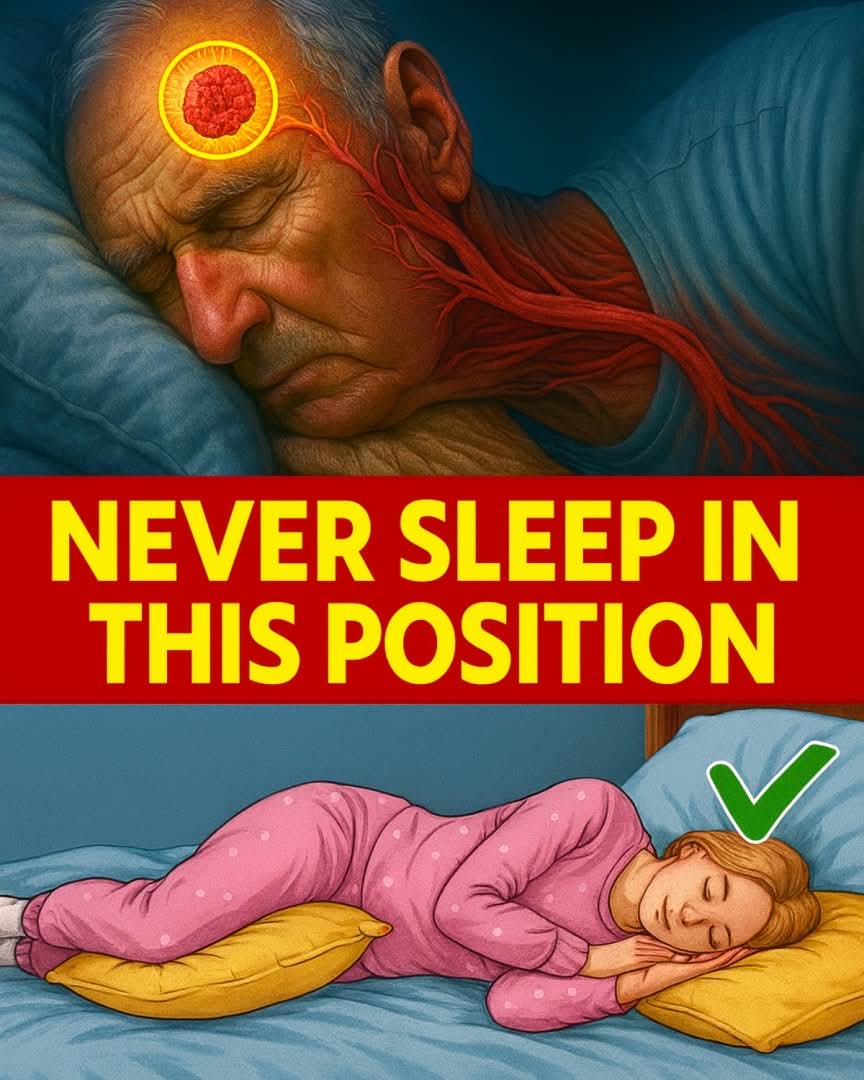
This Sleeping Position May Increase Your Stroke Risk — What You Need to Know
Most people choose a sleeping position based on comfort and never give it a second thought. However, health experts have found that the way you sleep may influence more than just the quality of your rest. In some cases, it can affect your breathing, circulation, and overall cardiovascular health.
One sleeping position that has received particular attention is sleeping flat on the back. While it may feel comfortable for many people, this position can sometimes make breathing more difficult during sleep, especially for individuals who suffer from sleep apnea. When breathing repeatedly stops and starts throughout the night, the body may experience lower oxygen levels and increased stress on the heart and blood vessels.
Over time, poor sleep quality and untreated breathing disorders can contribute to several health problems. Researchers have linked sleep disturbances to higher risks of high blood pressure, heart disease, and stroke. Although sleeping on your back does not directly cause a stroke, it may worsen conditions that are already known risk factors.
Many sleep specialists recommend side sleeping, particularly for people who snore heavily or experience breathing interruptions during the night. Sleeping on the side can help keep the airways more open, allowing for smoother and more consistent breathing.
It’s important to remember that sleeping position is only one piece of the puzzle. Factors such as age, diet, exercise, smoking, stress levels, and existing medical conditions all play significant roles in determining stroke risk. Maintaining a healthy lifestyle and getting quality sleep every night are among the best ways to support long-term heart and brain health.
If you frequently wake up feeling tired, experience loud snoring, or notice interruptions in your breathing while sleeping, it may be worth discussing these symptoms with a healthcare professional. Identifying and treating sleep-related issues early can lead to better sleep, improved energy levels, and a healthier future.
Small changes in your nightly routine may seem insignificant, but they can have a meaningful impact on your overall well-being. Sometimes, the key to better health begins with something as simple as how you sleep.
