
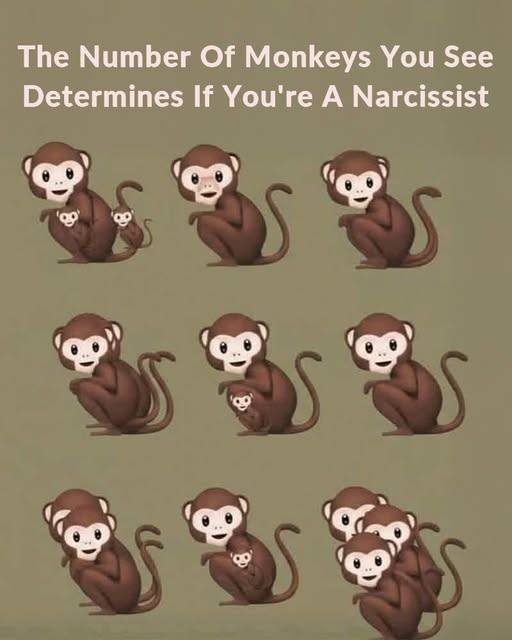
🧠 The Viral Monkey Illusion Everyone Is Talking About
Social media users are once again obsessed with a viral personality test…
👉 An image filled with hidden monkeys that supposedly reveals whether someone is narcissistic based on how many monkeys they can spot.
Some versions claim:
Seeing only a few monkeys means you’re self-centered
Spotting many monkeys means you’re observant and empathetic
Your answer reveals hidden personality traits
But is there any real science behind it?
👀 Why Optical Illusions Go Viral So Fast
Optical illusions combine two things people love online:
✔ Curiosity
✔ Self-analysis
People naturally enjoy discovering:
“Hidden truths” about themselves
Brain teasers
Personality quizzes
Visual puzzles
That’s why illusion-based tests spread rapidly across:
Facebook
TikTok
Instagram
Reddit
🐒 Why Different People See Different Numbers
The human brain processes images differently depending on:
Focus and attention
Visual scanning patterns
Screen size
Lighting
Prior expectations
Cognitive bias
Psychologists explain that optical illusions exploit how the brain fills in visual information. (apa.org
)
That means:
👉 Two people can genuinely notice different details in the same image.
🧠 Does This Test Actually Diagnose Narcissism?
Short answer:
👉 No.
There is no scientific evidence that counting monkeys in an image can determine whether someone has narcissistic personality traits.
Mental health professionals diagnose narcissism using:
Clinical interviews
Long-term behavior patterns
Psychological assessments
—not viral images.
According to the American Psychiatric Association, narcissistic traits involve patterns such as:
Excessive need for admiration
Lack of empathy
Grandiosity
Manipulative behavior (psychiatry.org
)
A simple visual puzzle cannot measure those traits accurately.
🔍 Why People Still Believe These Tests
Even though they aren’t scientific, personality illusions feel convincing because of something called:
🧩 The Barnum Effect
This happens when people accept vague statements as highly personal and accurate.
For example:
“You are observant but sometimes misunderstood.”
Most people relate to statements like that.
Psychologists have studied this effect for decades in:
Personality quizzes
Horoscopes
Viral “psychology” tests (britannica.com
)
📱 Social Media Loves “Instant Psychology”
