
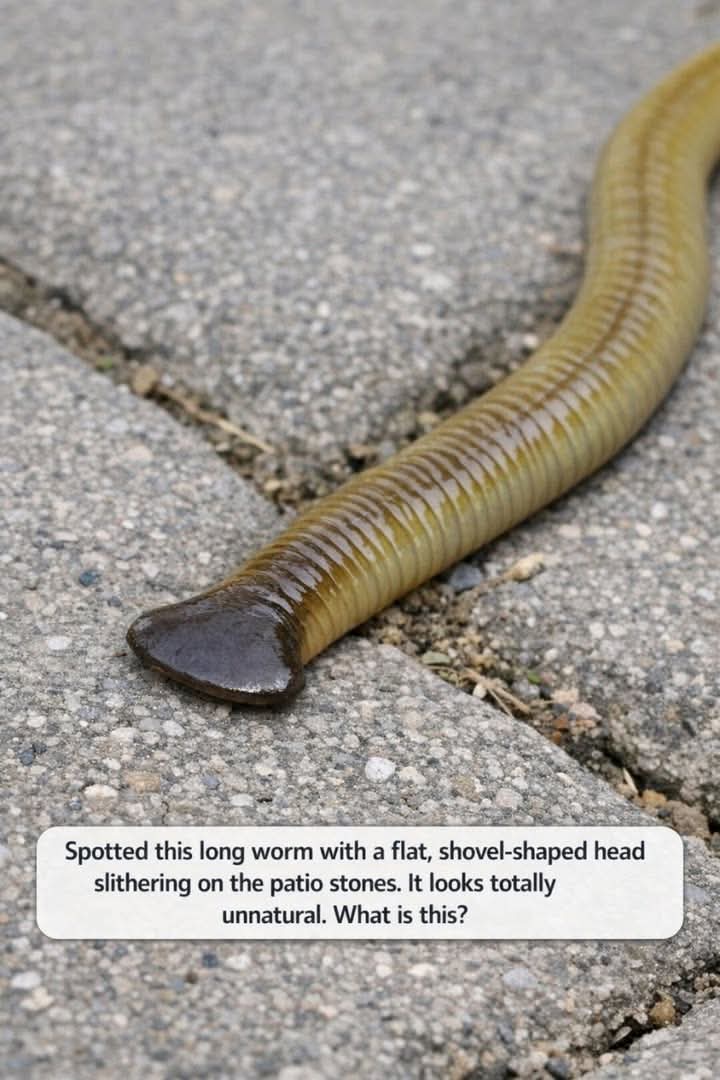
Spotted a Strange Worm with a Shovel-Shaped Head? Here’s What It Really Is
It’s not every day you come across a creature that looks like it belongs in a sci-fi movie. Yet many people are now reporting sightings of a long, flat worm with a strange shovel-shaped head crawling across patios, gardens, and sidewalks.
At first glance, it may seem alarming—and for good reason.
Meet the Hammerhead Worm
This unusual creature is known as a hammerhead worm, a type of land flatworm. It gets its name from its distinctive head, which resembles the shape of a hammer or shovel. Its body is long, flat, and often slimy, usually brown or gray with darker stripes.
These worms can grow surprisingly long, sometimes reaching up to 30 cm or more.
Why Is It Showing Up in Your Yard?
Hammerhead worms are originally from warmer regions but have spread to many parts of the world. They are often carried in the soil of potted plants, which allows them to appear suddenly in new places.
They thrive in moist environments, so you’re more likely to see them after rain or in damp areas like gardens, under rocks, or on patio stones.
Why They Look So Unnatural
What makes these worms so unsettling is how different they are from normal earthworms. Instead of moving in segments, they glide smoothly across surfaces using a layer of mucus.
Their flat body and unusual head shape give them an almost “alien” appearance, which is why many people are shocked when they first see one.
Are They Dangerous?
Hammerhead worms are not directly dangerous to humans, but they are toxic. They produce substances that help them capture prey, and touching them may cause irritation.
It’s best to avoid handling them with bare hands.
What Do They Eat?
Unlike regular earthworms that help your soil, hammerhead worms are predators. They feed mainly on earthworms and other small creatures like slugs and snails.
This makes them harmful to gardens because they reduce the population of beneficial worms.
A Strange and Creepy Ability
One of the most surprising facts about hammerhead worms is their ability to regenerate. If you cut one into pieces, each piece can grow into a new worm.
In other words, trying to kill them by cutting them can actually make the problem worse.
What Should You Do If You See One?
Do not touch it with bare hands
Do not cut or crush it
Use salt or vinegar to eliminate it
Dispose of it properly and keep it out of compost
