
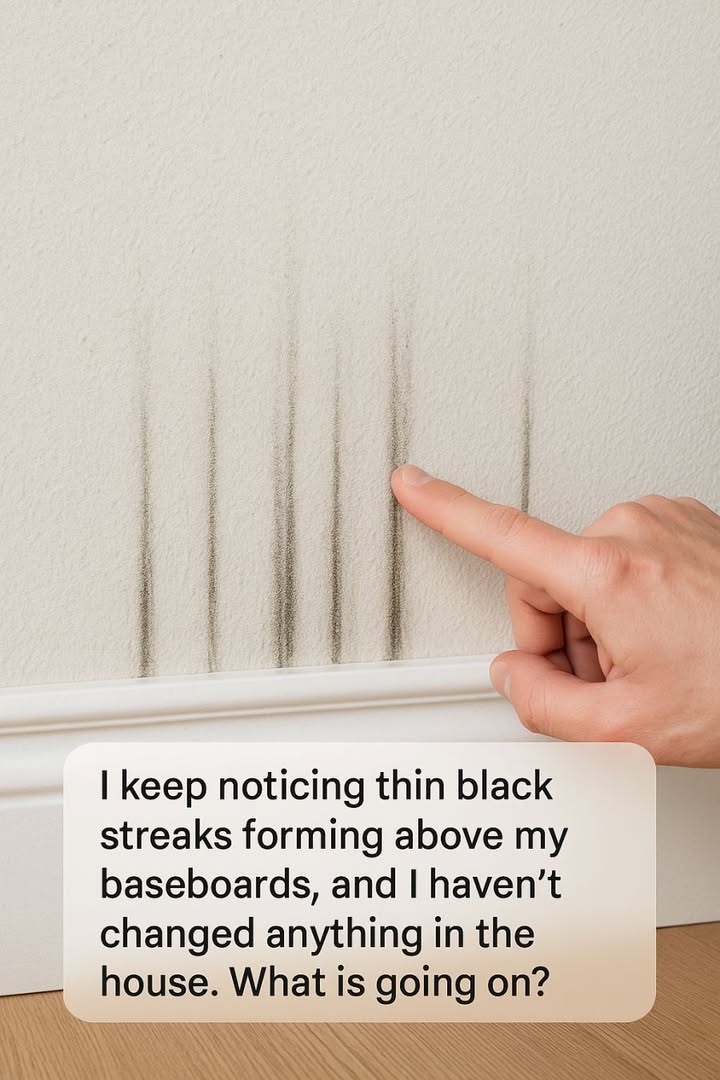
Have you ever walked into a room and noticed thin black streaks mysteriously appearing above your baseboards? If so, you’re not alone. Many homeowners find themselves puzzled by these unsightly marks that seem to appear out of nowhere. Despite not changing anything in your home, these streaks can be persistent and concerning.
Understanding what causes these streaks is essential for maintaining not only the aesthetic appeal of your home but also its structural integrity. From environmental factors to indoor habits, a variety of elements could be contributing to this phenomenon. In this article, we will delve into the reasons behind these streaks and provide insights on how to address them effectively.
1. Why Those Mysterious Black Streaks Aren’t Just “Random Dirt”
The black streaks you observe might seem like random dirt or dust accumulation, but they are often indicative of a phenomenon known as ‘thermal tracking’ or ‘ghosting’. This occurs when particulate matter such as dust, soot, or other pollutants adhere to cooler surfaces in your home. As these particles settle, they form visible streaks that are often mistaken for dirt.
These marks are usually found on exterior walls where there is a temperature differential. The cooler areas attract particulate matter more readily than warmer surfaces, leading to the streaks you see. Understanding that these streaks are more than just random dirt helps in identifying the underlying causes, which can range from thermal bridging to poor ventilation.
2. Understanding Thermal Tracking: The Hidden Physics Behind the Marks
Thermal tracking is a phenomenon driven by temperature differentials within your home. When warm air rises and meets cooler surfaces, it can lead to condensation, which in turn attracts and holds particulate matter. This is why the streaks are often found above baseboards or along studs and joists.
In homes with poor insulation or significant thermal bridging, the temperature difference between the interior and exterior walls can be substantial, sometimes exceeding 10 degrees Fahrenheit. This differential creates a perfect environment for thermal tracking to occur, making it more likely that you’ll see these streaks on your walls.
3. How Warm Walls and Cold Air Create Perfect “Dirt Magnets”
The interaction between warm walls and cold air is a key component in the formation of these streaks. As warm air moves through the house, it carries with it dust and other airborne particles. When this warm air encounters cooler surfaces, such as those near baseboards, it cools and deposits these particles.
This process is exacerbated in homes where the HVAC system is not evenly distributing heat, or where there are leaks in the building envelope. The constant cycle of air movement and temperature fluctuation causes more particles to settle, reinforcing the streaks over time.
4. Candle Soot, Fireplaces, and Other Surprising Indoor Pollution Sources
Indoor air quality plays a significant role in the formation of these streaks, with common household activities contributing to airborne particulate matter. Burning candles, using a fireplace, or even cooking can release soot and other particles into the air.
Soot from candles is particularly problematic because it is composed of fine, sticky particles that can easily adhere to surfaces. Similarly, fireplaces can release soot and ash, especially if not properly maintained. These sources of indoor pollution can increase the amount of particulate matter in the air, making thermal tracking more pronounced.
5. HVAC Systems, Leaky Ducts, and the Role of Airflow in the Streaks
The performance of your HVAC system can significantly impact the occurrence of thermal tracking. A well-maintained system with clean filters and properly sealed ducts ensures that air circulates efficiently, reducing the likelihood of particulate accumulation on walls.
Leaky ducts, on the other hand, can lead to uneven heating and cooling, creating temperature differentials that exacerbate thermal tracking. When ducts are not sealed properly, they can draw in dust and other particulates from areas like attics or crawl spaces, increasing the amount of airborne matter that can settle on walls.
6. Common Household Culprits: Cooking, Smoking, and Scented Products
Everyday activities such as cooking, smoking, and using scented products can introduce a variety of particles into your home’s air. Cooking, especially frying, releases grease and smoke that can contribute to the black streaks on walls.
Smoking indoors is another major contributor to poor air quality, as it releases tar and other substances that can easily settle on cool surfaces. Even the use of scented products, which release volatile organic compounds (VOCs), can contribute to particulate matter that exacerbates thermal tracking.
7. When Black Streaks Signal Moisture Problems or Mold Risk
While thermal tracking is a common cause of black streaks, moisture problems can also play a role. If your home has high humidity levels or water intrusion issues, you might be at risk of mold growth, which can also manifest as black streaks.
Moisture can cause dust to clump together and adhere to surfaces more readily. Moreover, constant exposure to moisture can lead to mold growth behind walls, making it essential to address any water issues to prevent potential health hazards.
8. Simple At-Home Tests to Tell Soot, Dust, and Mold Apart
Identifying whether the black streaks are caused by soot, dust, or mold can be done with a few simple tests. A damp cloth test can help; if the streaks wipe off easily, they are likely soot or dust. Mold, on the other hand, might smear or not come off easily.
