
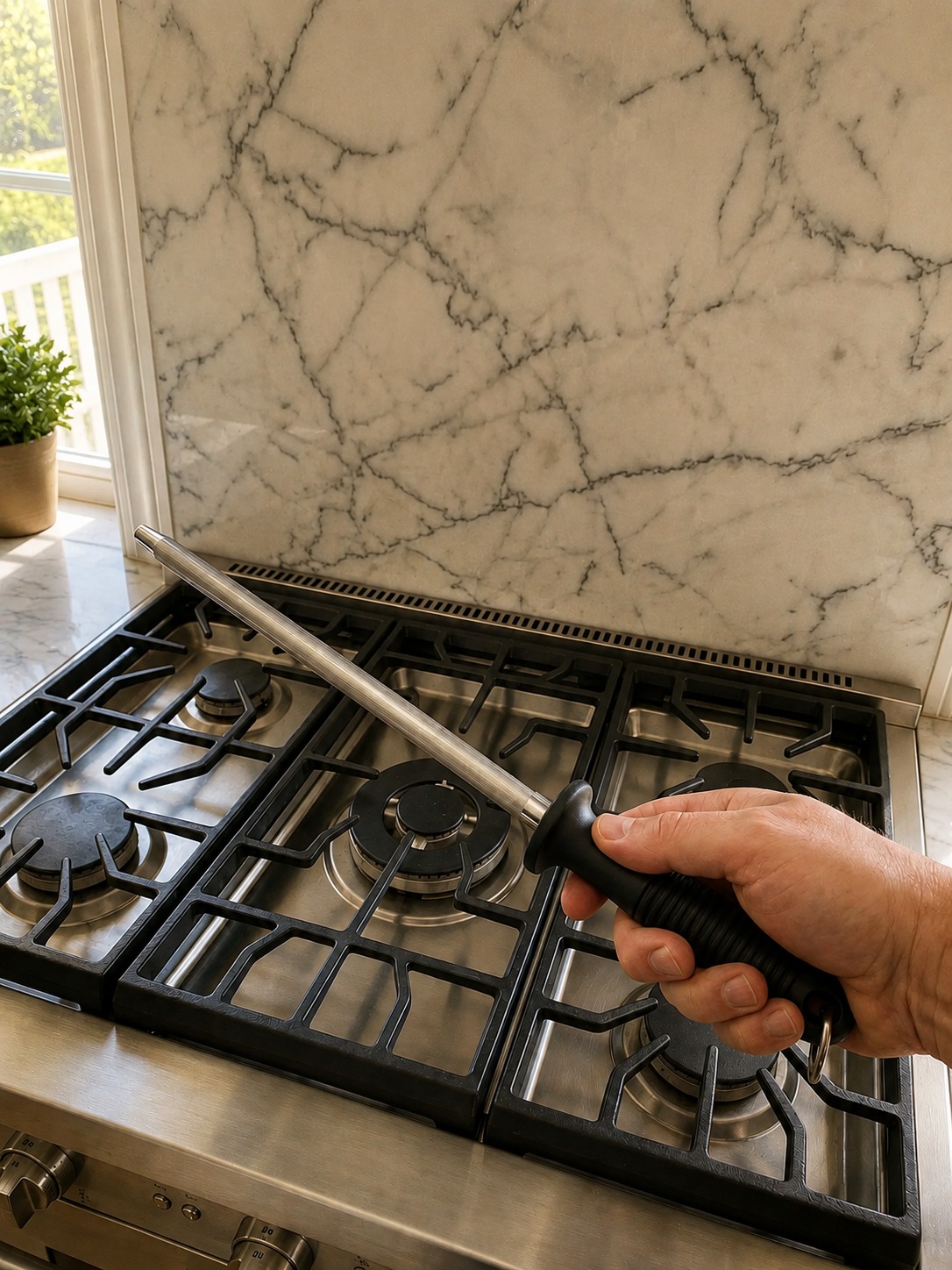
You know what? Some of the most stubborn kitchen arguments don’t start over big things. They start over small, everyday habits. How to store bread. Whether pasta water should be salty like the sea. And, yes, what that long metal rod in the knife block is actually doing.
If you’ve ever watched someone swipe their knife a few times on a honing rod and proudly say, “All sharpened,” while someone else quietly raises an eyebrow, you already know where this is headed.
It sounds technical, but it’s really not. It’s more about language and expectations than anything else. And once you sort that out, the whole thing gets a lot less tense and a lot more useful.
So let’s talk about it, the friendly way, like we’re leaning against the counter waiting for the onions to finish sautéing.
Why Sharp Knives Matter More Than We Like to Admit
First things first. Sharp knives aren’t about showing off or pretending you’re on a cooking show. They’re about comfort and safety.
A dull knife:
Needs more pressure
Slips more easily
Smashes food instead of slicing it
That last part might sound harmless, but it changes how food cooks and even how it tastes. Tomatoes get crushed. Herbs bruise. Chicken tears instead of cutting clean.
And safety? A dull blade is more likely to skid off food and toward your fingers. Not exactly what anyone wants on a Tuesday night making stir-fry.
So yes, keeping knives in good shape matters. It makes cooking calmer. Less fight, more flow.
The Big Mix-Up: Why Honing and Sharpening Get Confused
Here’s the heart of the problem: we use the word sharp to describe how a knife feels. And honing often makes a knife feel sharper, even though it’s not technically sharpening it.
That’s where the wires get crossed.
So someone uses the rod, the knife cuts better, and naturally they think, “Well, I sharpened it.” Fair enough. From their point of view, something worked.
But what really happened is a little different.
What a Honing Rod Actually Does (Plain and Simple)
Inside every knife edge, there’s a very thin line of metal. Over time, that edge doesn’t just wear down. It also bends. Tiny amounts, but enough to matter.
Picture a row of grass after people have walked through it. The blades are still there, just leaning in different directions.
A honing rod:
Pushes that bent edge back into line
Straightens what’s already there
Makes the blade feel crisp again
It doesn’t grind away metal. It doesn’t rebuild the edge. It just tidies it up, so to speak.
That’s why chefs use honing rods so often. A few quick swipes during service keep knives behaving nicely between real sharpening sessions.
So yes, honing is helpful. Very helpful. It just isn’t the whole story.
What Sharpening Really Means (and Why It Feels Different)
