
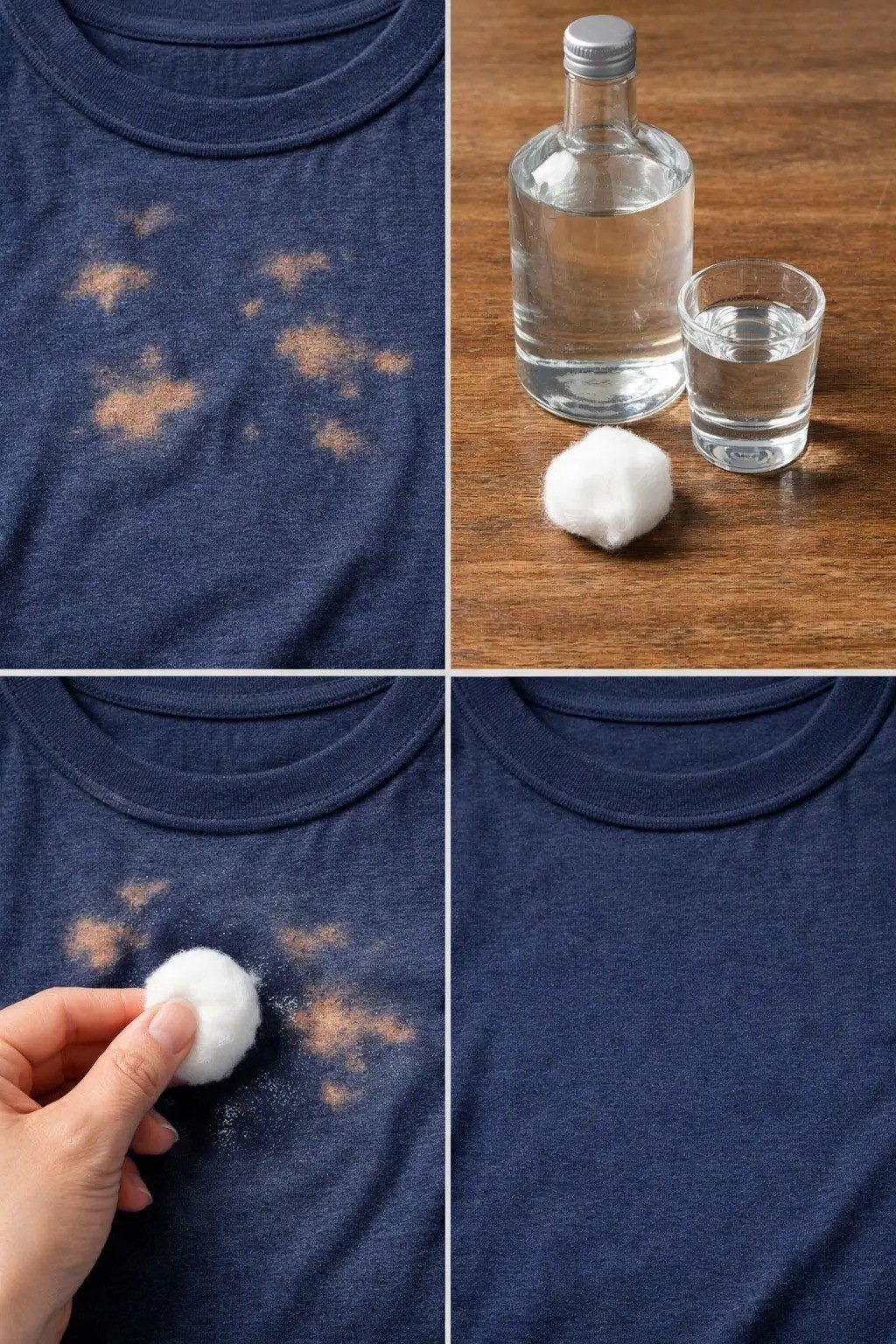
If bleach has left a yellowish tint on white or light-colored fabric — especially synthetic fibers like polyester or nylon — hydrogen peroxide can help neutralize and brighten the affected area.
How to use it:
Put on gloves before handling hydrogen peroxide
Dip a clean white cloth into standard 3% hydrogen peroxide (the type from any pharmacy)
Blot the yellowed area repeatedly, working from the outside edges inward
Rinse with cold water
Repeat the blotting and rinsing until the yellow tint fades
Launder the garment immediately after treatment
This method is particularly effective on white cotton and linen. For synthetic fabrics, results may vary depending on the severity of the damage.
Method 3: Fabric Dye to Restore Color on Colored Clothing
For bleach stains where the color is completely gone from a colored garment, fabric dye is one of the most effective solutions. You can either re-dye the specific stained area or dye the entire garment in a matching or new color.
For small stain areas:
Purchase fabric dye in a color that closely matches your garment’s original shade
Mix according to package directions and apply carefully to the bleached area with a small brush or cotton swab
Build up the color gradually in thin layers until it blends with the surrounding fabric
Rinse and wash as directed
For larger stains or multiple spots:
Consider dyeing the entire garment one even color — this completely eliminates any visible bleach damage and gives the piece a brand-new look
Choose a color slightly darker than the bleached area for best coverage
Fabric dyes are widely available at craft stores and online, and they work on most natural fibers including cotton, linen, and silk.
Method 4: Fabric Markers for Precise Touch-Ups
For small, precise bleach spots — especially on dark solid-colored clothing — fabric markers offer a quick and surprisingly effective fix. They work like permanent markers but are specifically formulated for fabric and won’t wash out.
How to use them:
Choose a marker that matches your garment’s color as closely as possible
Test on an inconspicuous area first to check the color match
Apply in small, light strokes over the bleached area, building up color gradually
Allow to dry completely before touching
Heat set with an iron if instructed on the marker packaging
This method works best on small spots and solid-colored fabrics. On patterned or light-colored clothing, the result may be less seamless — but for a quick fix on dark jeans or a black shirt, fabric markers are genuinely impressive.
Method 5: Creative Transformations — Turn Damage into Design
Sometimes the bleach stain is too large, too prominent, or too difficult to color-match for any of the above methods to work cleanly. In these cases, the most satisfying solution is to stop trying to hide the damage and instead transform the garment into something intentionally different.
Reverse tie-dye (bleach tie-dye):
If your shirt already has a bleach spot, embrace it. Apply more bleach to the rest of the shirt in a deliberate pattern to create a reverse tie-dye effect — where the bleached areas become the design. The result is a genuinely trendy look that’s completely unique.
Iron-on or sew-on patches:
A well-placed patch over a bleach spot can be a stylish fix, especially on denim jackets, jeans, or casual shirts. Vintage-inspired patches, embroidered designs, or fabric appliqués all work beautifully.
Crop it:
If the bleach stain is near the bottom hem of a shirt, the easiest solution is simply to cut it into a crop top. Clean, deliberate, and fashion-forward.
Cut into shorts:
Bleach stains on jeans or joggers near the thigh or knee? Cut them into shorts and the problem disappears entirely.
Repurpose as cleaning rags:
If the garment is too damaged to wear, don’t throw it away — cut it into cleaning cloths. You’ve turned a ruined piece of clothing into a useful household tool.
How to Prevent Bleach Stains in the Future
Prevention is always easier than repair. These simple habits can protect your clothes from accidental bleach damage:
Designate specific “cleaning clothes” that you wear only when using bleach-based products — old T-shirts and shorts you don’t mind staining
Store bleach away from the laundry area to prevent accidental splashes near clothing
Check product labels before using household cleaners — many contain sodium hypochlorite or other bleaching agents that can discolor fabric without you realizing it
Clean your washing machine’s bleach dispenser after any cycle that uses bleach — leftover residue in the drum or dispenser can transfer to the next load of colored clothing
Always wear gloves when handling bleach directly, and keep the bottle pointed away from your body when opening
The Bottom Line
A bleach stain on your clothes feels like a disaster in the moment, but it’s rarely the end of the garment’s story. Whether you neutralize it immediately, restore the color with dye or fabric markers, or creatively transform the piece into something new — there is almost always a solution worth trying before you consider throwing it away.
