
[adinserter block=”3″]
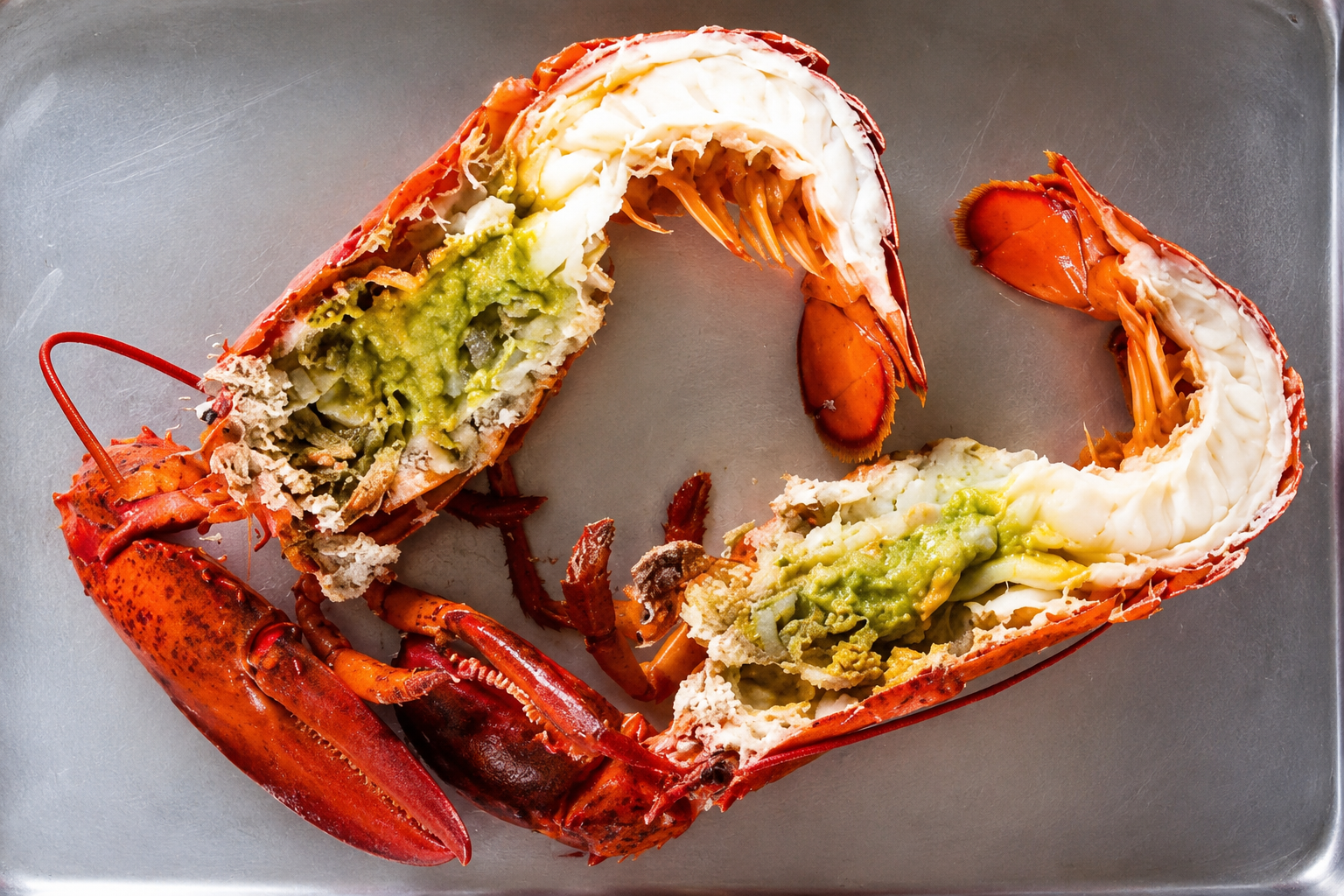
Have you ever cracked open a lobster and noticed a soft green substance inside? Many people are surprised when they first see it and wonder whether it’s safe to eat. This mysterious green material is called tomalley, and it has sparked debate among seafood lovers for years.
Tomalley is the lobster’s hepatopancreas, an organ that functions similarly to a liver and pancreas. It helps the lobster digest food and absorb nutrients. Found inside the body cavity, it appears as a creamy green paste and is often considered a delicacy by lobster enthusiasts because of its rich, concentrated seafood flavor. Some describe the taste as a more intense version of lobster meat with a smooth, buttery texture.
For generations, many people have enjoyed eating tomalley on its own or mixing it into sauces, soups, and seafood dishes. In some coastal regions, it is regarded as one of the most flavorful parts of the lobster.
[adinserter block=”4″]
However, there is an important reason why some health experts advise caution. Because tomalley acts as part of the lobster’s digestive and filtering system, it can accumulate environmental contaminants such as heavy metals and certain marine toxins. These substances may remain in the tomalley even after cooking. As a result, some food safety agencies recommend limiting or avoiding consumption, especially for frequent seafood eaters.
So, should you eat it? The answer depends on personal preference and risk tolerance. Many people continue to enjoy tomalley occasionally for its unique flavor, while others choose to avoid it because of the potential accumulation of contaminants. The lobster meat itself is generally considered the safest and most widely enjoyed part of the animal.
The next time you see that green substance inside a lobster, you’ll know that it isn’t spoilage or a sign that something is wrong. It’s simply tomalley—a fascinating part of lobster anatomy that remains one of the most talked-about delicacies in the seafood world.
[adinserter block=”5″]