
[adinserter block=”3″]
I Just Bought Ground Beef and the Inside Is Completely Grey — Did the Store Scam Me?
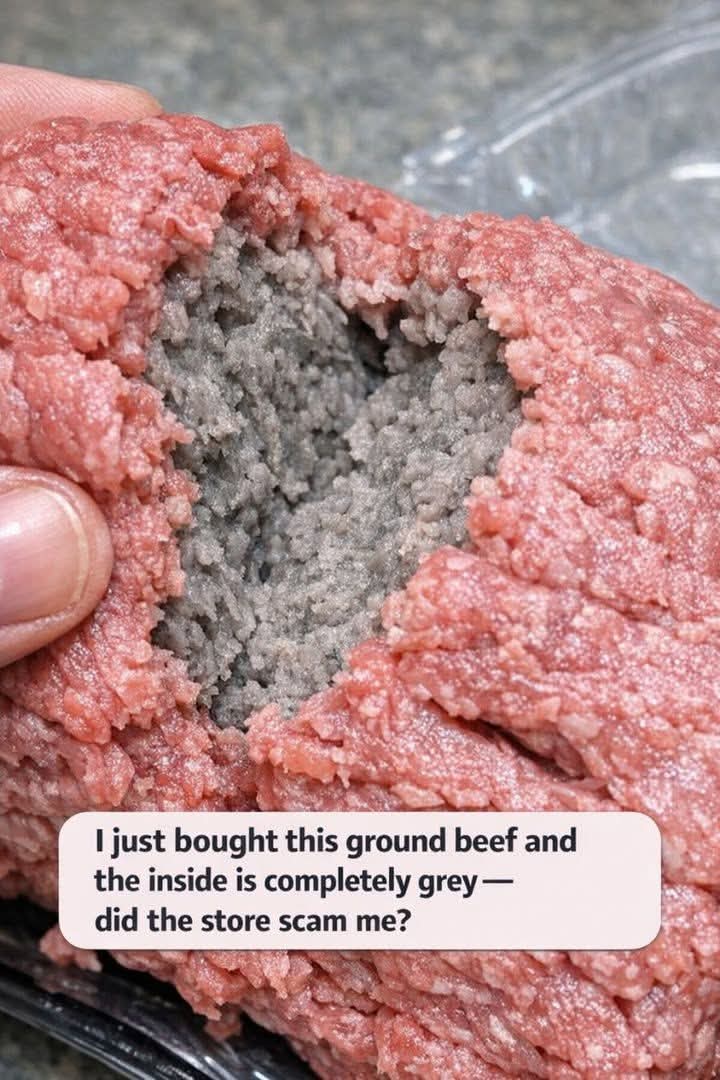
Few things are more unsettling than opening a package of ground beef and discovering that the meat inside is grey instead of the bright red color you expected. Many shoppers immediately assume the meat is old, spoiled, or that the store has tried to hide its true condition. Fortunately, a grey interior does not automatically mean there is anything wrong with your ground beef.
The color of beef is influenced by a naturally occurring protein called myoglobin. When myoglobin comes into contact with oxygen, it produces the bright cherry-red color that consumers often associate with freshness. This is why the outer surface of ground beef usually appears vibrant and appealing in the grocery store display case.
However, the meat located in the center of the package receives very little exposure to oxygen. As a result, the myoglobin in those areas remains in a different chemical state, causing the meat to appear grey or brownish. This process is completely natural and can occur even when the beef is perfectly fresh and safe to eat.
Many supermarkets package ground beef in a way that allows the outer layer to remain red while the interior receives less oxygen. When consumers open the package and separate the meat, they may notice a dramatic difference between the bright red exterior and the grey center. While this contrast can be surprising, it is usually not a sign of spoilage.
That said, color should never be the only factor used to judge whether meat is safe. Ground beef can sometimes remain red even when it is beginning to spoil, and fresh meat can appear grey despite being perfectly edible. Food safety experts recommend evaluating several factors together before making a decision.
One of the most important indicators is smell. Fresh ground beef should have little to no noticeable odor. If the meat gives off a sour, rancid, or unpleasant smell, it should be discarded immediately. A strong odor is often one of the clearest signs that harmful bacteria may be present.
[adinserter block=”5″]
Texture is another important clue. Fresh ground beef should feel slightly moist but not sticky, slimy, or tacky. If the surface feels slippery or leaves a strange residue on your hands, it may have begun to spoil. Changes in texture often accompany bacterial growth and should not be ignored.
The packaging itself can also provide useful information. If the package is torn, leaking, swollen, or damaged, the meat may have been exposed to conditions that accelerate spoilage. Always inspect the packaging carefully before purchasing and before preparing the meat.
Storage conditions play a major role in maintaining freshness. Ground beef should be refrigerated as soon as possible after purchase and kept at a safe temperature. Leaving meat at room temperature for extended periods can allow bacteria to multiply rapidly. Even fresh meat can become unsafe if it is not stored properly.
It is also important to pay attention to expiration dates and handling instructions. While dates are not perfect indicators of quality, they provide useful guidance. Consuming ground beef within the recommended timeframe helps reduce the risk of foodborne illness.
Another reason beef may appear grey is freezing and thawing. Frozen meat often undergoes color changes due to moisture loss and reduced oxygen exposure. After thawing, some areas may remain grey or brown. This alone does not necessarily indicate spoilage if the meat was frozen and thawed correctly.
Consumers are often surprised to learn that bright red meat can sometimes be less fresh than meat with a grey interior. Certain packaging methods are designed to maximize the attractive red color shoppers prefer. While appearance influences purchasing decisions, color alone does not tell the complete story about freshness or safety.
When preparing ground beef, always cook it thoroughly to the recommended internal temperature. Proper cooking helps eliminate harmful bacteria that may be present and reduces the risk of foodborne illness. Using a food thermometer is the most reliable way to ensure the meat has reached a safe temperature.
In most cases, finding grey meat in the center of a package is simply the result of limited oxygen exposure and not evidence of deception or poor quality. If the beef smells normal, feels normal, has been stored correctly, and is within its recommended use-by date, the grey color is usually nothing to worry about.
The next time you open a package of ground beef and notice a grey interior, remember that appearance can be misleading. Instead of relying solely on color, consider the smell, texture, packaging condition, and storage history. These factors provide a much more accurate picture of whether your meat is fresh, safe, and ready to cook.
[adinserter block=”5″]