
[adinserter block=”3″]
Why Does Grandma Have Purple Patches on Her Arms? The Surprising Explanation Behind a Common Sign of Aging
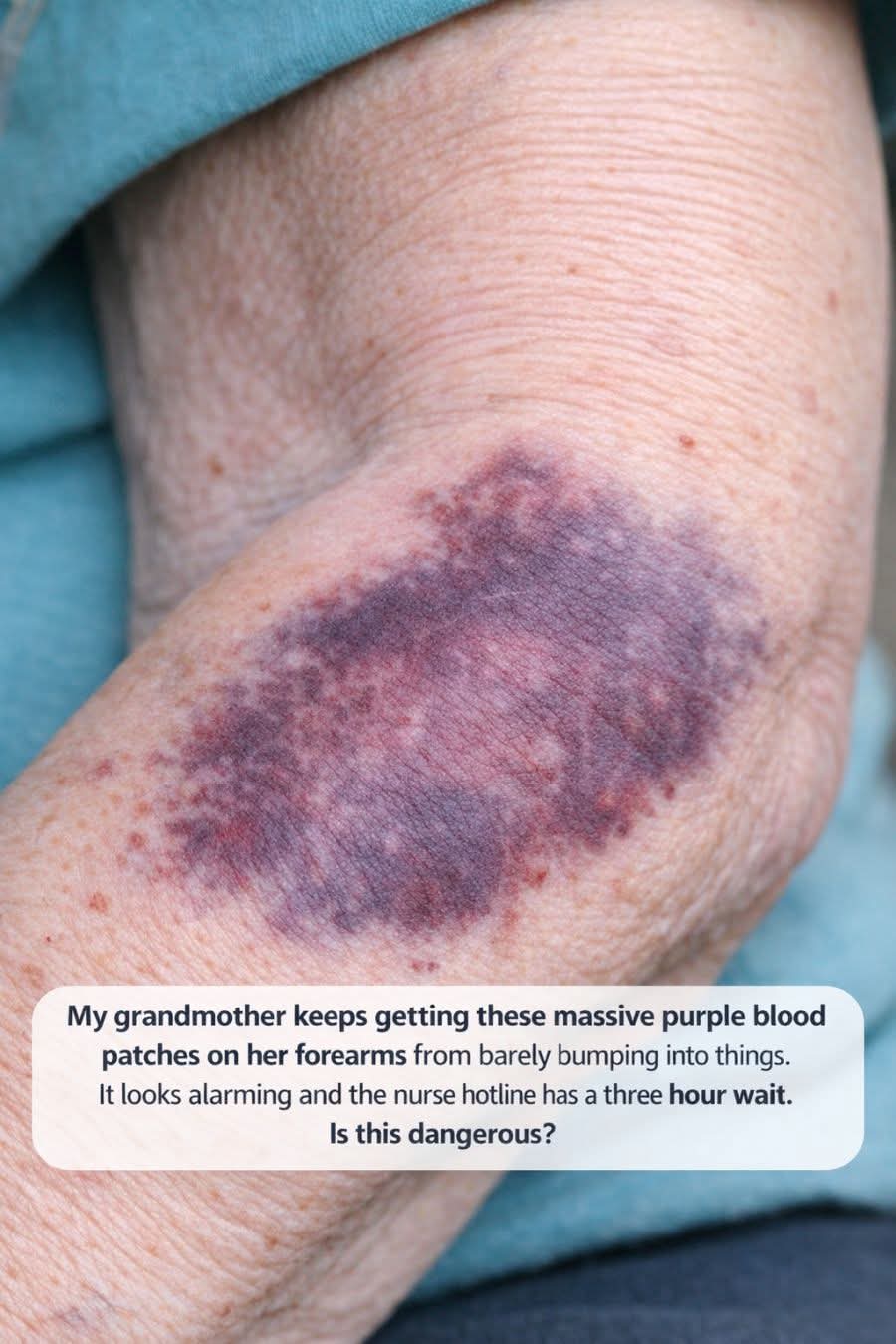
Have you ever noticed dark purple patches on an elderly person’s arms and immediately wondered if they had suffered a serious injury? For many families, these marks can be alarming at first glance. They often appear suddenly, look like large bruises, and may seem far more severe than they actually are.
In reality, these mysterious purple patches are often a common part of the aging process.
As we grow older, our skin undergoes many changes. It becomes thinner, more delicate, and less able to protect the tiny blood vessels that lie just beneath the surface. Over time, years of sun exposure and natural aging can weaken these blood vessels, making them much easier to damage.
This means that something as simple as lightly bumping into a countertop, brushing against a doorframe, or carrying a heavy grocery bag can cause blood vessels to break under the skin. The result is a large purple or reddish patch that may look dramatic but is often harmless.
One of the most surprising aspects of these marks is that many older adults don’t even remember how they got them. A minor bump that would leave no trace on a younger person can create a noticeable bruise on aging skin.
These purple patches are most commonly seen on the forearms and backs of the hands because these areas receive a great deal of sun exposure throughout life. The skin in these regions is often thinner and more vulnerable to injury.
Certain medications can also make bruising more likely. Blood thinners, aspirin, and some anti-inflammatory medications may increase the chances of developing visible purple marks after even a minor impact.
Although these patches can look frightening, they are usually not painful and tend to fade gradually over several weeks. Some may change color as they heal, transitioning from deep purple to brownish shades before eventually disappearing.
[adinserter block=”4″]
However, frequent unexplained bruising should not always be ignored. If the patches appear suddenly and often, become unusually large, or are accompanied by other symptoms such as bleeding gums, excessive fatigue, dizziness, or swelling, medical advice should be sought to rule out underlying health conditions.
There are also steps that may help reduce the appearance of these bruises. Protecting the skin from excessive sun exposure, using sunscreen regularly, keeping the skin moisturized, and avoiding unnecessary bumps and scrapes can all help maintain healthier skin as we age.
For many families, seeing these purple patches for the first time can be concerning. But in countless cases, they are simply a visible reminder of how our bodies change over the years. Understanding the reason behind them can turn worry into reassurance and help loved ones recognize one of the many natural signs of aging.
Have you ever noticed these purple patches on a parent or grandparent? What did you think caused them when you first saw them?
[adinserter block=”5″]