
[adinserter block=”3″]
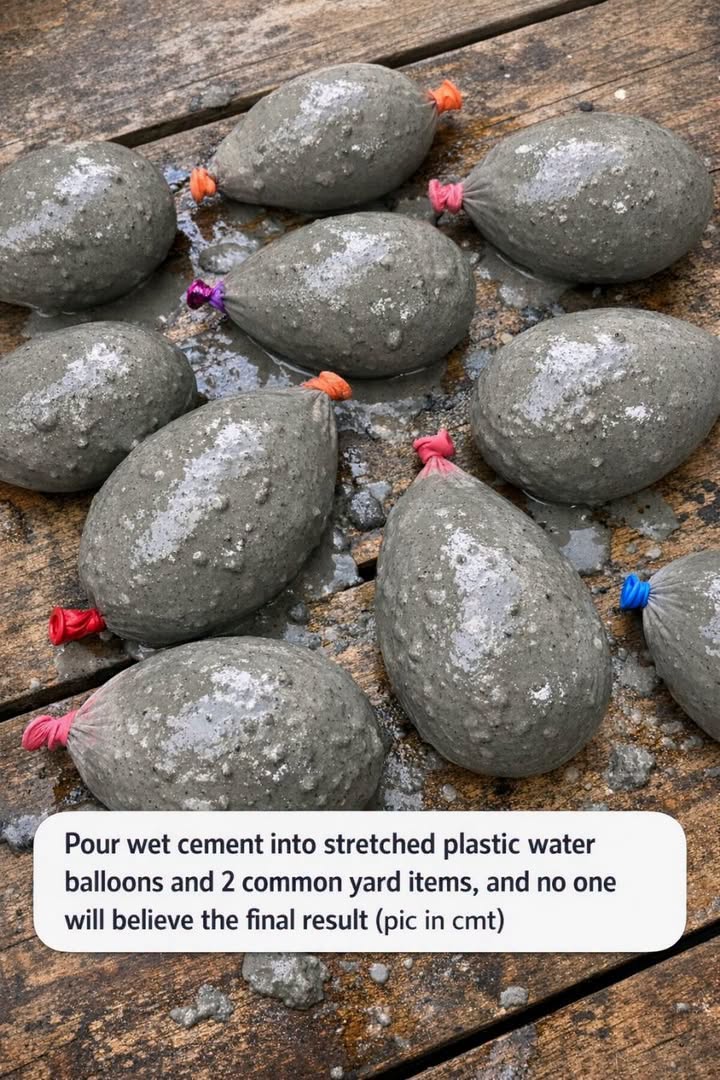
DIY craft and garden décor projects often go viral when they combine simple materials with unexpected results. One such idea involves pouring wet cement into stretched plastic water balloons along with a few common yard items to create unusual stone-like shapes for outdoor decoration.
At first glance, the process sounds strange—but it’s actually based on a simple concept: using flexible molds to shape concrete while it hardens.
Let’s break down what this craft is really about and what kind of results it produces.
The Basic Idea Behind the Project
This DIY method uses:
- Wet cement (or concrete mix)
- Water balloons (as flexible molds)
- Optional natural items like leaves, sticks, or stones
The balloons are stretched and filled with cement, then left to dry. As the cement hardens, it takes the rounded, organic shape of the balloon.
Once the outer layer is removed, what remains is a solid sculptural form.
Why Water Balloons Are Used
Water balloons work surprisingly well as temporary molds because they are:
- Flexible
- Stretchable
- Cheap and widely available
- Easy to remove once broken
When filled, they naturally form smooth, rounded shapes that are difficult to achieve with traditional rigid molds.
This makes them useful for creating:
- Garden stones
- Decorative spheres
- Organic sculpture pieces
What Happens When Cement Sets
Concrete undergoes a chemical process called hydration, where it gradually hardens as it dries.
During this process:
- The mixture thickens
- The outer shape is preserved by the mold
- The internal structure becomes solid and durable
- The mold (balloon) is peeled or broken away
The result is a hardened object that retains the balloon’s organic form.
[adinserter block=”4″]
Why People Add Yard Items
Some versions of this project include inserting natural materials into the wet cement, such as:
- Leaves
- Twigs
- Pebbles
- Grass impressions
These additions create texture and visual interest, making each piece unique.
When removed from the mold, the surface often shows natural imprints.
Common Uses for the Final Result
Once dried, these cement shapes can be used in several creative ways:
Garden Decorations
They can be placed among plants, pathways, or flower beds.
Artistic Sculptures
Their irregular shapes give them a modern, abstract aesthetic.
Outdoor Accents
They can serve as stepping-stone-style decorations.
DIY Craft Displays
Often used in home décor or craft projects.
Why the Result Looks So Impressive
The appeal of this project comes from its unpredictability.
No two cement-filled balloons look exactly the same because:
- Balloon size varies
- Cement thickness differs
- Drying conditions change
- Added materials alter texture
This randomness creates a natural, artistic appearance that looks more complex than the method itself.
Safety Considerations
While this is a popular DIY craft, working with cement requires caution:
- Wet cement can irritate skin
- Gloves should be worn
- Dust from dry cement should not be inhaled
- Proper outdoor ventilation is recommended
Safety is especially important when handling uncured concrete.
Limitations of the Technique
Although visually interesting, this method has some drawbacks:
- Balloon shapes are not structurally precise
- Surfaces may crack if dried too quickly
- Weight can make handling difficult
- Durability depends on cement quality
For functional construction, traditional molds are still preferred.
Why This DIY Project Went Viral
Projects like this spread quickly online because they:
- Use inexpensive materials
- Require minimal tools
- Produce visually surprising results
- Feel like “magic transformations”
- Are easy to photograph and share
The contrast between simple inputs and artistic outputs makes them highly shareable.
[adinserter block=”5″]