
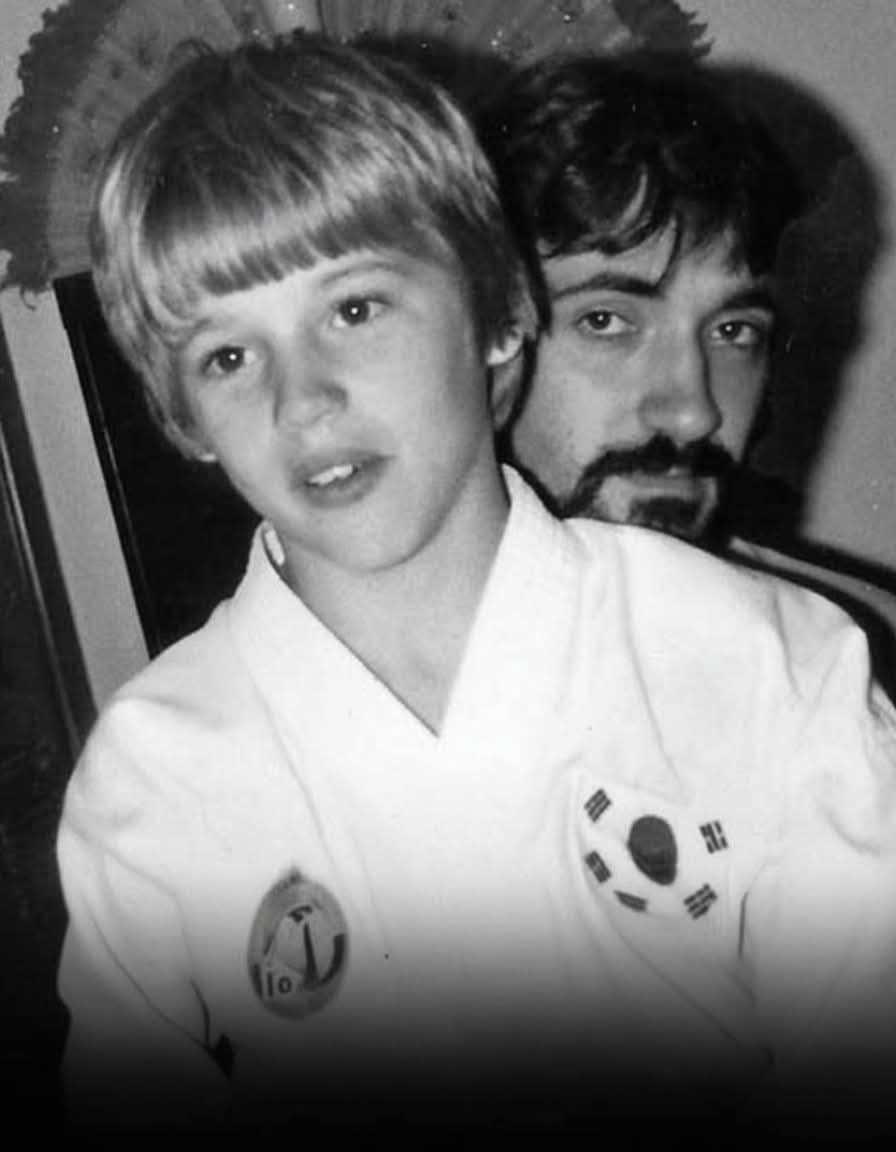
The news cameras were rolling when a father stepped out from behind a payphone and shot his son’s kidnapper in the head. What happened next shocked everyone.
February 1984. Eleven-year-old Jody Plauché was a normal kid living in Baton Rouge, Louisiana. He loved karate, looked up to his instructor, Jeff Doucet, and trusted him completely.
That trust was a trap.
On February 19, Doucet kidnapped Jody, drove him across state lines to California, and held him prisoner in a motel room. For days, Jody endured horrific abuse while Doucet assured him this was normal, this was okay, this was what people who cared about each other did.
Jody knew it wasn’t. But he was eleven, and terrified, and a thousand miles from home.
Meanwhile, in Baton Rouge, Jody’s father Gary Plauché was losing his mind.
Gary was a no-nonsense man. He drove a truck. He loved his kids fiercely. And he’d made a promise years earlier that everyone who knew him believed was dead serious:
“”If anybody ever touches my kid, I’ll kill him.””
Police found Jody and Doucet in California. Jody was returned to his family, traumatized but physically unharmed. Doucet was arrested and extradited to Louisiana to face kidnapping and rape charges.
On March 16, 1984, Doucet was being escorted through Baton Rouge Metropolitan Airport by police. Local news crews were there to film the perp walk—standard procedure for a high-profile case.
What they captured instead became one of the most shocking moments ever broadcast on live television.
As Doucet walked through the airport, flanked by officers, a man stepped out from behind a payphone.
Gary Plauché.
Wearing sunglasses and a baseball cap, calm as someone checking the time.
He raised a .38 revolver, aimed it at Jeff Doucet’s head, and fired.
One shot. Point-blank range.
Doucet crumpled. The officers dove for Plauché. The news cameras kept rolling.
The entire country watched a father execute his son’s abuser on live television.
Doucet died the next day. He never stood trial for what he did to Jody.
Gary Plauché was arrested immediately. He was charged with second-degree murder.
The legal case that followed was unlike anything Louisiana had seen.
The prosecution argued that Plauché had committed premeditated murder. He’d learned Doucet’s travel schedule, waited at the airport specifically to ambush him, and executed him in cold blood.
All of that was true.
The defense didn’t dispute the facts. Instead, they argued temporary insanity brought on by extreme emotional disturbance. What Doucet had done to Jody had broken something in Gary Plauché’s mind.
But the real verdict came from public opinion.
The community overwhelmingly supported Plauché. Strangers sent him letters of support. People donated to his legal defense fund. When asked if they’d do the same thing, many parents said yes without hesitation.
A local poll showed that 87% of respondents believed Plauchéwas justified.
The justice system faced an impossible question: How do you punish a father for killing his child’s rapist?
In November 1984, Gary Plauché pleaded no contest to manslaughter. The judge sentenced him to seven years in prison—then immediately suspended the sentence.
Instead, Plauché received five years of probation and 300 hours of community service.
He never spent a day in jail for killing Jeff Doucet.
The decision remains controversial. Some called it justice. Others called it a dangerous precedent—vigilante violence excused because the victim was sympathetic and the target despicable.
Both sides had a point.
But here’s what often gets lost in debates about Gary Plauché’sactions: Jody Plauché, the actual victim, had to live with all of it.
He had to heal from the abuse. He had to watch his father become a national figure. He had to grow up knowing his childhood trauma was replayed on television, discussed by strangers, turned into a symbol for debates about justice and revenge.
Jody has spoken about it as an adult. He’s said he understood why his father did it. He’s also said the shooting added another layer of trauma to an already traumatic experience.
“”I felt like I lost two people that day,”” he said. “”The man who hurt me, and in some ways, my dad too.””
Because Gary Plauché wasn’t the same after pulling that trigger.How could he be?
Gary died in 2014 at age 68. Until his death, he never expressed regret about killing Doucet.
“”I’d do it again,”” he said in interviews. For Gary, it was simple: Doucet hurt his son. He made sure Doucet could never hurt anyone again.
The airport shooting remains one of the most viewed pieces of footage from the 1980s. It’s been analyzed in law schools, debated in ethics classes, and shared millions of times online.
People watch it and ask themselves: What would I do?
Most parents, if they’re honest, know the answer. They’d want to do exactly what Gary Plauché did.
Whether they should is a different question.
Gary Plauché took the law into his own hands. He robbed the justice system of the chance to prosecute a child predator. He modeled violence as a solution to his son.
He also protected every child Jeff Doucet might have abused if he’d somehow gotten a light sentence or been released.
Both things are true. Justice isn’t simple.
Thirty years later, the footage still sparks the same heated debates. Was Gary Plauché a hero or a murderer? Was this justice or revenge?
Maybe it was both.
What’s certain is this: Jeff Doucet stole Jody Plauché’sinnocence. Gary Plauché made sure Doucet never stole another child’s.
The price was a bullet fired in an airport, captured on camera, watched by millions.
And a father who spent the rest of his life knowing he’d killed a man and wasn’t sorry.