
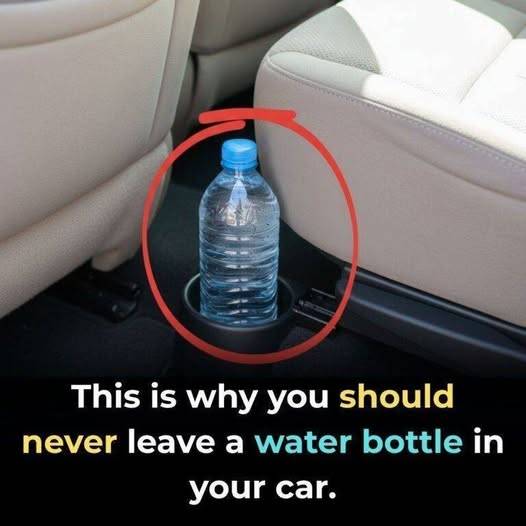
Is It Safe to Leave a Water Bottle in Your Car …Here’s What Actually Happens
[adinserter block=”7″]
It’s something most of us have done without thinking twice—leaving a water bottle in the car between errands or overnight. It feels harmless. Convenient, even.
But when temperatures rise, that simple habit becomes a bit more complicated.
You may have seen alarming headlines online, some of which exaggerate the risks. Still, experts agree on one thing: heat does change what’s happening inside that bottle—and it’s worth understanding how.
Your Car Heats Up Faster Than You Think
On a warm day, the inside of a parked car can quickly turn into something like an oven. Temperatures can climb well above 60°C (140°F), especially in direct sunlight.
That kind of heat doesn’t just make your steering wheel uncomfortable—it creates the perfect conditions for chemical changes and bacterial growth inside a water bottle.
What Happens to the Plastic?
Most disposable water bottles are made from PET plastic. When exposed to high heat for extended periods, the material can begin to degrade slightly.
This may lead to tiny amounts of chemicals—such as antimony or compounds related to BPA—leaching into the water.
Now, to keep things in perspective:
these amounts are generally very low and not considered immediately harmful.
However, repeated exposure over time is where some experts start to raise concerns.
The Bigger Issue: Bacteria
Surprisingly, the more immediate risk isn’t the plastic—it’s bacteria.
Once you’ve taken a sip from a bottle, bacteria from your mouth enter the water. Under normal conditions, that’s not a big deal.
But in a hot car?
That warm environment becomes ideal for bacteria to multiply quickly.
So a half-finished bottle left in your car for hours (or days) can turn into a small breeding ground for microbes.
Why the Water Starts to Taste “Off”
[adinserter block=”5″]
Read more on the next page