
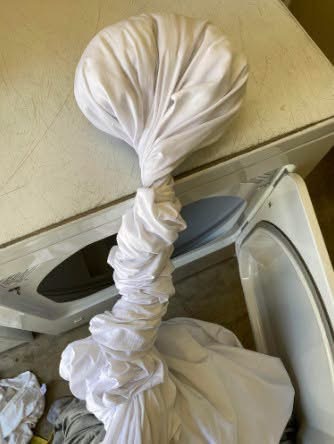
Few laundry frustrations are more annoying than opening the dryer and finding your sheets twisted into a giant knot that’s still damp in the middle. Fortunately, there are several simple tricks that can help keep sheets separated so they dry faster and come out with fewer wrinkles.
Why Sheets Ball Up
Large items such as bed sheets, duvet covers, and blankets have a lot of fabric surface area. As they tumble, they can twist around themselves and trap other items, creating a tight bundle that blocks airflow and prevents even drying.
The result is often:
- Damp spots
- Wrinkles
- Longer drying times
- Extra energy use
1. Don’t Overload the Dryer
One of the most common causes of tangled sheets is an overcrowded dryer.
Sheets need enough room to:
- Tumble freely
- Separate during the cycle
- Allow hot air to circulate
If you’re drying large bedding items, consider reducing the load size or drying bulky pieces separately.
2. Shake Sheets Before Drying
After removing sheets from the washer, give each one a good shake.
This helps:
- Remove twists
- Open folds
- Improve airflow
- Reduce tangling
It only takes a few seconds but can make a noticeable difference.
3. Use Dryer Balls
Wool dryer balls are one of the most recommended solutions.
They help by:
- Separating fabric layers
- Improving airflow
- Reducing clumping
- Speeding up drying
For large bedding loads, many laundry experts recommend using several dryer balls instead of just one.
4. Dry Sheets Separately
Heavy towels, jeans, and bulky clothing can contribute to tangling.
For best results:
- Wash bedding together
- Dry bedding separately
- Avoid mixing sheets with heavy items
This allows sheets to move more freely inside the drum.
5. Pause Mid-Cycle
If your sheets frequently twist into a bundle, stop the dryer halfway through.
Then:
- Remove the sheets.
- Shake them out.
- Loosely place them back in the dryer.
- Resume the cycle.
This simple step often prevents the large “sheet burrito” effect.
6. Zip Duvet Covers Closed
If you’re drying a duvet cover, zip or button it closed before placing it in the dryer.
This helps prevent:
- Other items from getting trapped inside
- Excess twisting
- Uneven drying
Many people find this dramatically reduces tangling.
7. Use Lower Heat
Lower temperatures can reduce aggressive twisting and help sheets maintain their shape during drying.
While the cycle may take a little longer, the results are often:
- Fewer wrinkles
- Less tangling
- Better fabric care
Final Thoughts
The best way to prevent sheets from balling up is to give them room to move, shake them out before drying, and use dryer balls to improve airflow. Combining these simple habits can help your sheets dry more evenly, reduce wrinkles, and save you from running extra drying cycles. 🛏️✨