
[adinserter block=”3″]
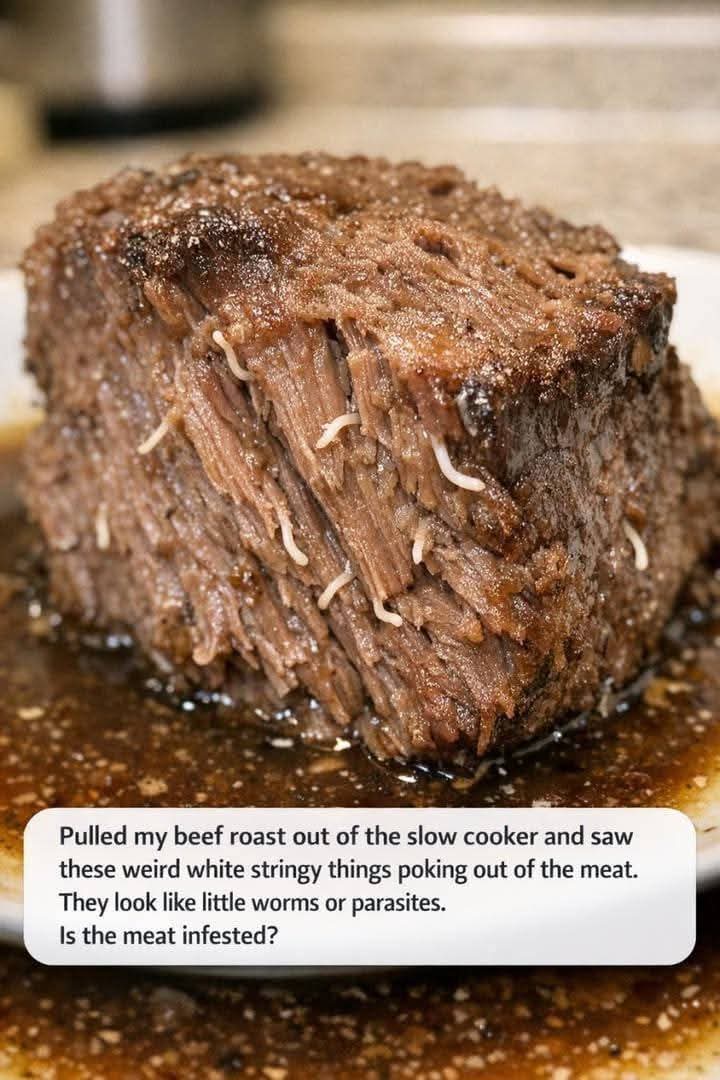
Have you ever pulled a slow-cooked beef roast apart and noticed strange white strings or strands coming out of the meat? At first glance, they can look scary — almost like tiny worms or parasites — but in most cases, there is a completely natural explanation.
Those white stringy pieces are usually connective tissue, collagen, or natural muscle fibers from the beef. When meat cooks slowly for several hours, the tough connective tissues inside the roast begin to break down. Collagen melts and turns into a soft, rich gelatin that helps make the meat tender and juicy. During this process, some fibers can separate and stick out, creating a shape that looks unusual.
Slow cooking can make the structure of the meat change dramatically. A roast that looked like a solid piece before cooking can become soft and pull apart easily, revealing different layers of muscle fibers, fat, and connective tissue. These parts can sometimes appear white, stringy, or slippery, especially when the meat has been cooked until it is very tender.
Before assuming the worst, check a few things:
[adinserter block=”4″]
✅ Normal signs:
The white strands are attached to the meat
They pull apart like fibers or feel gelatin-like
The roast smells like normal cooked beef
The meat was stored properly and cooked thoroughly
⚠️ Signs that something may be wrong:
A sour, rotten, or unusual smell
Slimy texture before cooking
Strange discoloration throughout the meat
Something appears to move independently or is clearly separate from the roast
Many people mistake these natural beef tissues for parasites because they are not used to seeing the inside structure of slow-cooked meat. In reality, those strands are often part of what makes a roast tender and flavorful.
So if your beef looked normal before cooking, was cooked properly, and smells good, those mysterious white strings are most likely just normal parts of the meat breaking down during the slow-cooking process, not an infestation.
[adinserter block=”5″]