
[adinserter block=”3″]
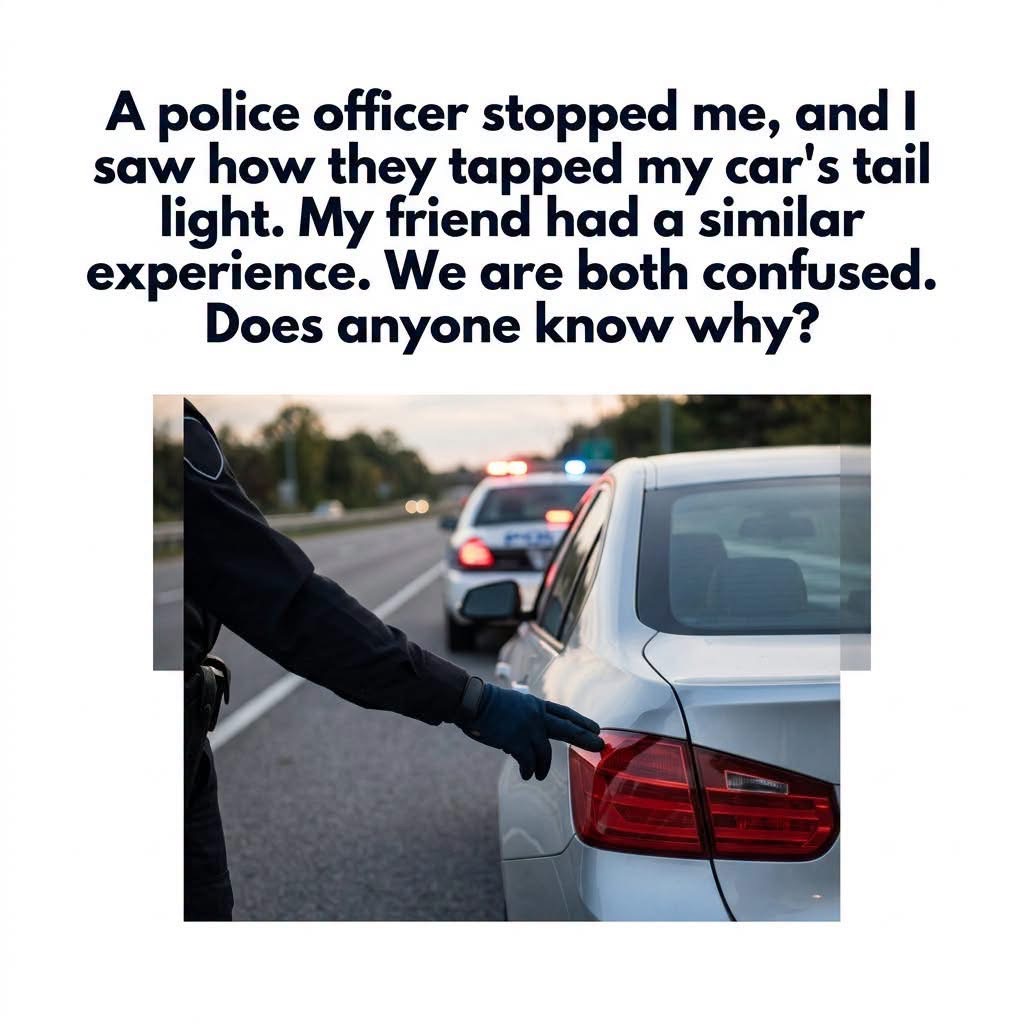
Many drivers have heard the claim that police officers touch or tap a vehicle’s tail light when approaching during a traffic stop. While not every officer does this, the practice has existed for several reasons.
1. To Leave Evidence of Contact
Historically, touching the tail light left fingerprints or other evidence showing that the officer was physically present at the vehicle.
In the rare event that something happened during the stop, investigators could potentially confirm that the officer had approached the car.
2. To Get the Driver’s Attention
A quick tap on the rear of the vehicle can alert occupants that the officer is approaching, especially if the driver is distracted or focused elsewhere.
3. To Check for Unusual Activity
As officers approach, they are often observing the vehicle and its occupants for anything unusual, such as:
- Sudden movements
- Attempts to hide objects
- Signs of impairment
- Safety concerns
The tap itself is less important than the officer’s overall observation of the situation.
4. Modern Technology Has Changed the Practice
Today, many patrol vehicles are equipped with:
[adinserter block=”4″]
- Dash cameras
- Body cameras
- Automatic recording systems
Because these technologies document traffic stops, some officers no longer routinely touch the vehicle.
Is It Required?
No.
There is generally no universal rule requiring officers to tap a tail light. Practices vary depending on:
- Department policies
- Officer training
- Personal preference
- The circumstances of the stop
What Should Drivers Do During a Traffic Stop?
For safety, it’s generally recommended to:
- Pull over safely.
- Turn off loud music.
- Keep your hands visible.
- Follow the officer’s instructions.
- Avoid sudden movements.
These steps help create a safer interaction for everyone involved.
[adinserter block=”5″]