
Why does this happen?
High blood sugar weakens the immune system, making it more difficult for wounds to heal.
Poor circulation in people with diabetes limits blood flow to the feet, leading to slow-healing wounds or infections.
⚠️ What you should do:
Check your feet daily for cuts, blisters, or sores. If they are taking too long to heal, see a doctor immediately. Untreated foot wounds in diabetics can lead to serious infections and even amputation!
4. Dry, cracked skin on your feet
Persistently dry, cracked, or flaky skin on your feet can be a symptom of circulation problems related to diabetes.
🛑 Why does this happen?
Diabetes affects the nerves that control sweat production, leading to excessive dryness.
Cracked skin can cause infection because bacteria and fungi can easily enter the body.
⚠️ What you should do:
Keep your feet moisturized, but avoid applying lotion between your toes (this can lead to fungal infections). If the cracks become deep or painful, consult a doctor.
5. Unusual changes in foot color
If your feet begin to turn red, blue, or pale, it may be a sign of poor blood circulation due to diabetes.
🛑 Why does this happen?
High blood sugar can damage blood vessels, causing a lack of oxygen in the feet.
Feet can turn red or dark blue due to poor circulation or infection.
What you should do:
If you notice unexplained discoloration of your feet, consult your doctor immediately, as this could be a sign of serious diabetes complications.
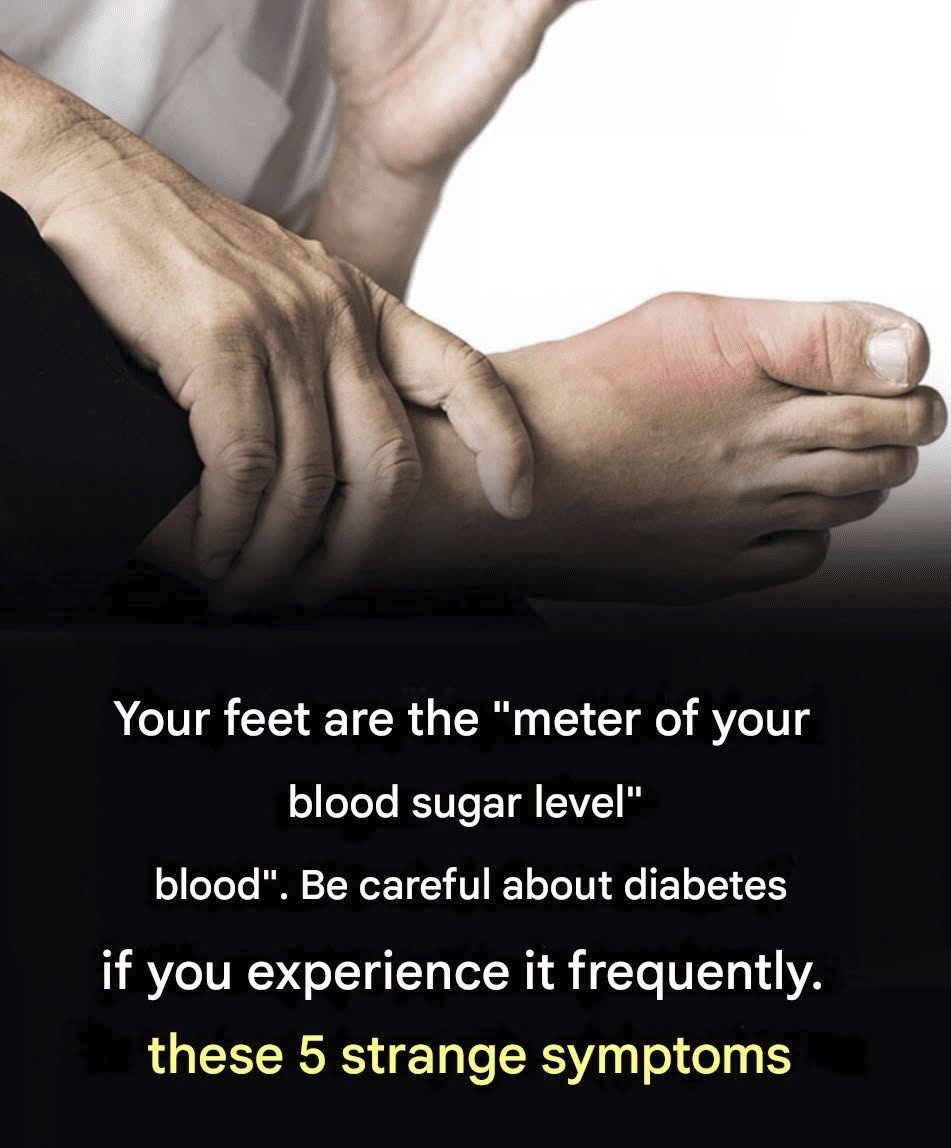
Summary: Your feet may reveal hidden signs of diabetes!
Diabetes often develops quietly, and many people don’t realize they have it until complications develop. By observing your feet, you can detect early warning signs and take action before it’s too late.
What you should do?
✔️ Monitor your feet daily for these five signs. ✔️ Maintain healthy blood sugar levels with a proper diet and exercise.
✔️ Get regular checkups to prevent complications.
⚠️ If you experience even ONE of these symptoms frequently, consult your doctor immediately! Early detection can protect you from serious complications.